Páginas

jueves, 25 de enero de 2024

Starbucks Japan unveils new blood-red Frappuccinos for Valentine’s Day

https://ift.tt/lxS2EMH Oona McGee

The green mermaid invites us into a thrilling polyamorous romance, tinged with danger.

At Starbucks in Japan, big annual events like Christmas and Valentine’s Day are celebrated with not one but two limited-edition Frappuccinos, released within a short space of each other in the lead-up to the day.

This year, however, we’re being spoilt with even more Frappuccinos than usual, thanks to the chain releasing them in twos for Valentine’s Day. After being seduced by the first duo — the Opera Frappuccino and White Opera Frappuccino — Starbucks has now revealed the second Valentine’s Day pair, also based on France’s famous layered chocolate cake.

▼ It’s time to get cosy with the Rouge Opera Frappuccino.

Like the first Valentine’s Day release, these two beverages come in white and dark versions, with a blend of chocolate chips and chocolate in the body of the drinks, and a hit of coffee combined with almond milk to capture the flavour of an opera cake.

The real scene-stealer, however, is the bright red topping, which the chain says will “add excitement” to your Valentine’s Day celebrations. Sitting atop a layer of whipped cream, the glacage topping is thick and glossy, recreating the look of an opera cake, with raspberries, strawberries, and cranberries in the mix for full-bodied flavour and deep red colour.

▼ Topped with a dusting of gold powder, these are two of the most luxurious-looking drinks we’ve ever seen at Starbucks.

The harmonious blend of sweet and sour notes in these drinks is said to be as luxurious as their appearance, but they’re tinged with danger as we fear won’t be able to stop drinking them when they’re released around Japan from 31 January.

Thankfully, they’re only available while stocks last until 14 February, giving us time to restore our waistlines before the next round of limited-edition Frappuccinos sweeps us off our feet again. Priced at 776 yen (US$5.25) for takeout or 790 yen for dine-in, these chocolatey beverages will soon be stealing hearts everywhere, especially when combined with the chain’s’ new limited-edition Valentine’s Day cake collection!

Source, images: Press release
● Want to hear about SoraNews24’s latest articles as soon as they’re published? Follow us on Facebook and Twitter!

Hayao Miyazaki’s Sherlock Hound anime episodes getting remaster and theatrical rerelease

https://ift.tt/zlNm4uI Casey Baseel

Pre-Studio Ghibli work of legendary director returns to theaters.

The anime Sherlock Hound is notable for several reasons, not the least of which is that its Japanese title, which translates to “Great Detective Holmes,” was brazen enough to attract the attention and ire of the estate of British author Arthur Conan Doyle (who, as you might be aware, already had a series about a pretty great detective with that surname). But what really makes Sherlock Hound stand out in the annals of anime history is the staff that worked on it, whose figurative fingerprints are all over certain sequences.

▼ Sherlock Hound, showing some incredible animation quality for an early-’80s TV anime

If you’re thinking, “Wow, that looks an awful lot like a Studio Ghibli movie,” it’s because a number of key Ghibli artists worked on Sherlock Hound before the studio was founded, including the legendary Hayao Miyazaki himself. Miyazaki directed about a half-dozen Sherlock Hound episodes in 1982 before legal challenges from the Conan Doyle estate delayed the production and pushed the release of the planned anime TV series back to 1984. During that interval, Miyazaki left the Sherlock Hound team and went off to direct Nausicaa of the Valley of the Wind, which also released in 1984 and became a phenomenal hit. This then prompted a pair of theatrical releases compiling the Sherlock Hound episodes Miyazaki had directed, and those episodes are now being remastered and rereleased in theaters to celebrate the series’ 40th anniversary.

The first compilation, which puts together the Miyazaki-directed episodes “Blue Ruby” (also known as “The Adventure of the Blue Carbuncle”) and “Treasure Under the Sea,” was released in 1984, followed by the second theatrical release, combining “Mrs. Hudson is Taken Hostage” and “Air Battle Over Dover” (a.k.a. “The White Cliffs of Dover”) originally arrived in heaters in 1986, but they’re being shown as a double-billing for the upcoming revival rerelease. Along with Miyazaki, other future Ghibli talent who were involved in those episodes include Yoshifumi Kondo (character designer for Princess Mononoke, Grave of the Fireflies, and Only Yesterday) as character designer and animation director and Nizo Yamamoto (art director for Castle in the Sky/Laputa, Princess Mononoke, and Grave of the Fireflies) as art director for “Blue Ruby” and “Treasure Under the Sea.”

The limited-time rerelease is being handled by Japanese movie review site Filmarks Recommend, and will run from March 22 to April 18 at a total of 117 theaters across Japan. Between March 22 and April 4, the most prominent downtown Tokyo venues will be the Shinjuku Piccadilly, Ikebukuro Humax Cinemas, Grand Cinema Sunshine Ikebukuro, and United Cinema Aqua City Odaiba theaters, and from April 5 to 18 the only currently listed Tokyo venues are Aeon Cinema Tama Center and Aeon Cinema Hinode (a full list of theater can be found here).

Source, images: PR Times
● Want to hear about SoraNews24’s latest articles as soon as they’re published? Follow us on Facebook and Twitter!

The one in which we sample top-notch melon in the Crown Melon Lucky Bag

https://ift.tt/bkVgzyF Krista Rogers

This melon specialty shop’s unique lucky bag puts a fruity spin on the New Year’s tradition.

Every January, SoraNews24 strives to bring you the best and weirdest in New Year’s lucky bags/fukubukuro. Up until now, we’ve always had a distinct lack of fruit-themed lucky bags–but that changed with our purchase of the Crown Melon Lucky Bag. A crown melon is a particularly famous variety of muskmelon often dubbed “The Japanese King of Fruits” that’s cultivated in the western part of Shizuoka Prefecture.

▼ The fabled crown melon

Now, in general, high-quality specimens of fruit are a luxuriously expensive gift in Japan. Perfectly shaped and perfectly packaged, it’s not uncommon for the rarest or most delicious varieties to fetch upwards of 10,000 yen (US$68) for an individual piece.

Being big fans of melons, we decided to purchase a Crown Melon lucky bag from Melon Shop Maeshima, a melon specialty store in Shizuoka with over 30 years of melon-growing experience, that was being sold on Rakuten Japan for 9,999 yen. It contained over 10 seasonal fruits, including the promised crown melon and some Mikkabi mikan citrus fruits.

The refrigerated box arrived a few days after we ordered it with a sticker that advised careful handling.

We first admired the carefully padded fruit inside of the box.

It felt triumphant to finally lift the stylish green melon box out of its packaging.

We immediately removed the perfectly round melon and placed it on a scale, which revealed the fruit to be 1.2 kilograms (2.6 pounds). According to the enclosed informational pamphlet, any of their shop’s melons around 1.3 kilograms are considered to be medium size.

Instructions for determining when the melon would be at its ripest were also included, and this one would be ready to eat about three days after being delivered. We also learned some neat melon trivia, such as the fact that they won’t ripen any faster in the fridge or that they should be ready to eat when there’s no more moisture on the vine.

On the top of the melon was a sparkly sticker with a crown symbol. It served as proof that this would be an outstanding specimen after being carefully grown and inspected before arriving at our door. The sticker also identified the individual producer number of this particular one, so we could actually trace the person whom we could thank for it later. It turns out that this particular producer takes such pride in their work that they even use their producer number on their car license plate!

After slicing it open and tasting the juicy goodness, we confirmed that it was just as sweet and delicious as predicted.

Next, we took a look at the Mikkabi mikan. This brand is also famous, and if you were to say “mikan” in Shizuoka, nine times out of ten it would probably be referring to these ones. They’re said to have a great sweetness and depth of flavor due to being grown in Hamamatsu City, which is one of the sunniest cities in all of Japan.

It’s easier to grasp the mikans’ size when holding one in the palm of a hand. A large one is said to weigh 180 grams, so the one pictured below was probably an extra large. We expected at least one of the five to be lacking in taste, but they all turned out to be deliciously sweet.

Of course, that wasn’t all. The lucky bag also included an assortment of other fruits like apples from Aomori Prefecture, persimmons from Fukuoka Prefecture, and dekopon (a variety of satsuma orange) from Saga Prefecture. We’d been half hoping to score some Shine Muscat grapes or pineapples, but this lineup made perfect sense for the winter season.

So is this Crown Melon Lucky Bag a good value for its price? After searching for the price of a single crown melon at the same store, we found that it normally retails for 5,800 yen. That meant that at the very least, all of the remaining fruit we received were valued at 4,199. We honestly weren’t sure if that’s a good deal or not, but we were certainly pleased with the quantity and size of all of these domestically grown fruits.

Since Melon Shop Maeshima specializes in melons, there’s no doubt that their melons are going to be ridiculously delicious. And since you can get almost two melons for the price of the lucky bag, we might recommend just purchasing two of those instead for any serious melon lovers out there. In any case, we’ll be happily munching our fruit to counterbalance all of the cheese from Domino Japan’s latest Cheese Volcano Pizza over the next week.

All images © SoraNews24
● Want to hear about SoraNews24’s latest articles as soon as they’re published? Follow us on Facebook and Twitter!

Death sentence handed down for Kyoto Animation arsonist

https://ift.tt/9EOVJlB Casey Baseel

“There are no circumstances present for which the death penalty should be avoided.”

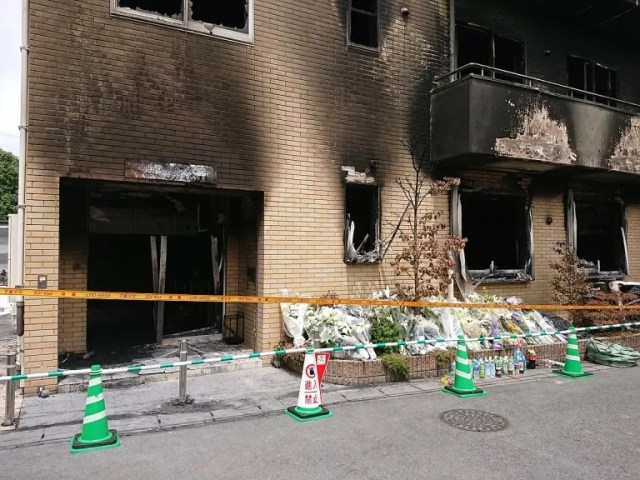
It’s been roughly four and a half years since Shinji Aoba walked into anime production company Kyoto Animation’s studio in the Fushimi district of Kyoto, spread gasoline around the interior, and set it ablaze. 36 Kyoto Animation employees were killed and another 33 injured, with only one of the 70 people in the building miraculously making it out unharmed.

Aoba’s guilt, in the sense of whether or not he was the person who committed the crime, has never been in doubt He was apprehended attempting to flee the scene after the flames engulfed his body as well, and has admitted that he purposely attacked the studio as an act of revenge for what he saw as plagiarism of a novel he had submitted to Kyoto Animation as part of a writing contest. The severity of Aoba’s burns, however, meant that considerable time would pass before he could be formally arrested (as he had to be deemed healthy enough to survive incarceration), and the pace at which his trial could proceed was limited in part due to his ongoing physical rehabilitation.

The trial has now concluded, though, and the Kyoto District Court, seeing no chance of Aoba’s mental and moral rehabilitation, has sentenced him to death.

The crux of debate during the trial was whether or not the now 45-year-old Aoba was of sufficient mental capacity to be legally punished for the arson attack. In addition to stating that he chose his method of attack specifically because he felt it would allow him to kill more people, throughout the trial Aoba maintained that he continues to feel that he has been wronged by Kyoto Animation, and displayed an utter lack of remorse when first learning how many people had died because of him.

In its ruling, the court cited Aoba’s deliberate decision to attack the studio early in the business day, when a large number of employees could be expected to be inside the building, and the premeditated nature of purchasing and transporting the large quantity of gasoline used to the scene of the crime, concluding “There are no circumstances present for which the death penalty should be avoided.”

Source: NHK News Web, Yomiuri TV via Yahoo! Japan News
Top image: Wikipedia/L26
● Want to hear about SoraNews24’s latest articles as soon as they’re published? Follow us on Facebook and Twitter.

miércoles, 24 de enero de 2024

Potentially dirty and broken used Shinkansen food/beverage carts on sale in Japan for 100,000 yen

https://ift.tt/baUS5qC Casey Baseel

Some might call it wear and tear, but others would argue it’s history and authenticity.

An era came to an end last October, as the Tokaido Shinkansen ended in-car sales of food and beverages. According to Central Japan Railway Company/JR Tokai, which operates the bullet train line connecting Tokyo and Osaka, the change was prompted by, among other things, an increase in attractive and convenient food/drink takeaway options from vendors in and around the line’s train stations, resulting in more passengers sorting out their snacking and sipping requirements before boarding.

However, as anyone who’s had the pleasure can tell you, there was a certain special satisfaction that came from seeing carts of food and drink being wheeled down the train’s center aisle by JR’s snappily uniformed, politely polished sales staff and being served a delicious katsu sandwich, ice-cold can of beer, or super-hard cup of ice cream. To many travelers, the Shinkansen food carts were symbols of a simple luxury that set the tone for the rest of their vacation, and they were sad to see them go.

But now those who are nostalgic for the Tokaido Shinkansen food carts will have a chance to see them again, and in their own homes.

A total of 50 Shinkansen service carts are being offered for sale by JR Central’s Retailing Plus division. These aren’t replicas, either, but actual food/beverage carts that were used on the bullet trains before their retirement last autumn.

In order to preserve that authenticity, the carts are being offered for sale as-is. JR Central explicitly states that the carts will be “delivered [to buyers] with no cleaning, repainting, repairs, or confirmation of operational status performed,” and that no returns may be made for such related issues.

▼ Those aren’t scratches. They’re history.

Used, possibly dirty and/or broken service carts are definitely a niche product, but given Japan’s large and enthusiastic communities of rail and travel fans, finding 50 buyers probably won’t be a problem. Because of that, the Shinkansen service carts are being offered on a lottery basis here through online marketplace Livepocket Ticket. Applications will be accepted between January 29 and February 5, with winners informed by email by February 7. The carts are priced at 100,000-yen (US$690) yen each, with a limit of two per winner, and it appears that a formal commitment to pay in the case of winning the lottery is required at the time of entry.

Oh, and note that the price includes shipping within Japan, thus sparing you the trouble of having to go pick the cart up, but also the effort of resisting the urge to push it up and down the train while on your way home with it.

Source: Livepocket Ticket via IT Media
Images: Livepocket Ticket
● Want to hear about SoraNews24’s latest articles as soon as they’re published? Follow us on Facebook and Twitter!

We stumbled upon “Pudding Street” in Hanoi, so of course we had to investigate

https://ift.tt/UCNxgIE Dale Roll

What’s Vietnamese pudding taste like? We had to find out!

Our Japanese-language, world-traveling reporter Ikuna Kamezawa was visiting Hanoi, Vietnam, recently, when, after getting a massage, she received a map designed for Japanese tourists (seen in the photo above). Since she’d been to Hanoi many times, Ikuna didn’t expect to see anything new on it, but as it turned out, there were lots of places she didn’t know about.

The one that most snagged her attention was a something called “Pudding Street.” This surprised Ikuna, who had never seen pudding offered anywhere in Vietnam before. The fact that there was a “Pudding Street” implied that it would be lined with pudding shops…And that was something Ikuna had to check out.

Pudding Street is located north of Hoàn Kiếm Lake, a central landmark in Hanoi. The path from the lake is full of interesting things, so it’s definitely worth taking a walk there if you have the time.

Of course, don’t miss the main event! The first restaurant on Pudding Street is Kem Caramen Duong Hoa, with “Kem Caramen” meaning “pudding” in Vietnamese.

The interior was scattered with dozens of tiny plastic stools, giving it a chaotic feel. Ikuna wondered if this meant that pudding wasn’t a fancy dessert, as it sometimes is in Japan, but a food for the masses. Whatever the case, she definitely had the impression she could sit and eat pudding to her heart’s content.

One pudding from Kem Caramen Duong Hoa costs 8,000 dong (roughly 48 yen or US$0.33).

Pudding these days, at least in Japan, is usually made with lots of eggs and milk, with the end result a really rich custard. But this pudding was totally different. It was about three times lighter than most puddings, and super sweet, as if it was made with condensed milk. And while in Japan most people would order one, many of the customers at Kem Caramen Duong Hoa had two or three spread out on the tables before them.

It was certainly a new experience, one Ikuna was pleased with. So far, Pudding Street was turning out great. She moved on to the next pudding shop, which was called Minci Pudding.

They sold not just pudding but tons of sweets, and people were piling up stuff in their arms to take home. Pudding was a popular choice for many.

One pudding at Minci Pudding cost the same as Kem Caramen Duong Hoa, 8,000 dong.

Ikuna wanted to say that the eggy flavor in this pudding was slightly stronger, but she wasn’t completely sure. In any case, it was super light, almost liquid, like she could drink it down with a straw. Both puddings were so good that Ikuna actually ended up ordering two more of each.

As it turned out, those two restaurants were the only pudding shops on Pudding Street, but once you try their puddings, you’ll understand why they make such a strong impression that the presence of just two shops renamed a whole street. If you have plans to visit Hanoi sometime soon, definitely take some time to check them out!

Shop information
Kem Caramen Duong Hoa
Address: 29 Hang Than Ba Dinh, Hanoi 100000
Website (Facebook)

Minci Pudding
Address: No.5 Nguyen Truong To, Ba Dinh,, Hanoi 10000

Images © SoraNews24
● Want to hear about SoraNews24’s latest articles as soon as they’re published? Follow us on Facebook and Twitter!

Japanese government’s Ministry of Economy, Trade and Industry finally stops using floppy disks

https://ift.tt/JTyHwp4 Casey Baseel

Better (very) late than never, right?

With such broad and important spheres of society under its jurisdiction, you’d be correct in assuming that Japan’s Ministry of Economy, Trade and Industry has a lot of information it needs to organize and maintain. So it’s reassuring to know that a recent revision to the ministry’s protocols is going to undeniably modernize its operations. That doesn’t mean that the new regulations allow for cutting-edge advancements in IT, however, just that the ministry is finally abolishing the required use of antiquated forms of physical media.

You may recall that back at the start of September in 2022, Minister of Digital Affairs Taro Kono, head of Japan’s Digital Agency Cabinet sub-division, pleaded with the various branches of the government to identify and revise ordinances that specify outdated physical media forms for certain types of applications, reporting, and record-keeping. The wheels of government tend to turn especially slowly in Japan, though, and it’s only recently that the Ministry of Economy, Trade and Industry has gotten around to doing so in earnest, though. On Monday, METI, as the ministry is also known, announced that as of the end of the 2023 calendar year it has removed 34 ordinances requiring floppy disks to be the method used for submission of data to the ministry, and an unspecified number of ordinances saying that CD-ROMs must be used.

The abolished floppy disk/CD-ROM requirements stretched back several decades, and they weren’t limited to quaint, non-sensitive parts of society either, as the ordinances were related to fields such as gas, electricity, and water supply, mining operations, and aircraft and weapons manufacturing.

The push to end the use of floppy disks within government agencies stems, of course, from two major problems. The first is that a physical media requirement reduces the ability to submit and share data online, hampering operational efficiency and complicating the process of revising or updating the information. Second, it’s extremely difficult to even find floppy disks for sale anymore, as they’ve essentially disappeared from the consumer market.

In his 2022 statement, Kono said that his staff had found approximately 1,900 government ordinances, across a variety of ministries, requiring the use of physical media for data storage. So there’s probably still a long ways to go, but at least METI has started the process.

Source: Impress Watch via Hachima Kiko, Nihon Keizai Shimbun
Top image: Pakutaso
● Want to hear about SoraNews24’s latest articles as soon as they’re published? Follow us on Facebook and Twitter!