Páginas

miércoles, 29 de noviembre de 2023

Japanese dad turns smash-and-grab thief son in to police, shopkeeper’s polearm technique criticized

https://ift.tt/xM9HkvN Casey Baseel

Two of three robbers now in police custody.

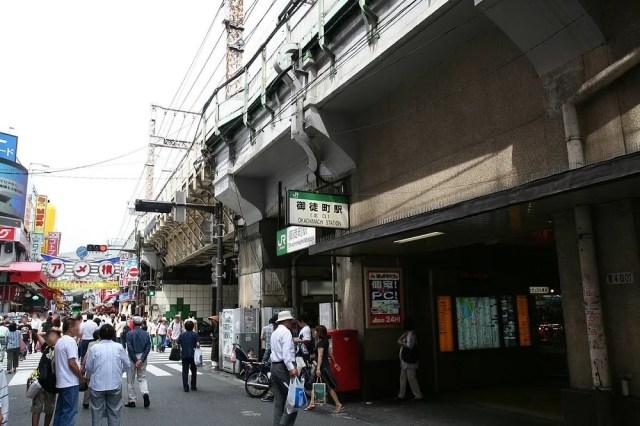
On Sunday evening, a group of three men attempted a smash-and-grab robbery at a precious metals shop near Okachimachi Station in Tokyo’s Ueno neighborhood. The heist was foiled when an employee of the store saw the robbers’ combined arsenal of three crowbars and responded by counterattacking with a man catcher polearm, causing the trio to turn tail and flee on foot, leaving the motor scooters they’d arrived on behind.

The on-foot escape route the three men took was down a street lined with jewelry shops equipped with security cameras, so their apprehension would seem to be largely a matter of time. But it turns out there’s an even speedier way to deliver justice than surveillance analysis or forensic investigation: a disappointed dad.

On Tuesday morning, the father of one of the robbers brought his son to a police station in Saitama Prefecture, which neighbors Tokyo to the north, where he was promptly placed under arrest for the crime. On the same day another member of the group turned himself in at a separate police station in Saitama and was arrested as well

As of this writing, the third criminal remains at large. While exact details haven’t been released, it’s possible that the two men who turned themselves in are the owners of the two scooters that were used in the attempted robbery, which they rode up to and then left right at the entrance of the store they targeted. Assuming the scooters could be traced to them and their home addresses determined via the vehicles’ registration, it’s likely that neither saw any remaining hope of escaping punishment for the crime. Both of the arrested men are 18 years old, which until recently would have made them minors, but following a recent revision to Japanese law both are now legal adults and can be tried as such.

Meanwhile, the dramatic video footage of the shopkeeper fighting the robbers off with a man catcher has grabbed people’s attention and sparked a rise in interest in the criminal submission apparatuses, according to the management of Sano Kiko a company that makes man catchers named after mythical beasts such as Cerberus and Orochi. However, not everyone is impressed with the shopkeeper’s technique. J-Cast News spoke with an employee of an unnamed Tokyo man catcher manufacturer, who gave the reminder that:

“Man catchers are not themselves designed as weapons. Fundamentally, they’re meant to be used by a team of multiple people [each with a man catcher] who [thrust them to] immobilize the person’s arms and legs. We cannot recommend swinging them around or using them for striking.”

The goal being to subdue the target is right there in the “man catcher” name, after all, and the manufacturer employee goes on to explain that in a one-on-one scenario, there’s a chance of the criminal turning the tables on the man catcher user by snatching the device away from them, especially if the criminal has a larger/heavier body frame than the man catcher wielder.

That said, when confronted by three armed attackers, a long pole is better than nothing, and it seems to have done the trick in this case. Still, it’s always best to weight the potential risks before deciding to try to be a hero in a dangerous situation.

Source: TV Asahi (1, 2) via Hachima Kiko, J-Cast News via Livedoor News via Jin
Top image: Wikipedia/PRiMENON
● Want to hear about SoraNews24’s latest articles as soon as they’re published? Follow us on Facebook and Twitter!

martes, 28 de noviembre de 2023

Pokémon merch Mister Donut Lucky Bag, Japan’s sweetest can’t-miss fukubukuro deal, is coming back

https://ift.tt/zmh2dw5 Casey Baseel

Once again, Mister Donut offers an incredible deal that basically pays you to eat donuts.

One of the best end-of-the-year traditions in Japan are fukubukuro/lucky bags, and one of the best lucky bag deals is the one offered by donut chain Mister Donut. There are a whole bunch of reasons why, but one of the biggest is because Mister Donut’s lucky bags are a team-up with the Pokémon franchise, giving you a mix of free sweets and exclusive Poké merch.

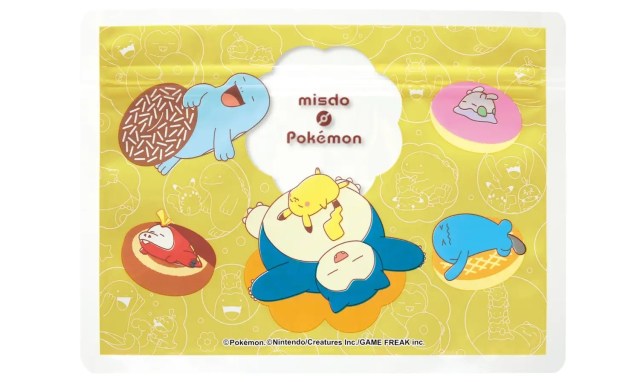
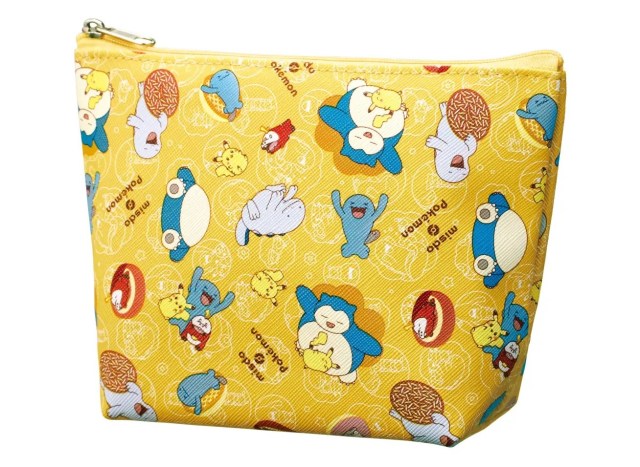
This year, Mister Donut is offering three tiers of Pokémon Lucky Bags, priced at 2,400, 3,600, and 5,900 yen (US$16, US$24, and US$39). Each comes with a collection of Pokémon items, like the zippered pouch pictured above, and a stack of coupons which can be exchanged for free donuts. That brings us to the second awesome thing about the Mister Donut Pokémon Lucky Bags: they’re an amazing bargain. The 2,400-yen bundle comes with 20 donut coupons, the 3,600-yen one 30 coupons, and the 5,900-yen one 50 coupon. With each coupon exchangeable for a donut up to 187 yen in price, that makes the value of the included coupons:

● 2,400-yen lucky bag: 3,740 yen in free donuts
● 3,600-yen lucky bag: 5,610 yen in free donuts
● 5,900-yen lucky bag: 9,350 yen in free donuts

So you’re already coming out way ahead just on the free deserts, even before you factor in the cool Pokémon items featuring Pikachu, Snorlax, Wobbuffet, Quagsire, Fuecoco, and Goomy.

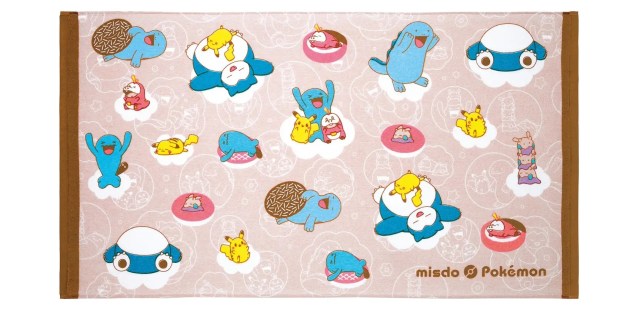
▼ The lucky bag bath towel, with all six species of Pocket Monsters, can double as a light terrycloth banket, or “towelket” as they’re called in Japanese.

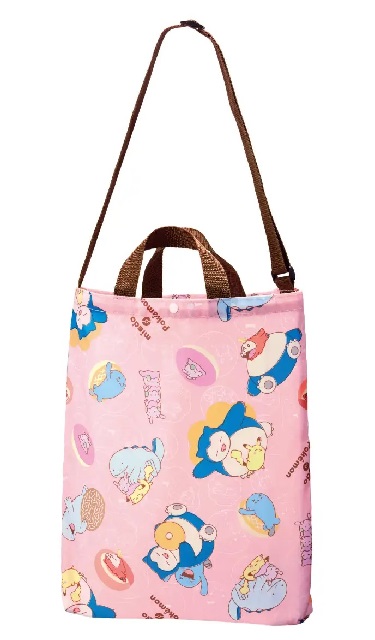
Another great thing about the Mister Donut Pokémon Lucky Bags is that they almost entirely bypass the random risk usually associated with fukubukuro. With some stores’ lucky bags it’s an absolute mystery as to what items will be inside, but Mister Donut is very upfront. In addition to its donut coupons, the 2,400-yen bundle will always include an eco shopping bag with shoulder strap…

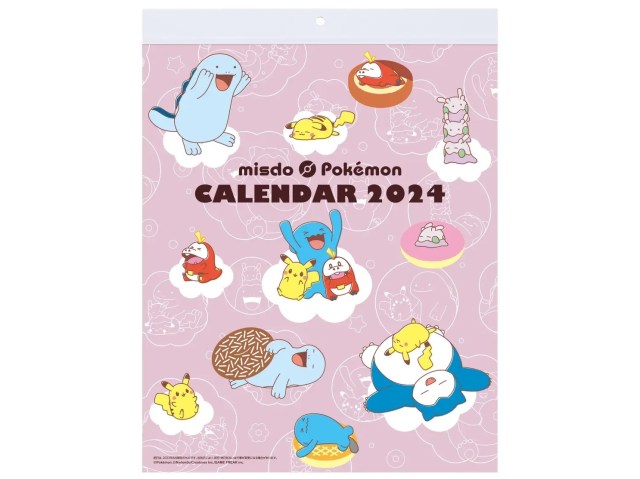
…an illustrated calendar…

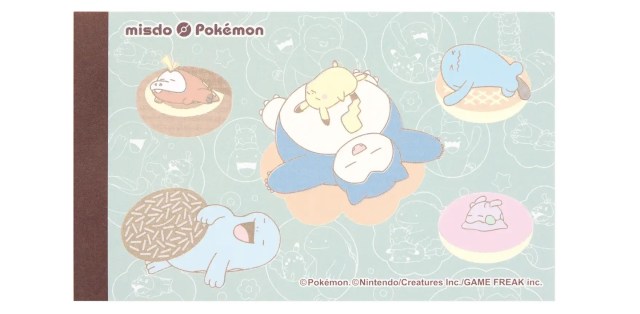
…a memo pad…

…and the cloth zippered pouch we saw earlier.

The 3,600-yen lucky bag includes everything from the 2,400-yen one, plus an additional zippered bag

…and a schedule book/day planner.

▼ You randomly get one of five patterns for the schedule book, but that’s the one and only part of the package that’s left up to chance.

Finally, the 5,900-yen lucky bag has everything from the 3,600-yen one, plus the bath towel.

Considering that each tier already gives you more than its cost in donuts, Mister Donut is essentially paying you to eat dessert and/or take some Pokémon merch off their hands, and the deal gets better still, because they give you a very long window in which to use your donut coupons. They’re good until May 31, and even if you’re not sure if you can single-handedly/mouthedly eat all those donuts by then, the coupons are transferable, either by giving the to friends or letting them register individual coupons through the Mister Donut smartphone app. So as long as you and your circle of friends and family are collectively in the mood for donuts, getting your money’s worth out of the Mister Donut Pokémon lucky bags should be no problem, even if you want to save a few freebies for a springtime trip to Japan’s real-world Sandshrew Park.

The lucky bags go on sale December 26, though Mister Donut hasn’t specified exactly what time, perhaps as part of a strategy to thwart scalpers.

Source, images: PR Times
● Want to hear about SoraNews24’s latest articles as soon as they’re published? Follow us on Facebook and Twitter!
There’s a Tokyo bar with Japanese whisky inside bookstore inside Japan’s tallest building

https://ift.tt/39yxVoz SoraNews24

Slow Page pours classy coffee too at Azabudai Hills.

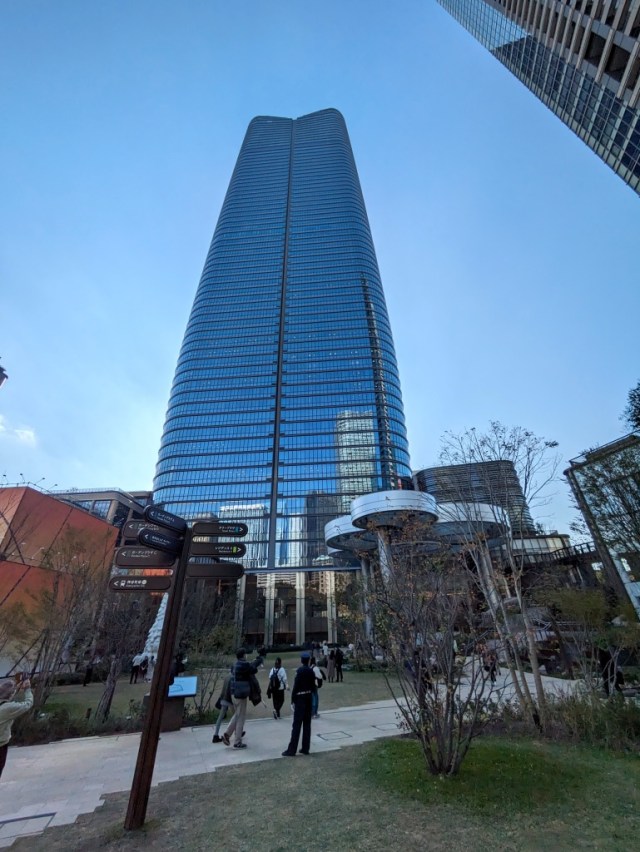
Last week, Tokyo’s Azabudai Hills complex opened, with its main tower becoming the tallest skyscraper in Japan. 64 floors and 325 meters (1,066 feet) tall, the Azabu Hills Mori JP Tower, to use its full name, is almost as tall as Tokyo Tower’s spire tip.

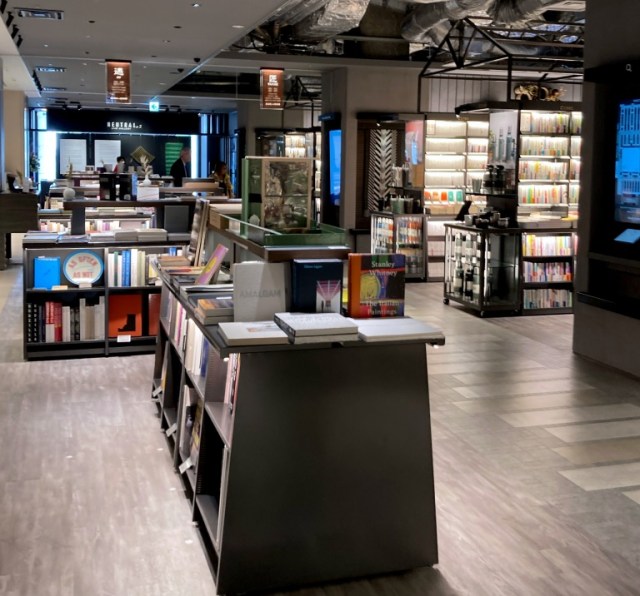
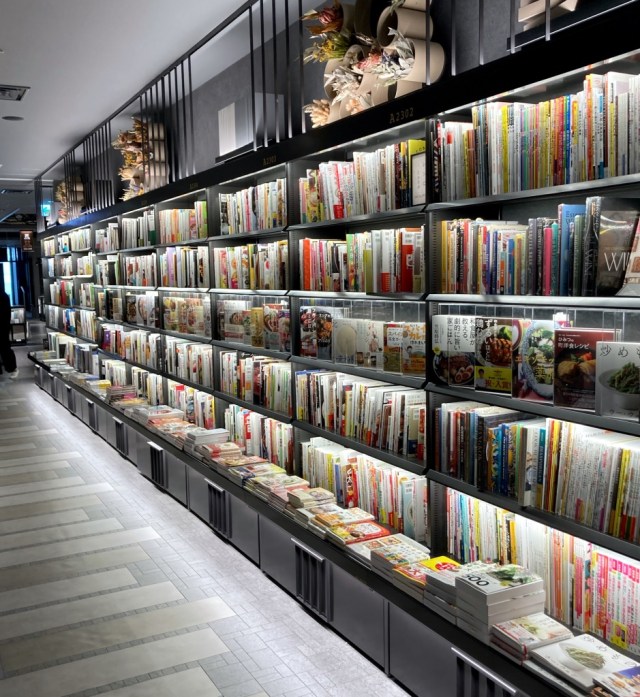
Unlike the largely empty frame of Tokyo Tower, though, the Azabu Hills Mori JP Tower is filled with shops, restaurants, and offices, and on our visit we were drawn to the Ogaki Bookstore, on the fourth floor.

Ogaki is headquartered in Kyoto, but they’re making this Tokyo branch one of their flagship locations. With wide walkways, neatly organized shelves, and soft yet ample lighting, the whole place is designed to make the actual process of shopping for books as pleasant and enjoyable as possible, providing an elegant atmosphere you can’t get just from clicking on samples and order buttons on an online bookseller’s website.

There are even reading lounges set up in the store, with views that look down into the central garden of the Azabudai Hills complex.

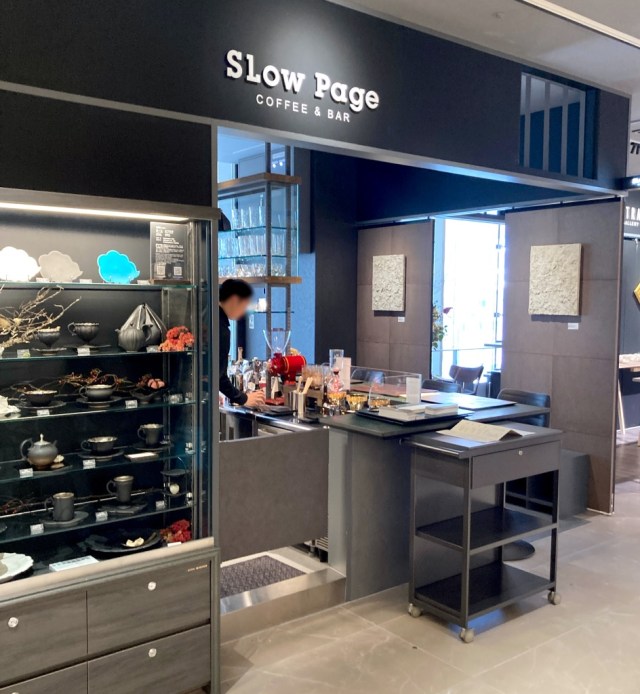
But the coolest place of all to sit and peruse some reading material? That’d be Slow Page, a bar/cafe that’s located inside the Azabudai Hills Ogaki Bookstore.

The menu has a nice selection of whiskies, including Suntory’s famed trio of Hakushu, Yamazaki, and Hibiki, all of which are looking to see price spikes next year.

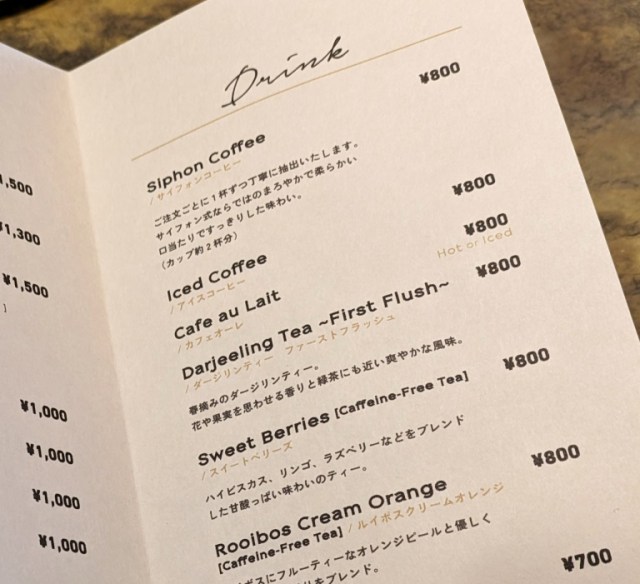
If it’s too early in the day for you to start drinking, there’s also a lineup of coffees and teas, and they even have curry rice for those who’re feeling hungry.

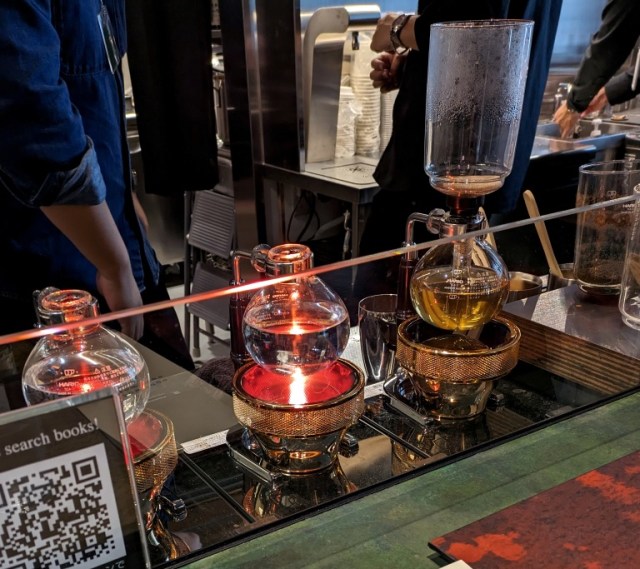
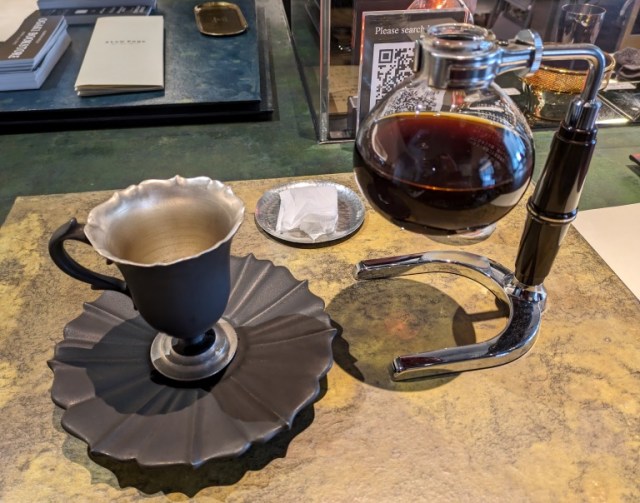
Being the classy types we are, we opted for the siphon coffee.

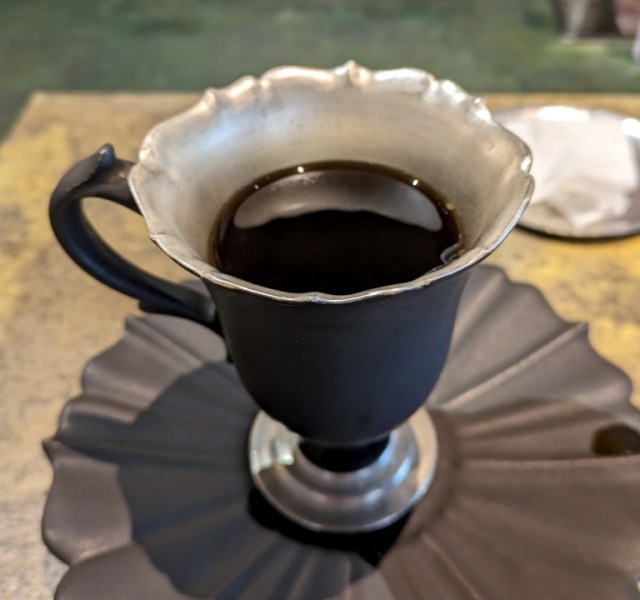
The 800-yen price wouldn’t be out of line for a swanky cafe in this part of Tokyo, and turned out to be an even better bargain than we’d initially expected when we noticed you get two cups of coffee for that price.

▼ Plus the cup and saucer felt like works of art.

With over two dozen restaurants and cafes either already operating or set to open soon within the building, Slow Page is far from the only place to sit and sip a drink at Azabudai Hills, but it’s definitely one of the best, and it’s semi-hidden status will probably make it a great choice for those in the know when all the other eateries are crowded.

Location information
Slow Page
Address: Tokyo-to, Minatko-ku, Azabudai Icchome 3-1, Azabudai Hills Tower Plaza 4th floor
東京都港区麻布台一丁目3番1号 麻布台ヒルズ タワープラザ4階
Open 11 a.m.-8 p.m.

Photos ©SoraNews24
● Want to hear about SoraNews24’s latest articles as soon as they’re published? Follow us on Facebook and Twitter!
Celebrate Japanese New Year traditions with Studio Ghibli decorations

https://ift.tt/8QpVPLt Oona McGee

Studio Ghibli New Year's decoration 2024 Totoro Spirited Away No Face anime film merchandise shop buy photos 6

Totoro, Jiji and No Face bring anime charm to some traditional customs.

It’s often been said that the most traditional time of year in Japan is New Year’s, when people take part in a wide variety of customs that include visiting shrines and temples, eating special foods, and decorating their homes with traditional displays to usher in good luck.

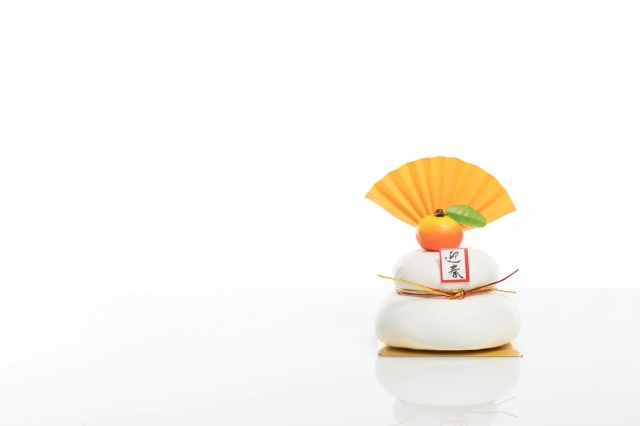
One of the most common displays you’ll find in a lot of homes is the kagami mochi (literally “mirror rice cake”), which consists of two mounds of mochi placed on top of each other, with a Japanese citrus fruit called “daidai” on top. The shape of the rice cakes is said to represent the mirror of the sun goddess Amaterasu, one of Japan’s most sacred items, so the display is usually placed on a traditional sheet of paper called shihobeni and displayed on a small pedestal known as a sanpo, in a similar manner to the way offerings are presented to the gods on an altar in a Shinto shrine.

▼ An example of kagami-mochi, albeit without the traditional pedestal.

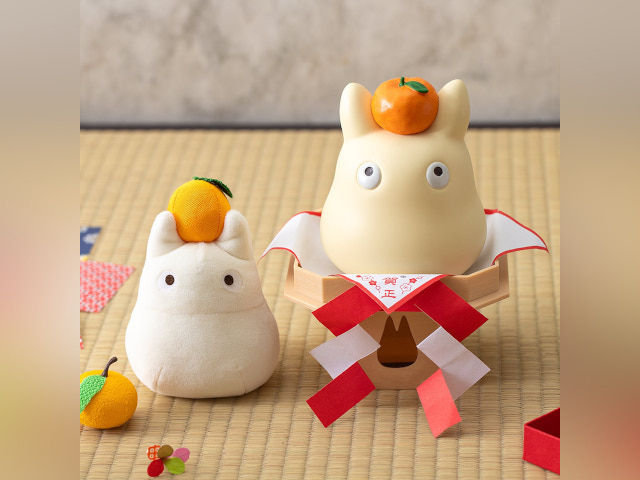
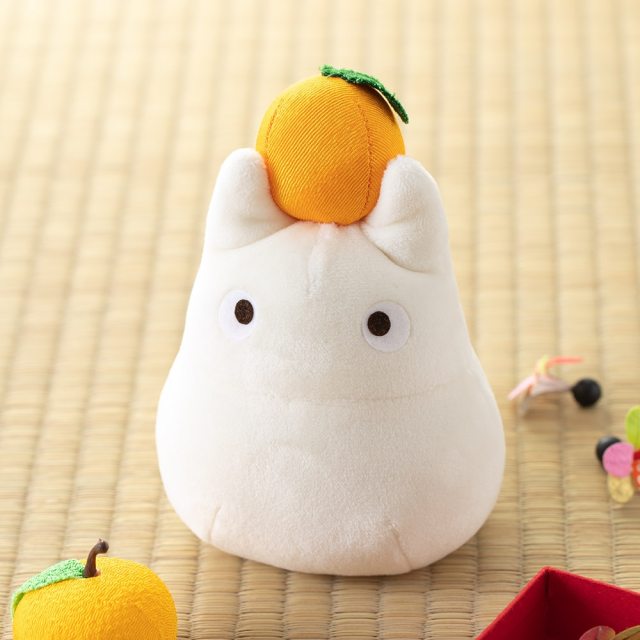
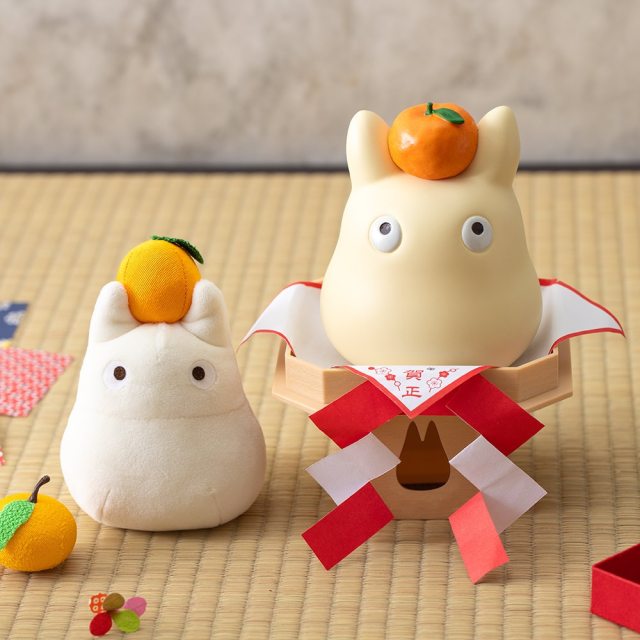
These days, kagami mochi are displayed in a number of ways, but the main elements of plump white rice cakes and citrus topping, complete with green leaf attached, generally remain the same. That is, unless you’re Studio Ghibli, because this year they’re giving us a kagami mochi like nothing we’ve ever seen before, replacing the mochi cakes with the body of a Totoro!

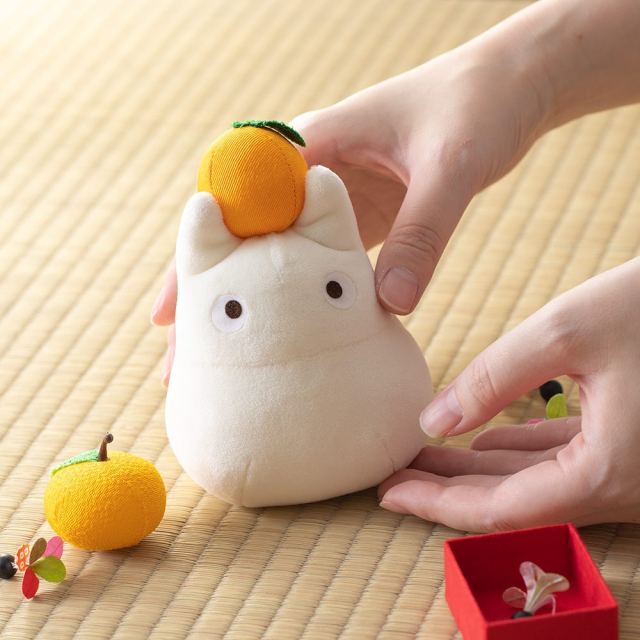
If you like your decorations to be soft and cuddly, you’ll love the New Year’s Small Totoro plushie, which is 12 centimetres (4.7 inches) wide and 10 centimetres tall, and retails for 2,200 yen (US$14.78).

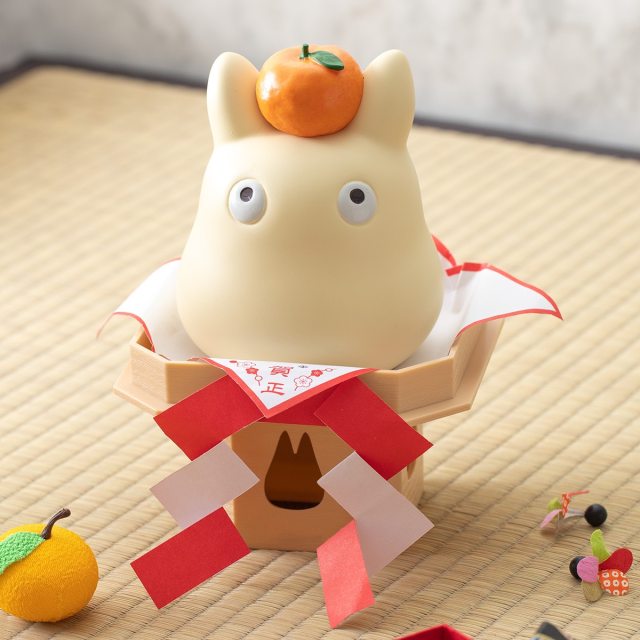
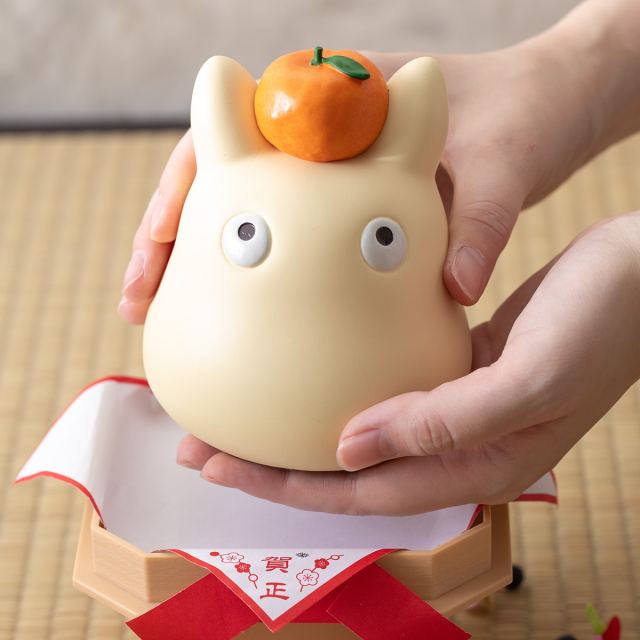
Those looking for a slightly more traditional decoration will want to opt for the New Year’s Small Totoro made from polyester resin, making it firmer to touch.

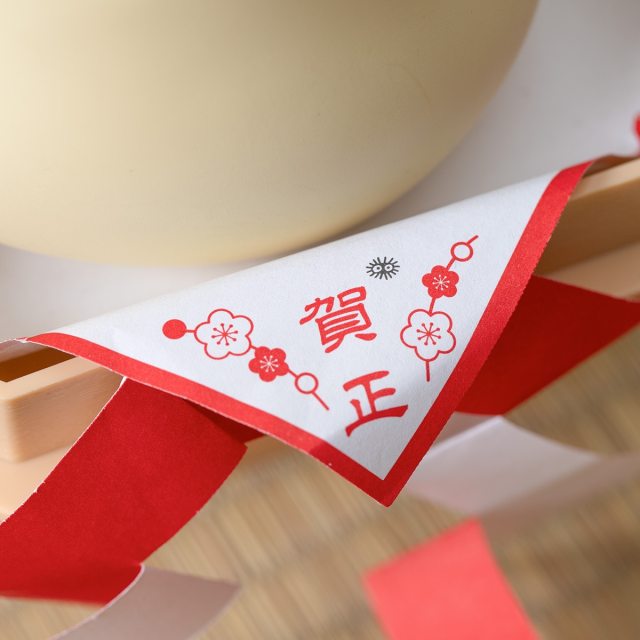
This Totoro comes with the traditional paper and stand, although these ones are embellished with some gorgeous Ghibli details.

The red-and-white paper reads “Gasho” (“Happy New Year”) on the front corner, with plum blossoms to represent the coming of spring and new beginnings, and a little Soot Sprite to give it a dash of Ghibli magic.

The pedestal, which traditionally features a hole in the shape of a Hoju (a sacred, wish-fulfilling jewel), bears the shape of Totoro instead.

This Totoro is 9.5 centimetres wide and 11 centimetres tall and weighs in at 761 grams (26.8 ounces).

▼ At 6,930 yen, it’s more expensive than the plush Totoro, but it does come with a stand and paper decoration, making for a more impressive display.

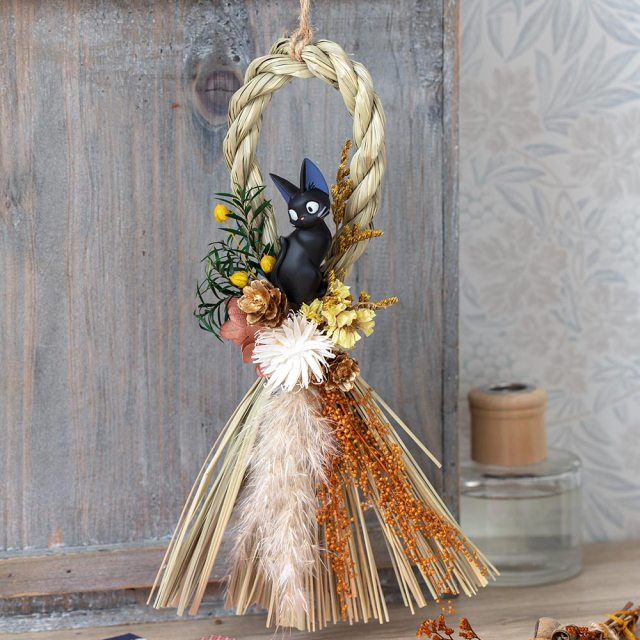
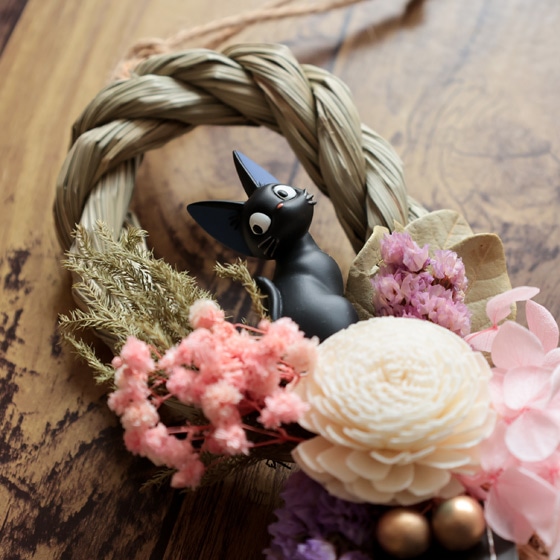
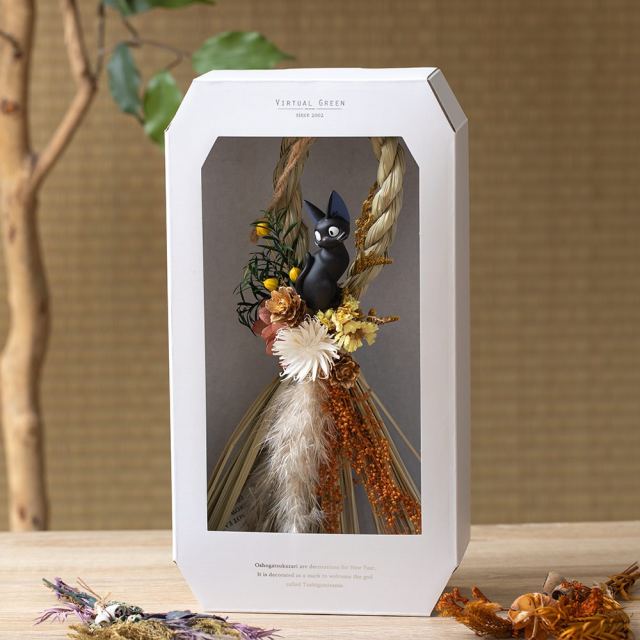
Fans of Kiki’s Delivery Service also have cause to celebrate, with the unveiling of a wreath featuring magical black cat Jiji.

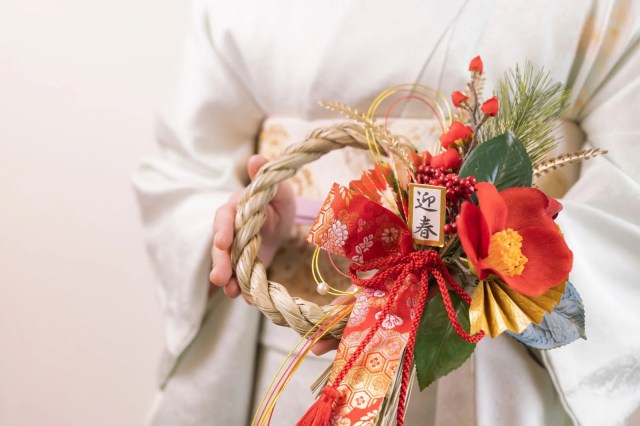
While it’s customary to display a wreath or pine display at your front door over New Year’s in Japan, this Ghibli item is described as a “Western-style decoration” due to its design, which doesn’t include sacred paper details and opts for a more subdued hue that’s markedly different to that of traditional Japanese New Year’s wreaths.

A traditional wreath, known as “shime kazari”, contains bursts of green and red hues, with leaves of urajiro (Japanese fern) and yuzuriha (false daphne) often included.

The Ghibli wreath has a similar straw rope but different details that hark back to the medicinal herbs and blooms seen in Kiki’s family home, where magical potions are concocted.

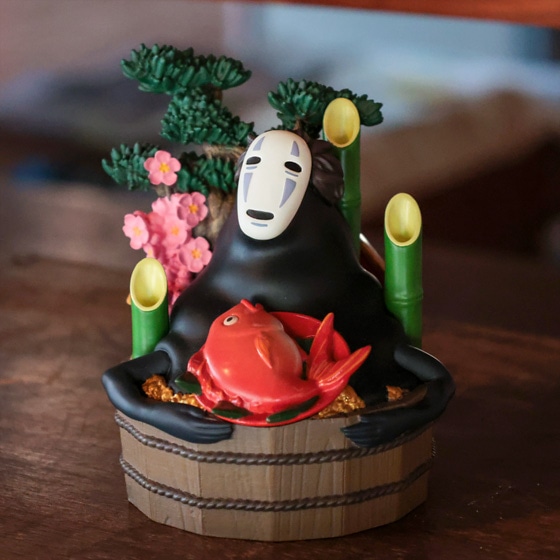
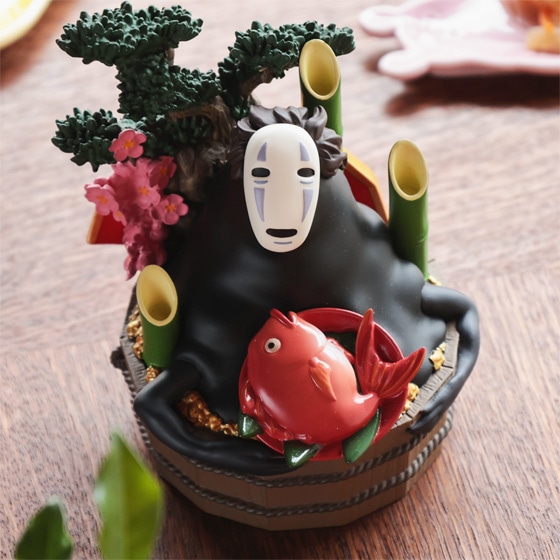
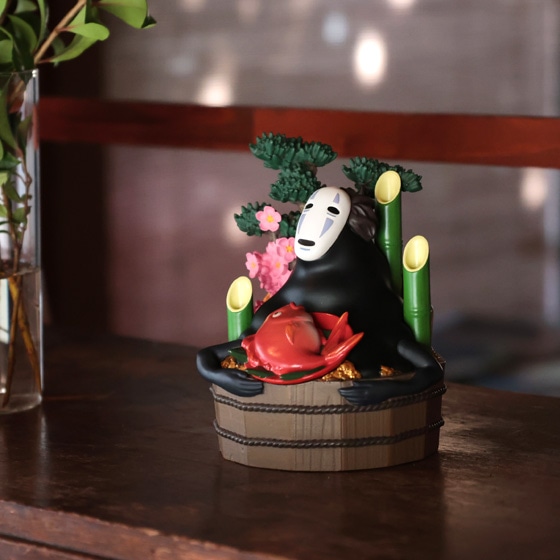
If you’re more of a Spirited Away fan, you’ll want to check out this New Year’s decoration featuring No Face, which retails for 8,800 yen.

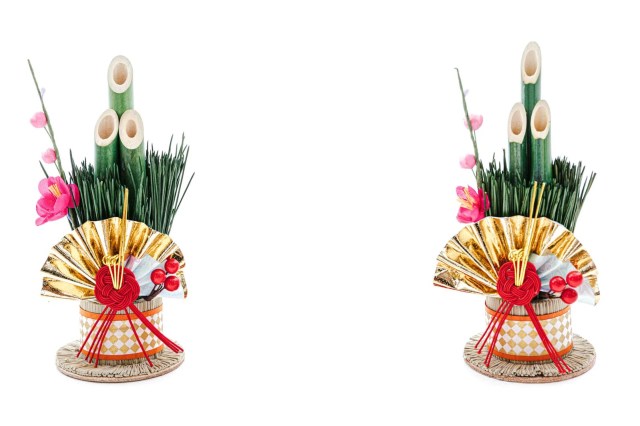
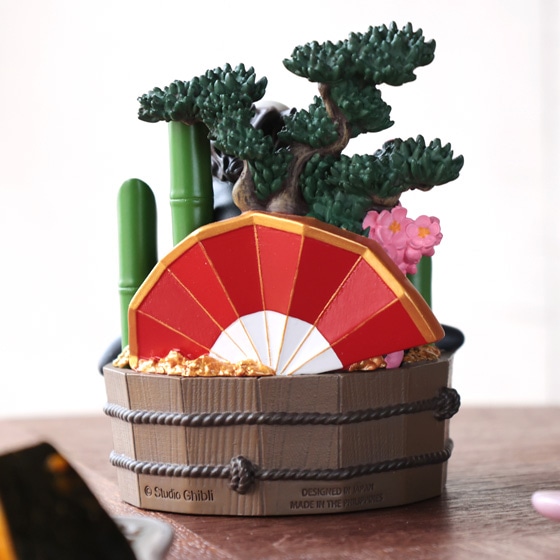
This beautiful item gives us a Ghibli twist on the traditional kadomatsu display, which contains pine and bamboo and usually looks similar to what we see in the image below.

▼ Miniature kadomatsu

While most kadomatsu are large and purchased as a pair, with one placed on either side of the door, that’s not an option for apartment dwellers who usually have to keep shared public spaces clear of clutter, so mini versions like this one bring the tradition indoors.

▼ Ah…ah…ah…

There are a lot of auspicious items to be found in No Face’s tub, starting with the pine, bamboo and plum display, which also includes a fan in a mound of gold.

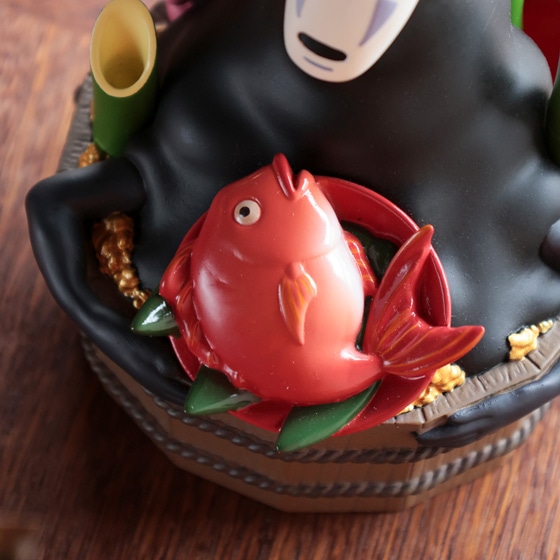
The auspicious gold and red hues continue on the front, where we see a tai in a plate perched on No Face’s belly. Tai, or red sea bream, is one of the lucky foods eaten at New Year.

Not only will this decoration help to bring luck and fortune into your home, it can also serve as a reminder to avoid greed and overindulging during the holiday period and the year ahead, lest we end up like No Face in the bathhouse.

While the No Face decoration, in true No Face fashion, has been lurking on the Donguri Kyowakoku site for a while now, the Totoro and Jiji decorations are new additions to the range for New Year.

On sale online from 25 November, the newly released Jiji and larger Totoro items proved to be sell-out hits, with only the small plush Totoro now remaining in stock. Donguri Kyowakoku is known to restock its popular goods whenever possible, though, so here’s hoping they’ll have more available before the year is out. Until then, we’ll be browsing these New Year’s Totoro tenugui decorations and the cute new Ghibli hanko stamps in the lead-up to the holidays.

Source: Donguri Kyowakoku
Featured image: Donguri Kyowakoku
Insert images: Pakutaso (1, 2, 3) Donguri Kyowakoku
 (1, 2, 3, 4)

● Want to hear about SoraNews24’s latest articles as soon as they’re published? Follow us on Facebook and Twitter!
There’s a real-world Pokémon Sandshrew Park in Japan, and it’s adorable!【Photos】

https://ift.tt/PbEwk47 Casey Baseel

Sand-loving Pokémon look right at home in this famous-for-sand prefecture.

Pokémon is popular all over Japan, but there are a few parts of the country that are lucky enough to have their own Pocket Monster goodwill ambassador. In the case of Tottori Prefecture, that ambassador is Sandshrew.

The partnership came about because Tottori’s most famous tourism attraction is its coastal sand dune, the largest in Japan. Add in the fact that Sandshrew’s name in Japanese-language versions of the Pokémon games and anime is simply “Sand,” and it was really a no-brainer. Tottori has had a series of Sandshrew Pokéfuta manhole covers for a while now, but the team-up evolved into a new form earlier this year with the opening of a real-world Sandshrew Park in Tottori City!
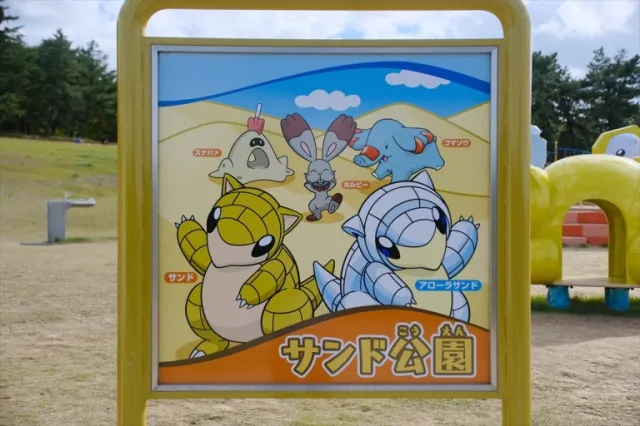
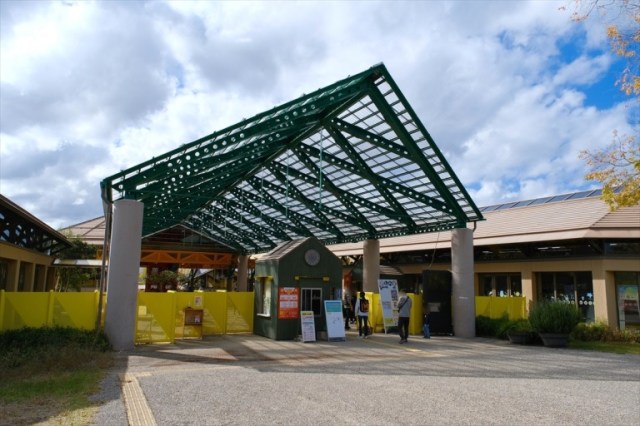
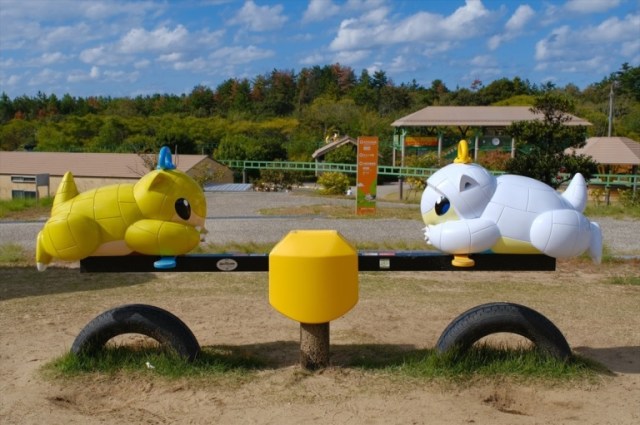
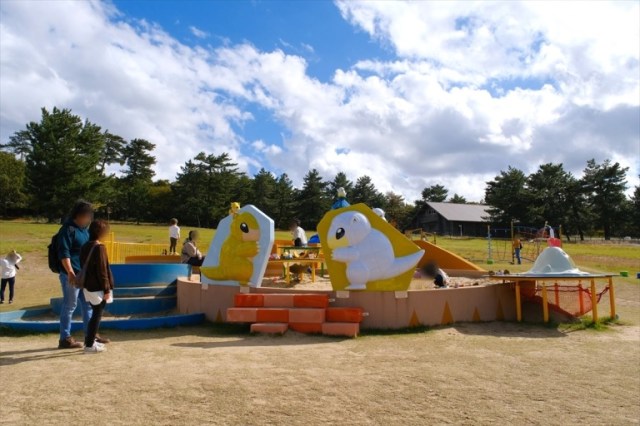
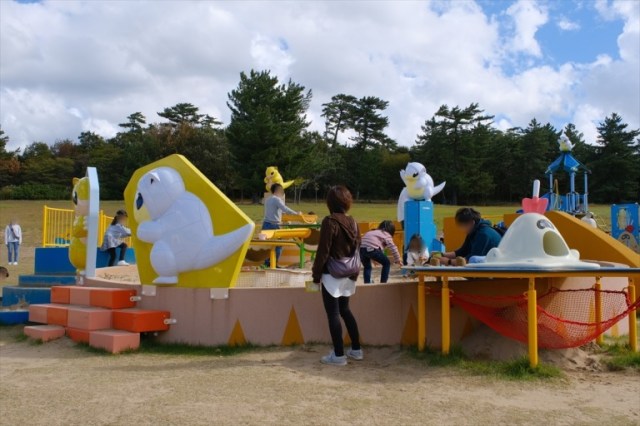
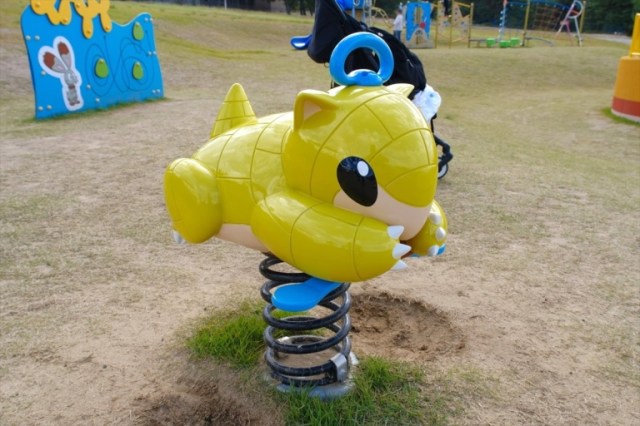
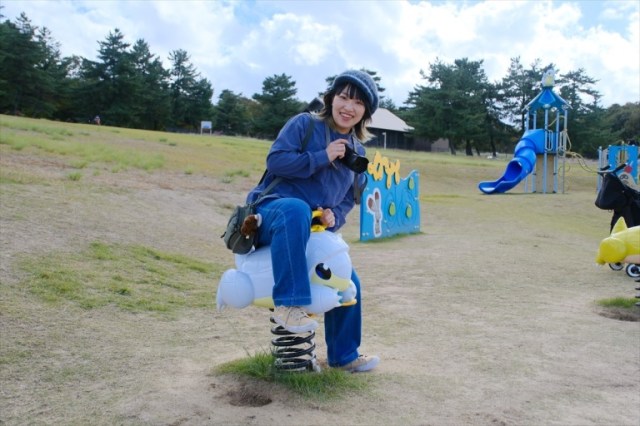
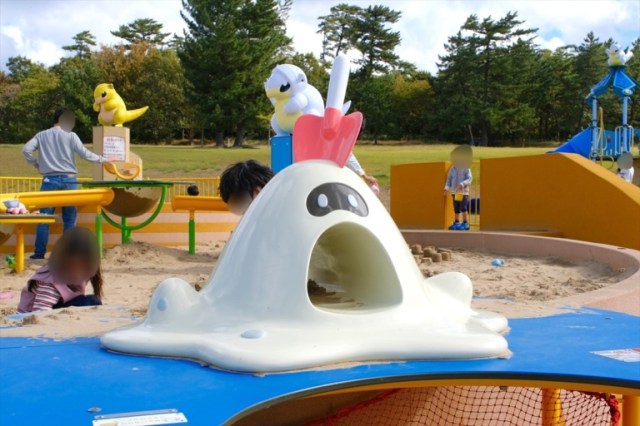
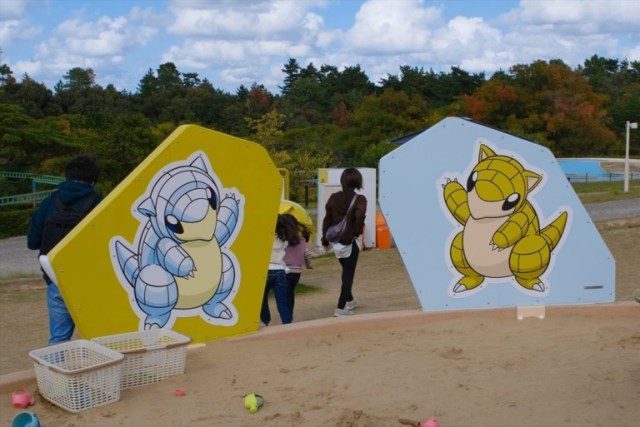
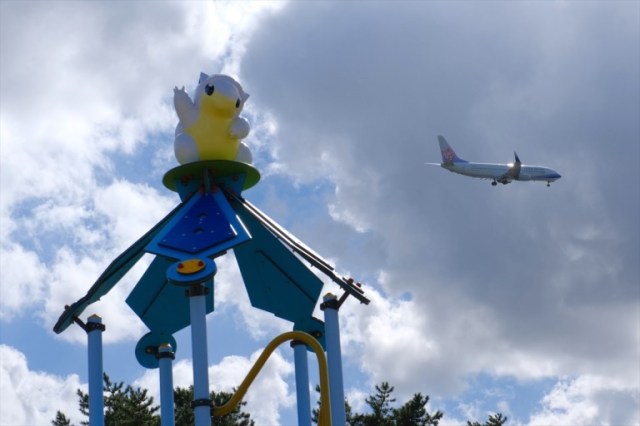
Sandshrew Park is located within Chubu Tottori Sakyu Kodomonokuni, a 19-hectare (46.95-acre) prefecture-run park and play area. Sandshrew Park isn’t hard to find, since it’s just a two-minute walk once you’re inside the main gate, and you’ll know you’re in the right place when you see the Sandshrew and Alolan Sandshrew play equipment.

The custom-made play equipment was built thanks to a donation by the Pokémon Company, and the official backing means that the characters are adorable and accurately represented.

In keeping with the sandy theme, the central area of Sandshrew Park is itself one big sandbox.

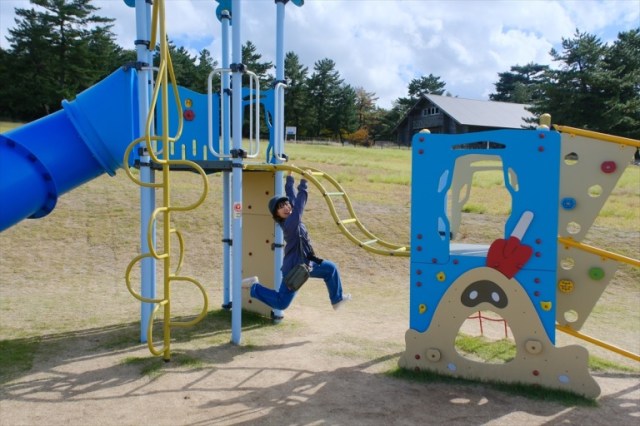
There’s also all sorts of things to ride on, climb up, and slide down.

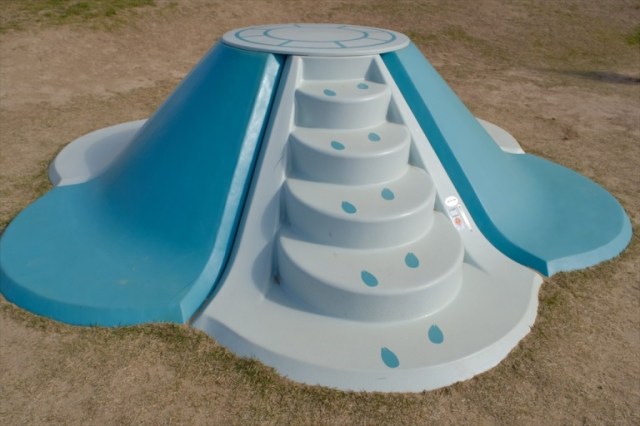
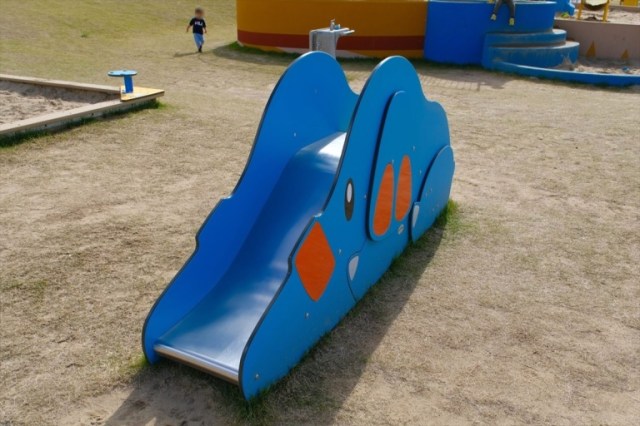
While the Sandshrew-shaped stuff is the first thing to catch your eye, there are also other little touches that you’ll only notice one you go in for a closer look, like this mini step/slide equipment…

…with Sandshrew tracks on it.

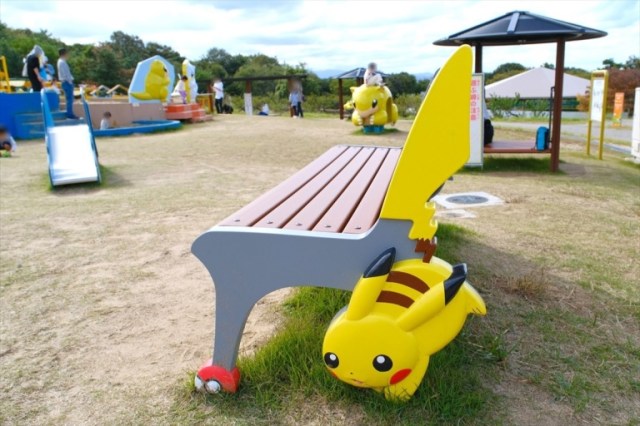
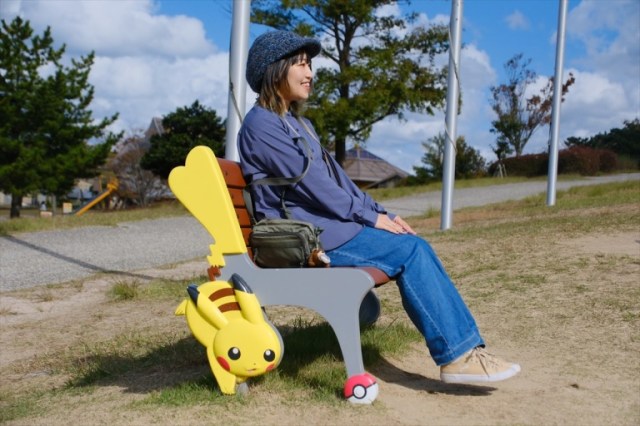
There are a few other Pokémon species at the park too, like Pikachus (both male and female) on this bench…

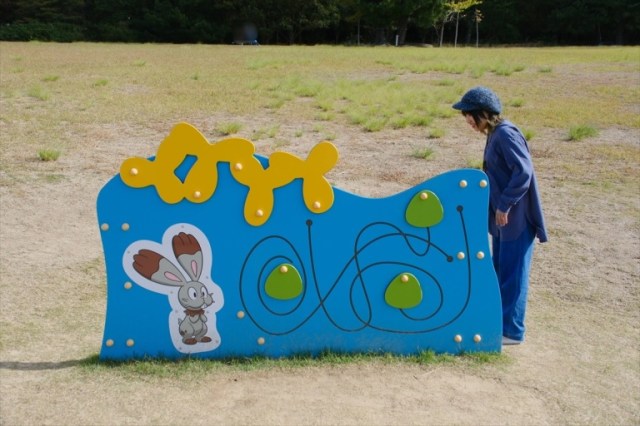
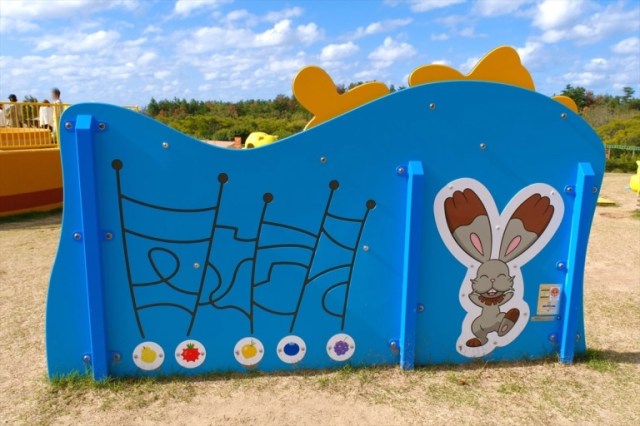
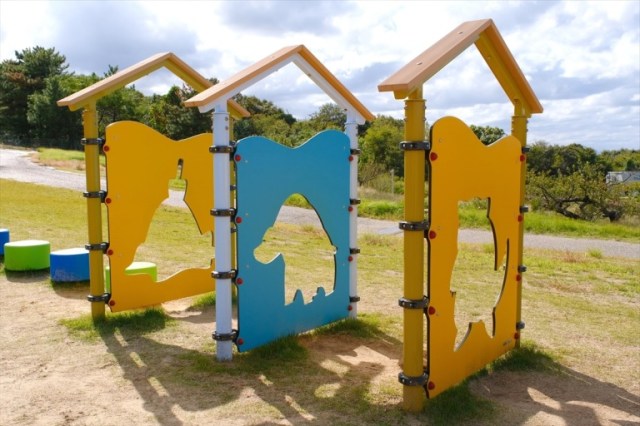
Bunnelby on this art/puzzle wall…

…and a Phanpy slide.

…and Sandygast looking right at home near the sandbox.

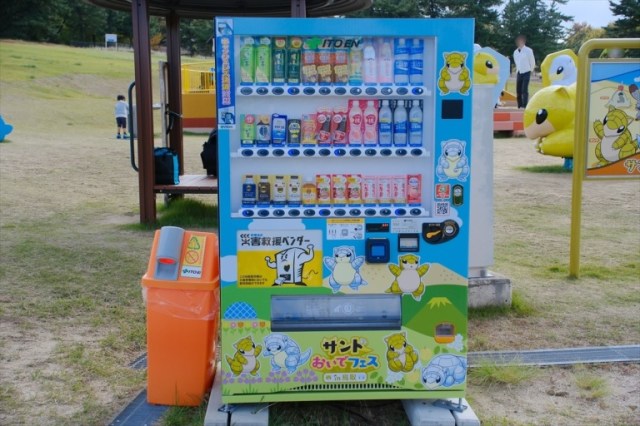
And if you find yourself getting thirsty, there’s even a Sandshrew-wrapped vending machine.

Sandshrew Park isn’t big enough to spend a whole day at, but Chubu Tottori Sakyu Kodomonokuni itself is, with a wide variety of other play areas and attractions, including wide grassy fields, a mini kart track, and fire truck display.

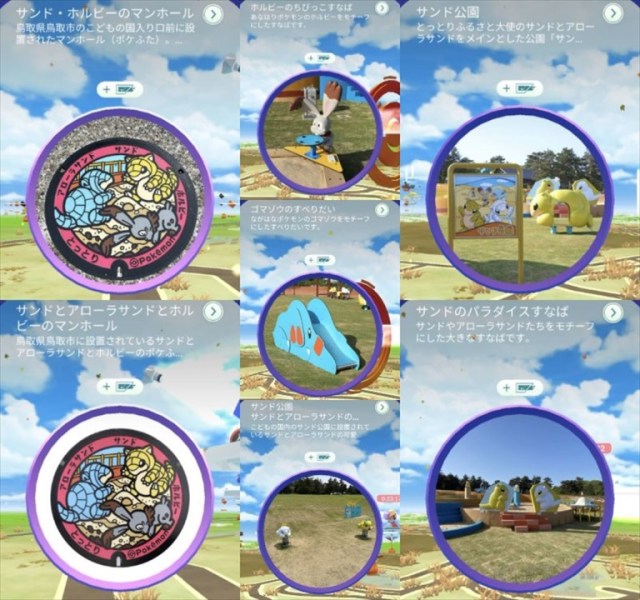
And if you’re a Pokémon GO player (maybe fresh off the game’s Asakusa Routes event in Tokyo), the park has a number of PokéStops too.

As a prefecture-run park, Chubu Tottori Sakyu Kodomonokuni’s ticket prices are low, topping out at 500 yen (US$3.35) for adults and 200 yen for middle school-age kids on weekdays. Admission for elementary school-age kids is free every day, and students of any grade, including university, are free on weekends and holidays, so stopping by to play in the sand/with the Sandshrews is always an affordable option.

Location information
Sandshrew Park / サンド公園
Located inside Chubu Tottori Sakyu Kodomonokuni / チュウブ鳥取砂丘こどもの国
Address: Tottori-ken, Tottori-shi, Hamazaka 1157-1
鳥取県鳥取市浜坂1157-1
Open 9 a.m-5 p.m.
Closed second Wednesday of every month (or second Thursday of every month if Wednesday is a holiday)
Open every day in August
Website

Photos ©SoraNews24
● Want to hear about SoraNews24’s latest articles as soon as they’re published? Follow us on Facebook and Twitter!