Páginas

jueves, 2 de febrero de 2023

Is it the end of Japan’s conveyor belt sushi as we know it?

https://ift.tt/NCXb6IV Master Blaster

And I don’t feel all that fine.

Much like how a bluebird heralds the beginning of spring, it seems the late winter months in Japan are often greeted by someone doing something horribly disgusting in a revolving sushi restaurant. Whether it’s putting cameras on the belt to peek into everyone’s booth or intentionally dropping fish in the garbage, it seems there is something about the end of the frigid weather that really brings out the jerk in some people.

While this behavior seemed to die down since the pandemic began, it now appears to be back with a vengeance. At the end of January a video went viral of a teen licking various items in his booth like the bottle of soy sauce and a self-service drinking cup, and then returning them for the next customer to unknowingly use at a branch of conveyor belt sushi chain Sushiro in Gifu Prefecture.

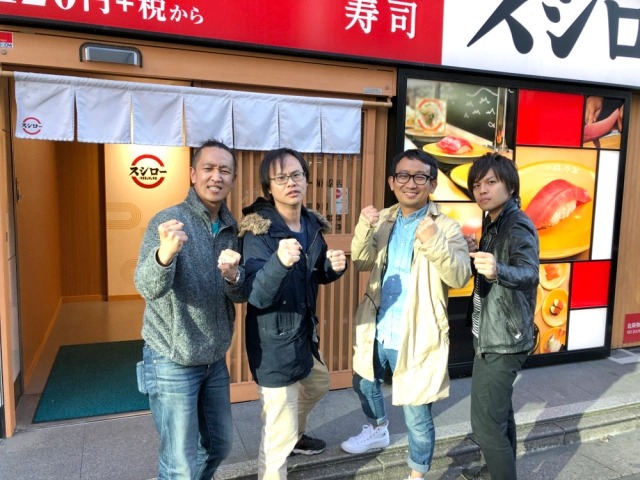
▼ Sushiro is one of the leading restaurants of its kind and often enjoyed by our staff
The incident has since been widely dubbed “daeki tero” (saliva terrorism) and the terrorist responsible has since turned himself in to the authorities and, along with his parents, apologized to the company. However, considering the company that owns the restaurant chain saw a five percent dip in stock price right after the video came out, they might not be satisfied with a simple apology.

▼ “Sushiro: If the stock price fell due to soy-sauce-licking shock, that would amount to a loss of 10 billion yen (US$76M) in total market value at this point in time. If that store in Gifu loses sales due to harmful rumors and is forced to close a causal relationship can be confirmed and a claim for damages, including lost profits, could easily amount to hundreds of millions of yen.”

Not only that but Sushiro along with all the other revolving sushi chains have a major trust issue on their hands. This daeki tero boy is much like a cockroach in that… Actually, he’s like a cockroach in a lot of ways but mainly in that when you see one, you can envision there’re a hundred more out there, and in any posting of the video on social media, you’re sure to find several comments to the effect of, “I’m never eating conveyor belt sushi again.” The idea of having your food float through a room of strangers before eating it became a lot more problematic when COVID-19 hit, and things like daeki tero certainly aren’t helping.

Kura Sushi, another conveyor belt sushi chain, announced that they are installing microchips on the cases that hold the plates of sushi. In addition to monitoring how long they’ve been sitting on the belt, they’ll be able to detect if the case has been tampered with so customers can avoid sushi that may have been compromised.

Meanwhile, Hama Sushi, yet another conveyor belt sushi chain, abolished the public conveyor way back in March 2020 due to the pandemic. Instead, they rely solely on the express belts used by most major chains in which the customer orders from a touchscreen at their seat and their desired dish zooms right to their table. Immediately following the daeki tero incident rumors swirled that Sushiro had gone the same route but the company has officially denied those rumors, saying they are instead making changes to how utensils and seasonings are stored.

▼ Orders can often be made from a tablet installed at each table or the customer’s smartphone.
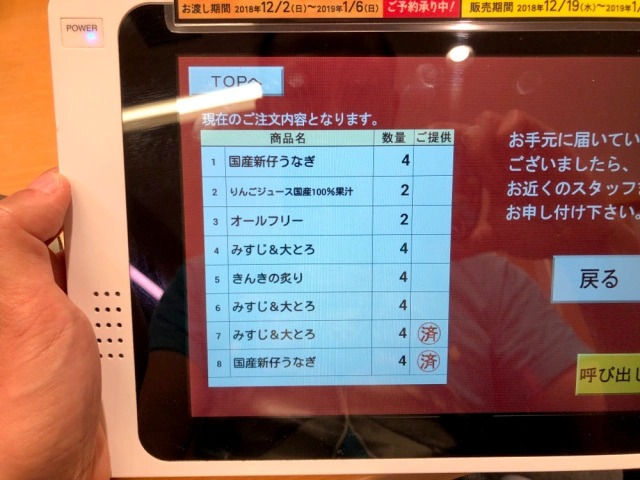
In addition to keeping it away from idiots, ordering sushi directly way has the added benefits of it being more freshly made and not having to wait for the topping you want to eventually make its way across the entire restaurant at a snail’s pace. It also helps the restaurant to keep a tighter rein on its stock during busy and slow times.

Because of this, express lanes have been in partial use for a long time now, and most people would probably understand if revolving sushi restaurants evolved their conveyor belt system to only use them. Kura Sushi at least seems to be making a concerted effort to maintain the classic formula, but with the increased public awareness of incidents like daeki tero, it’s difficult to say how long even they can hold on.

However, one of the many comments about this issue posed the most important existential question:

“If a revolving sushi restaurant’s sushi doesn’t revolve, isn’t it just a regular sushi restaurant?”
“I don’t see how any of this is protecting the soy sauce and cups though.”
“They’ll have to switch to individually packaged sauce and paper cups. It’s not great for the environment though.”
“Just keeping the food stocked in the back is fine. We don’t need it moving around.”
“I’m fine with takeout, thanks.”
“I think even if there’re only express belts there’ll be guys trying to spit on it as it moves past.”
“How about banning anyone under 18 from entering?”
“Whatever system renovations Sushiro needs to do should be paid for by that daeki tero fool.”

There really is something to just having food casually float by and plucking out whatever looks appealing rather than having to think about what you want to eat. Sometimes, something unexpected passes by and ends up being an especially memorable treat to make the overall experience that much better.

▼ Just look at that smile…
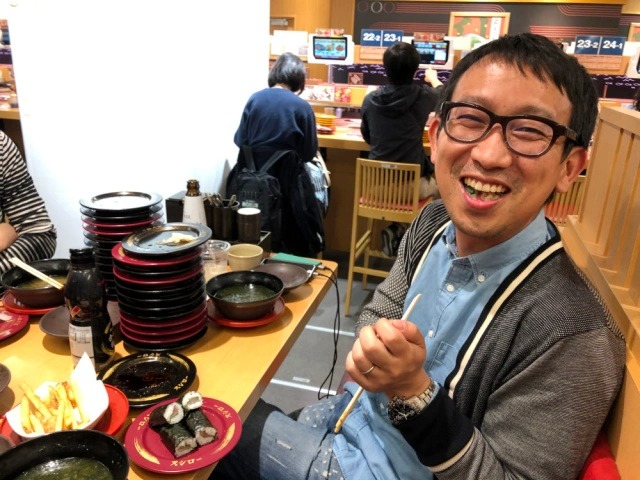
It’ll be sad if that experience disappears, but daeki tero and deadly viruses might end up being why we can’t have nice things.

Source: J-Cast News, Hachima Kiko
Photos ©SoraNews24
● Want to hear about SoraNews24’s latest articles as soon as they’re published? Follow us on Facebook and Twitter!


miércoles, 1 de febrero de 2023

Japan’s number-one cosplayer Enako cosplays as Spy x Family’s Yor, recommends brutal revenge manga

https://ift.tt/CUFRwj3 Casey Baseel

Enako slips on the dress of the Thorn Princess.

On Wednesday, Japanese broadcaster Fuji TV aired an episode of its Honma Dekka!? TV variety show with manga as its focus and a panel of celebrity guests coming on to talk about series they’ve been following and recommend. Most of the panel, like comedian Akira Kawashima and idol group Snow Man member Daisuke Sakuma, were dressed in fairly casual attire, but one guest put a lot more thought into her outfit.

That guest? None other than Enako, Japan’s number-one cosplayer, who came dressed as someone arguably as popular as she herself is: Yor Forger.

As the female lead of Spy x Family, fans have been seeing a lot of the assassin-turned-mother over the past few months as the anime adaptation of the series was airing the second half of its first season. We’re now in a lull awaiting the restart of the anime, its theatrical animated installment, and the live-action Spy x Family stage musical, so fans of the series and Enako supporters alike were happy to see her cosplaying as the character, wearing Yor’s Thorn Princess assassin garb, garnering online reactions to the shared snapshot such as:

“Whoa, it’s a real-life Yor…”
“Looks great–she even got the eye color with colored contacts.”
“This is the quality cosplay we’ve come to expect from Enako!”
“She’s on a whole other level.”
“Champion of champions of champions of champions.”

During the segment, Enako’s manga recommendation was Confessions of a Brutal Murdering Police Officer (Buruutaru Satsujin Keisatsukan no Kokuhaku), a tale of violent vengeance with a free online sample available here.

As for what else Enako has been up too/wearing, she’s serving as a brand ambassador for online costume shop Clearstone, which is celebrating its 20th anniversary…

…and she also recently announced the on-sale date of March 22 for her 2023 calendar.

That might seem awfully late in the year to be selling calendars, but many business and academic years in Japan start in the spring, and Enako’s calendar runs from April to March.

Source: Twitter/@enako_cos via Hachima Kiko, Fuji TV
Top image ©SoraNews24
● Want to hear about SoraNews24’s latest articles as soon as they’re published? Follow us on Facebook and Twitter!

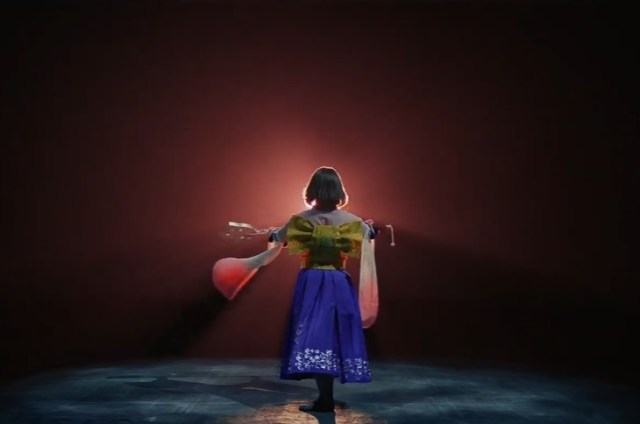
Beautiful live-action Final Fantasy X kabuki preview shows Yuna performing Sending【Video】

https://ift.tt/TW7M6ni Casey Baseel

Kabuki adaptation of the hit video game opens in Tokyo this spring.

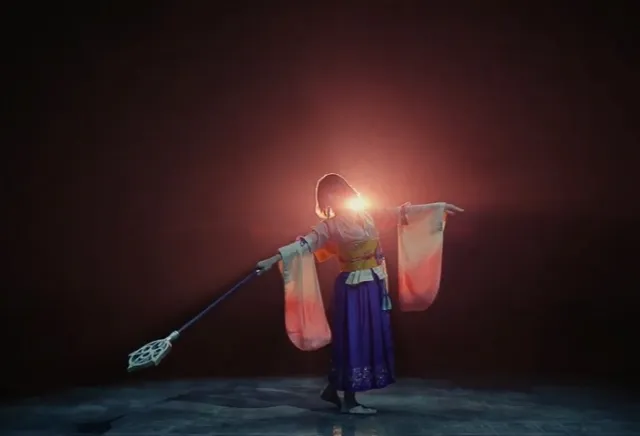
There’s been a renewed interest in live-action adaptations of video games, with a slew of TV/streaming series and movies in that category set to premiere soon. But when Final Fantasy X makes the leap to live action this spring, it won’t be in theaters or on TV screens, but on stage in Tokyo with the Final Fantasy X kabuki play.

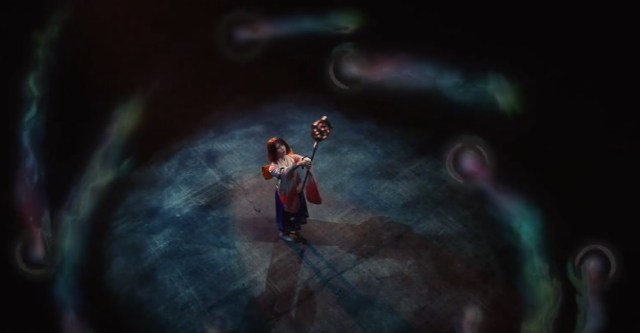
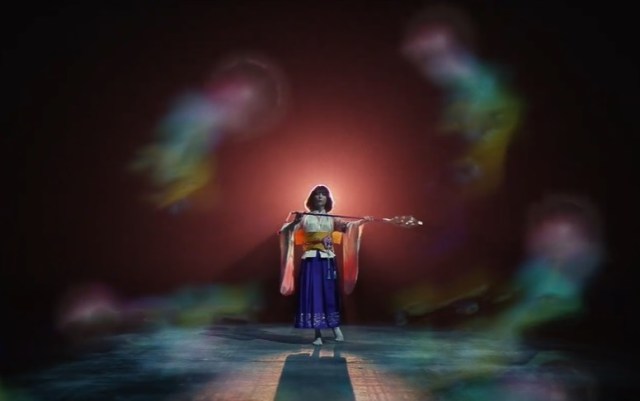
First announced in July, the Toyosu neighborhood’s IHI Stage Around Theater will serve as the play’s venue, and the production has just released its first in-costume look at kabuki actor Nakamura Yonekichi, who will play Yuna. Instead of just providing a still image of Nakamura dressed as the game’s female lead, though, we’ve been given a video recreation of one of Final Fantasy X’s most famous scenes, in which Yuna performs a ritual known as the Sending.

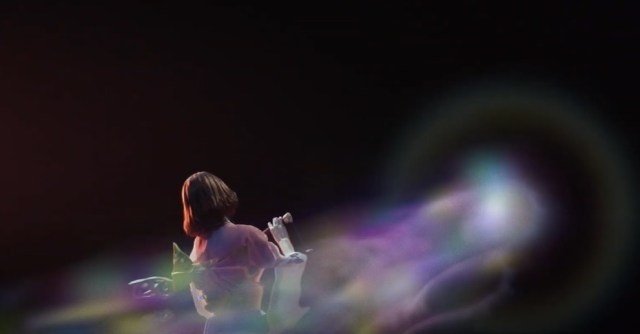
Yuna’s role within the game is as the party’s summoner, a recurring Final Fantasy class that summons mythical beasts to fight on behalf of the heroes. However, Yuna is also tasked with helping reluctant souls of the deceased cross over into the afterlife, via a dance-like ritual in which the spirits rise and circle around her before being freed of their lingering regret, animosity, and other negative emotions.

In addition to the kabuki play’s faithful costuming and elegant choreography, the preview video shows off some of the impressive digital effects that will be incorporated into the play.

The Final Fantasy X kabuki play opens on March 4 and runs until April 12, with tickets available online through the official website here.

Source: YouTube/【公式】木下グループ presents『新作歌舞伎 ファイナルファンタジーX』 via Otakomu
Images: YouTube/【公式】木下グループ presents『新作歌舞伎 ファイナルファンタジーX』
● Want to hear about SoraNews24’s latest articles as soon as they’re published? Follow us on Facebook and Twitter!

Synthetic fossil fuels made from light, water, and CO2 in the air tested in Osaka

https://ift.tt/3yLzRtG Master Blaster


A fuel that consumes the CO2 it produces to make more of itself.

As technology advances, so do the opportunities to make synthetic versions of unsustainable materials. Synthetic leather has been around for a while and synthetic sweeteners frequently hit the market. Even ways to make synthetic fuel have been around for a century, but not quite like the way being tested out in Osaka recently.

From 11 to 17 January, the Demonstration Business Promotion Team Osaka along with Sustainable Energy Inc. ran trials on a synthetic fuel produced from water and carbon dioxide present in the air. If successful, this could become the first carbon-based and truly carbon-neutral fuel of its kind.

The idea may sound pretty wild at first, but all the basic elements needed for fuels like gasoline are right there in the water and air: hydrogen, carbon, and oxygen. The hard part is just getting all those atoms into the right places cheaply and quickly.

Sustainable Energy does this by first using a photocatalyst to create what they call “radical water” from light and CO2 in the air. Radical water is water that contains radicals, which are molecules with unbound electrons that are more conducive to chemical reactions.

Next a “seed fuel” is added to the radical water which reacts with the CO2 to continuously produce more of the same type of fuel. For example, if kerosene is added then more synthetic kerosene will be made. The synthetic fuel itself can also be used as a seed fuel in future production, eliminating the need for fossil fuels once started.

▼ A diagram illustrating the basic process

Since this synthetic fuel behaves like the natural fuel it is based on, it too will release carbon dioxide into the air. However, since it is also made from carbon dioxide in the air, it could be possible to achieve a balance. Since the main energy source to drive the chemical reaction appears to be sunlight, this balance doesn’t seem out of the question.

The tests carried out at Tsurumi Ryokuchi Park in Osaka City used synthetic fuel made by this process to power a generator which was used to charge an electric vehicle. The purpose was to measure both the emission of other air pollutants such as sulfur oxides and the stability of power generation from this fuel. Using this data production of the fuel as well as equipment to make use of it can be further developed.

▼ A news report on the tests

Such a fuel seems too good to be true, and as such there were many mixed feelings about it online. Some where cautiously optimistic while others doubted this synthetic fuel’s ability to succeed or outpace other alternatives such as fuel cells.

“I don’t know…”
“Are they trying to be alchemists in Osaka?”
“I think just running an engine on water alone is more practical.”
“We’re better off using crops like corn to get fuel.”
“I doubt they can make it so the energy to produce is less than the energy it creates.”
“There’s not enough CO2 in the air to make a suitable amount of fuel.”
“This is basically a different kind of solar power, isn’t it?”

It would seem that a lot of the criticism directed at this method is under the assumption that the process is decided and ready for use rather than still in development. Clearly there are major hurdles such as how to efficiently collect enough pure CO2 from the air to produce the fuel or determining if the whole system is any better then current solar panels in the end.

If it does work then we may all be a lot better off from it, but even if it doesn’t the lessons learnt from tests like this might lead to something else further down the road.

Source: Osaka City, Sustainable Energy, Hachima Kiko
Top image: Pakutaso
Insert image: Osaka City
● Want to hear about SoraNews24’s latest articles as soon as they’re published? Follow us on Facebook and Twitter!

Manga artist wants Japanese teachers to feel, for two seconds, how dumb their girls’ dress code is

https://ift.tt/2C4wtya Casey Baseel

Masayuki Ishikawa is fed up with a rule that keeps schoolgirls cold all winter long.

Manga creator Masayuki Ishikawa is best known for his series Moyashimon. Also known as Moyasimon: Tales of Agriculture, the story follows a freshman at an agricultural university who has the ability to communicate with microorganisms, all of which are rendered as cute Pokémon-like characters.

With its scientific references and in-jokes, Moyashimon is considered a treat for the intellectual anime/manga fan. Right now, though, it’s Ishikawa’s comments on school uniform dress codes, and their unfair treatment of female students, that the Japanese Internet is seeing shining intelligence in.

Ishikawa, who has a high school-age daughter of his own, recently tweeted his thoughts about the school rules she has to deal with.

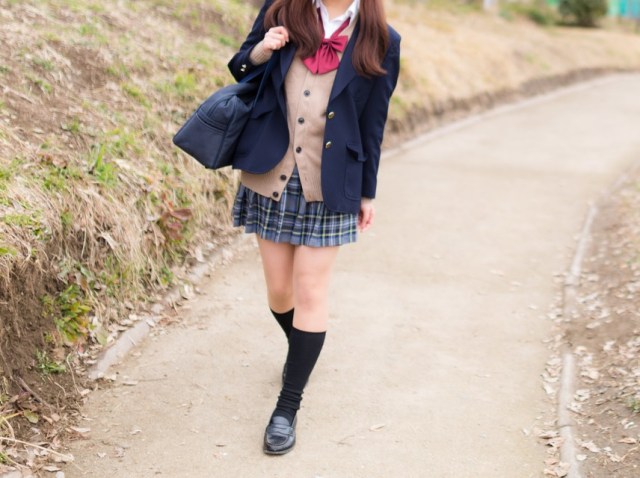
“I used too think high school girls were really tough, what with how they walk around with bare legs [in the winter], but the rules at the school my daughter attends include that the only leg coverings they’re allowed to wear [other than their skirt] are the socks specified by the school. If they wear anything more than that, they get yelled at by the teachers, who are all bundled up in tights, [Uniqlo] Heat-Tech, and other lined inner wear. If those adults had to walk around outside for even two seconds wearing just a pleated skirt and socks, they’d be completely wrecked! Why don’t men understand?”

Setting aside the issue of whether or not such school policies are put in place only by male administrators, Ishikawa raises some valid points. While many schools in Japan have dress codes that severely limit students’ options for guarding themselves against the cold, the teachers and administrators enforcing those policies are generally free to use whatever innerwear they wish in order to feel more comfortable. Some schools rationalize having no-tights rules for students by saying that being too warm and cozy will make it harder for students to concentrate, but if that’s true, shouldn’t they also be worried about that phenomenon dulling teachers’ mental sharpness while they’re at work too?

Ishikawa isn’t alone in his frustration, as evidenced by the 30,000-plus likes his tweet has racked up along with comments such as:

“They should start making teachers wear uniforms too!”
“Yeah! Uniforms with sort pants!”
“One of my classmates got hives on her legs because of how cold they were.”
“When I was in high school, I made sure to wear beige skin-colored tights, and my homeroom teacher, who was a guy, never noticed.”
“We weren’t allowed to wear a second layer of socks [underneath the school-mandated ones] at my school either.”
“This morning, I saw a high school girl walking in the cold with her legs bare…I felt so sorry for her.”

Thankfully, some commenters showed that not every school is as strict as Ishikawa’s daughter’s.

“So there are still old-fashioned schools out there. 24 years ago the female students at my school kept giving presentations [about changing the dress code], and they convinced the school to let us wear tights and longer socks.”
“The junior high school in my neighborhood now has a rule requiring female students to wear tights in winter [in order to keep warm]…on the recommendation of the school nurse. I think it’s a rare example, though.”
“Aside from gender issues, I think this is another reason more schools are allowing female students to choose to wear slacks as part of their uniform.”
“Recently, I think some schools are changing their attitude and trying to base their rules on more logical ideas.”

Hopefully Ishikawa daughter’s school will reevaluate its no-tights rule in the near future. With most school rule changes being implemented at the start of the Japanese academic year, which takes place in April, though, it looks like this winter is still going to be a cold one for her.

Source: Twitter/@isk_ms via Jin
Top image: Pakutaso
● Want to hear about SoraNews24’s latest articles as soon as they’re published? Follow us on Facebook and Twitter!

Panasonic says to stop wearing socks while you sleep

https://ift.tt/f2avADE Master Blaster

I’m going to call Sony for a second opinion.

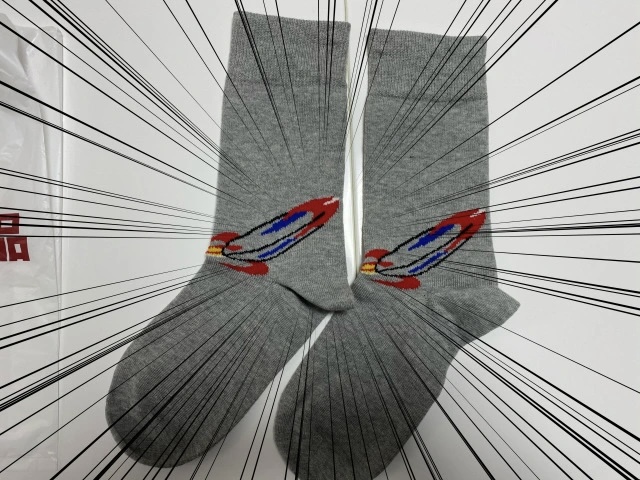
I never thought I would admit to this, but I love sleeping in socks with holes in them. Wearing normal socks always felt too constricting, but especially during the winter months, not wearing socks was just too cold. A sock with a hole — and the bigger the better — always felt just right.

I never really understood why until Panasonic published the “New Common Sense of Winter Sleep” report which sheds light on a few misconceptions when it comes to getting a good night’s rest. Since Panasonic has a range of air conditioning and heating appliances, such knowledge is important to them and their resident specialist Mayumi Kikuchi has found that socks tend to do more harm than good when it comes to preparing the body for sleep.

Naturally, in the winter we want to bundle up in bed and that is wise to do. However, for the human body to be in the right condition for sleep, its core temperature needs to be lowered. They way this temperature is normally lost is through the extremities of fingers and toes. So, by blocking that outlet for our core temperature our bodies don’t end up in an optimal state and may result in trouble getting to sleep or staying asleep.

▼ Unless you’re one of those people who can just sleep anywhere. Then just keep on being you.

For those who enjoy the warmth that socks provide, Kikuchi does suggest leg warmers as an alternative. They keep the general foot area warm while keeping the toes exposed to aid in optimal body temperature regulation.

▼ They also have that retro charm.

For this same reason, Panasonic’s report says, everyone should avoid sleeping with other warming equipment such as electric blankets or hot water bottles. Instead it is best to use these things to warm up the bed prior to going to sleep so you and the bed can gradually cool off together as you drift off to sleep.

Another potential problem is taking a hot bath too soon before going to sleep. That also jacks up the body’s temperature and can keep you awake if done just before bed time. On the other hand, if a hot bath is taken about an hour or two before sleep that spike in body temperature will also come down quickly which may help make you drowsy.

Most people assume summer is when its too hot to sleep, and yet the findings by Panasonic suggest this is also the reason that 61 percent of people surveyed by them also can’t sleep during the winter months of December to February. It’s just that we don’t really notice it.

Many readers online seemed to agree that something was up with wearing socks to bed, even without quite realizing why.

“Sock always feel stuffy when I’m sleeping even though I’m always cold.”
“Sorry, as long as it’s cold, I need my socks.”
“I always like to warm the bed with my own body rather than using heaters.”
“Sometimes I wake up at 4 a.m. and it feels good to get out of bed and cool down a bit.”
“I always feel really sleepy after I cool down from taking a bath.”
“My grandma always said that only dead people sleep with socks on.”
“I wear socks and always go to sleep quickly.”

Of course, everyone is different and some of us may be especially good at getting a good night’s sleep regardless of what is worn. But for those tossing and turning without knowing why, taking a look at your footwear may be a good start. Based on my own experience, I’d recommend just taking a normal pair of socks and cutting a hole in the end for your toes to stick out. That should make a world of difference.

Either way, I’m just happy that the next time my wife complains about my own tattered sleeping socks, I have some scientific data by a major corporation backing me up. Thanks, Panasonic!

Source: Panasonic, FNN Prime Online, Hachima Kiko
Top image: © SoraNews24
Insert image: Pakutaso

● Want to hear about SoraNews24’s latest articles as soon as they’re published? Follow us on Facebook and Twitter!

Japanese TV network makes multiple apologies for reporter chewing gum on air【Video】

https://ift.tt/MYtqr1c Casey Baseel

Station president vows to “restore viewers’ trust.”

Ohayo Asahi Desu is a weekday morning talk show broadcast by ABC TV, a regional network serving the Osaka area. As part of the episode aired on January 13 Ohayo Asahi Desu sent segment director/field reporter Mayuko Tsuda out to Tanabe, Wakayama Prefecture, for a live report on the town’s Kawayu Onsen hot spring district.

It’s the sort of light news that forms the breakfast-time bread and butter of Japanese TV programming, but the segment has now prompted multiple apologies from ABC TV because of what happens at the 14-second mark in the clip below.

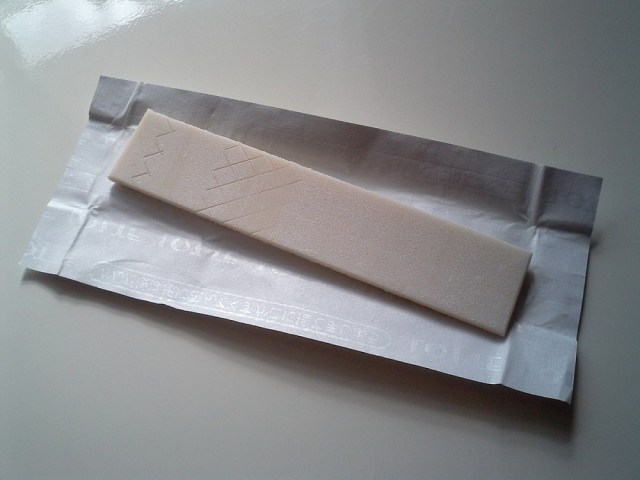
The in-studio Ohayo Asahi Desu anchors, having noticed Tsuda working her jaw during her report, start wondering aloud about it. “Are you eating something?” asks one, followed by another observing “You’ve been chewing on something the whole time” and “What are you munching on?” Flustered, Tsuda covers her mouth and says “I’m sorry. Sorry,” before admitting “I was chewing gum” and that she’s now swallowed the piece to get rid of it.

We should probably take a moment here and talk about how chewing gum fits into Japanese society and interpersonal etiquette. The selection may not be as extensive as it is in the U.S., but in Japan, pretty much every convenience store stocks chewing gum. However, even though Japanese chewing gum is all flavored, it’s not all that commonly enjoyed as a sweet snack substitute. Instead, in Japan chewing gum is primarily seen as either something you chew to freshen your breath, or something to chomp on when you’re sleepy, with the logic that working your jaw muscles will help ward of drowsiness.

The result is that gum is primarily seen as something to chew discretely when you’re not interacting with other people. It’s rare to see someone in Japan chewing on a piece while talking to a friend, and you’ll pretty much never see service workers or other people who are on the clock and expect to be in customers’ line of sight chewing gum either. So a TV reporter, who knows the camera is going to be pointed directly at them, visibly chewing gum is a pretty big breach of etiquette in the Japanese media sphere.

“Anyway, anyway, anyway,” says Tsuda, trying to move on from the faux pas, but a studio anchor adds a “We don’t go on camera chewing gum.” There’s a lot of laughter on both sides of the exchange, but it’s hard to tell how much of it is genuine amusement and how much is trying to vent some of the awkwardness of the situation. At the end of that day’s Ohayo Asahi Desu broadcast, lead studio anchor Keisuke Iwamoto issued an on-air apology on behalf of the program, saying:

“Earlier, in a remote report, one of our reporters appeared on air while chewing gum. This was very disrespectful to both the people of Kawayu Onsen, who helped with the report, and to our viewers. We deeply apologize.”

The incident attracted enough negative responses on social media, including people saying they changed the channel after seeing Tsuda’s behavior, that ABC TV president Shinya Yamamoto addressed the topic in his scheduled New Year’s press conference, which was held on January 20, one week after the Ohayo Asahi Desu episode aired, saying:

“Many viewers have pointed out and criticized [the on-air gum chewing]. Ordinarily, anyone should already be aware, and not need to be told, that it is rude to speak to others while you have something in your mouth. It is something that especially should not be done while appearing on camera. Naturally, after the broadcast we strictly cautioned the person involved and urged her to be more aware of this. She regrets what happens more than anyone, I believe.”

Yamamoto went on to say that the station’s collective regret has strengthened their resolve to “restore viewers’ trust” in the program.

As for the event Tsuda was covering, Kawayu Onsen has a unique annual karuta event. Karuta is a traditional game in which a narrator reads excepts from classical Japanese poems and the players compete to be the first to snatch up the card with the matching words written on it. The cards are usually spread out on the floor, but in January Kawayu Onsen organizes hot spring karuta games, with hiragana characters written on blocks of wood that float in the onsen water.

▼ This year’s event, held on January 22, featured a total of 60 players.

Given the obviously lighthearted tone of the event, it might seem all the stranger that Tsuda’s gum-chewing was treated as such a serious transgression. There’s a key distinction, though, in that while the event can be as silly as it wants to be, it’s still considered proper etiquette in Japan for an outside party, like ABC TV and its reporters, to treat it with respect, and in Japan that includes getting rid of your gum before you’re on the air.

Source: Tokyo Sports Web via Jin, Wakayama Keizi Shimbun
Top image: Wikipedia/Lusheeta~commonswiki
● Want to hear about SoraNews24’s latest articles as soon as they’re published? Follow us on Facebook and Twitter!