Páginas

viernes, 2 de septiembre de 2022

Maguro mountain! Giant sashimi bowls of this Ginza restaurant are even bigger than promised

https://ift.tt/jLguPJA Casey Baseel

Why did we eat this mountain? Because it was there.

Mr. Sato had a problem.

Recently, we’d heard that a certain restaurant chain based in the Osaka area has started opening up branches in Tokyo. This chain is famous for its delicious tuna sashimi, and so naturally our ace reporter, Mr. Sato, volunteered to go and eat some, since he’s far too industrious to pass such a tough assignment off on another member of our team.

Unfortunately, when he showed up at the restaurant, they were mysteriously closed. He then went to another branch elsewhere in Tokyo and was told that they still hadn’t received their shipment of fish, and so they weren’t seating any customers.

So like we said, Mr. Sato had a problem. His plans of eating tuna sashimi had hit a brick wall. Thankfully, though, a solution presented itself, and he was able to eat a mountain.

A mountain of sashimi.

Though it’s not the restaurant he’d originally intended to visit this day, a combination of fate, Mr. Sato’s rumbling stomach, and his wandering feet led him to the entrance to Maguro Soma Suisan, a restaurant in Tokyo’s Ginza neighborhood. The more important geographic detail, though, is that Maguro Soma Suisan is directly managed by a wholesaler at Tokyo’s Toyosu fish market, the Tsukiji successor which now serves as Japan’s premiere entry port for high-quality seafood, and in particular delicious sashimi.

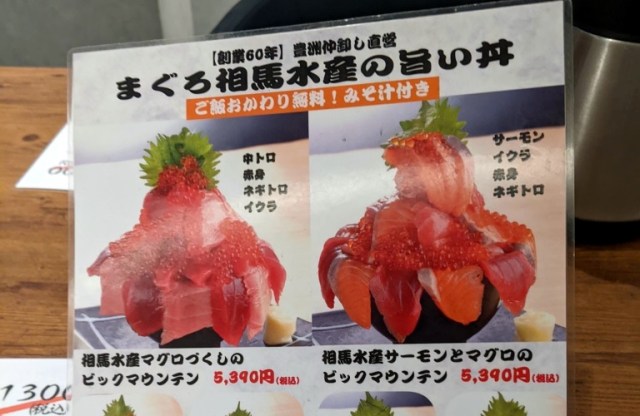
Even better, Maguro Soma Suisan specializes in maguro (tuna), which is exactly what Mr. Sato had his heart set on eating. Honestly, even if he hadn’t already been craving maguro, he would have been unable to to think of anything else after seeing the sign in front of Maguro Soma Suisan filled with photos of their maguro mountain bowls.

Seriously – they have names like “Fujisan” (Mt. Fuji), “Qomolangma” (a.k.a. Mt. Everest), and “Big Mountain.”

Now thoroughly convinced that this was fate, Mr. Sato stepped inside, promptly ignored the other menu items like grilled salmon and sea bream, and immediately ordered the Big Mountain.

As he waited, though, Mr. Sato tried to keep his expectations from getting too high. After all, sometimes restaurants have gorgeous-looking food photos in their menus, only for the real thing to not quite measure up. He was happy to learn, though, that Maguro Soma Suisan is very honest about what you’re getting.
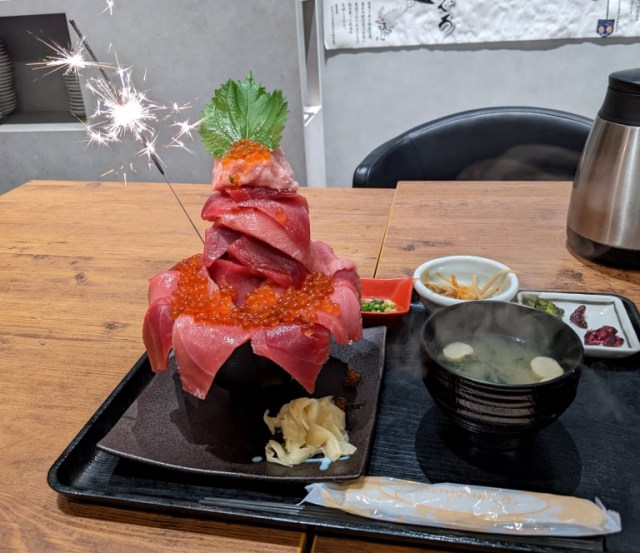
If anything, the real Big Mountain is even bigger than the one shown in the photo!
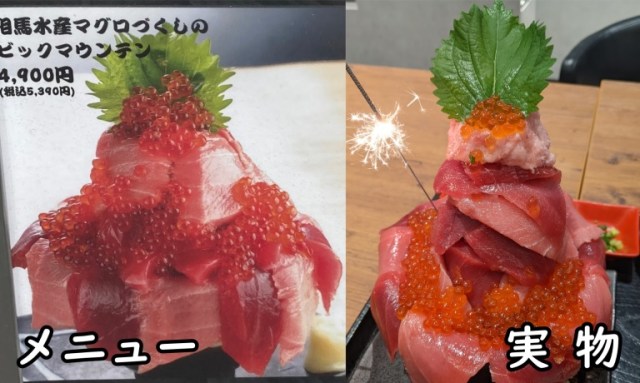
Also, the Big Mountain in the photo didn’t have the fireworks that the real one did.
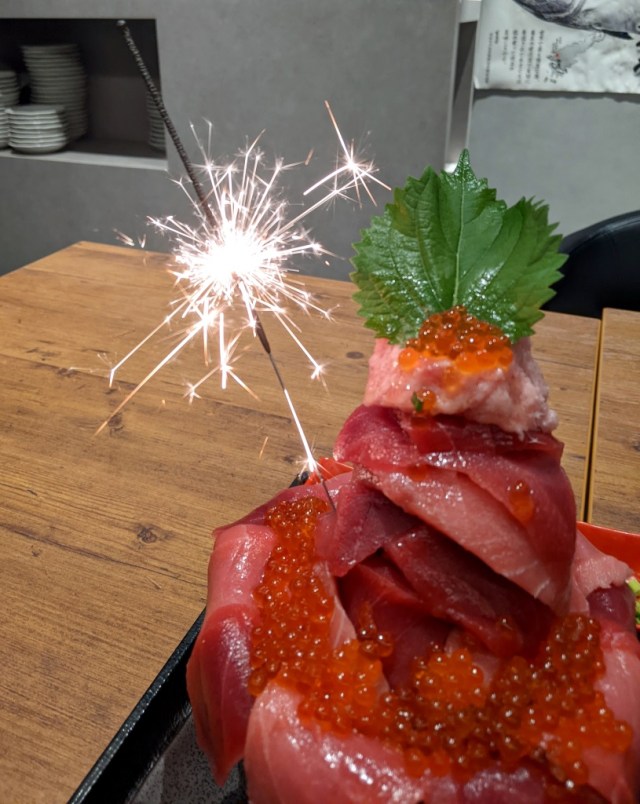
Mr. Sato felt a little self-conscious about the sparklers, but let’s be honest here. With or without pyrotechnics, the Big Mountain is so huge that there’s no way it’s not going to attract attention from your fellow diners when the waitstaff brings it to your table. You may as well give everyone a show.
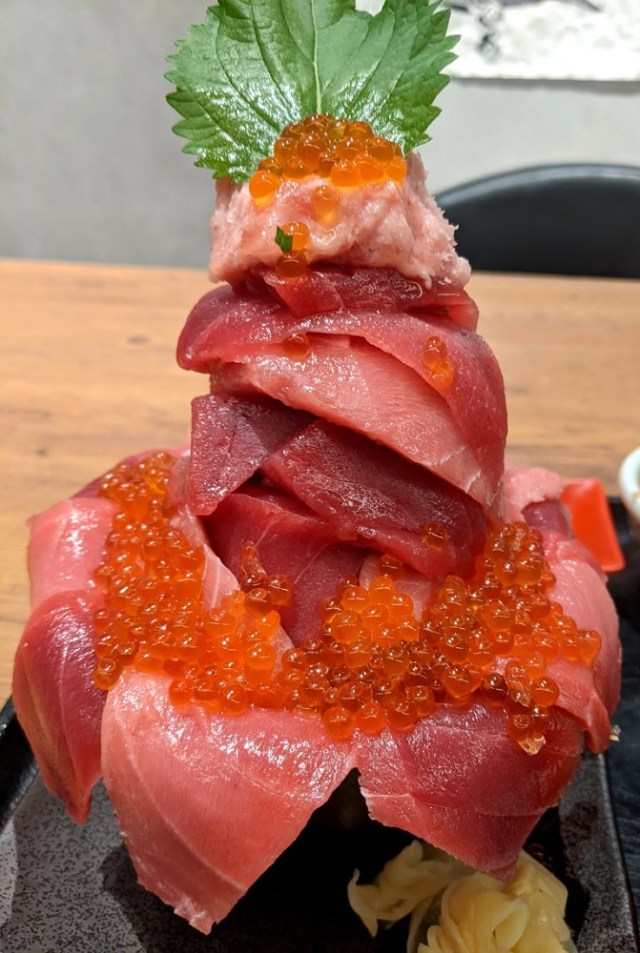
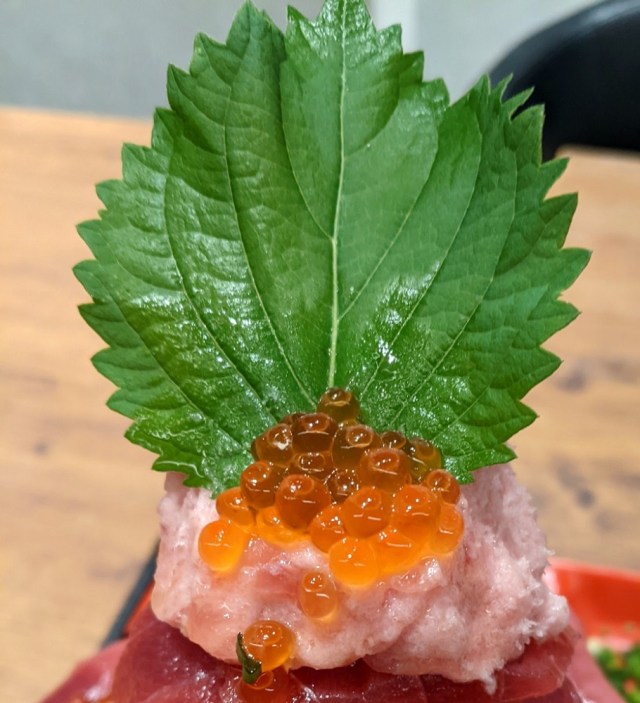
Let’s take a moment to admire the gastronomic geography of the Big Mountain. At the peak you’ve got a leaf of shiso (Japanese basil) and a sprinkling of ikura (salmon roe) looking like fallen snow atop a dollop of negitoro (diced tuna).
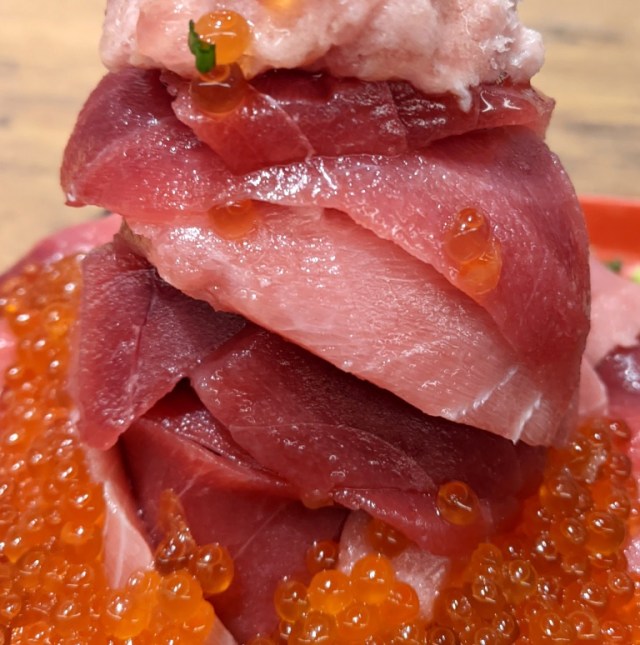
Underneath that you have a spire of stacked slices of akami (lean tuna) and chutoro (extra-fatty tuna).
Then, where the base widens, you have more ikura and tuna, so much so that it completely obscures the rim of the bowl.
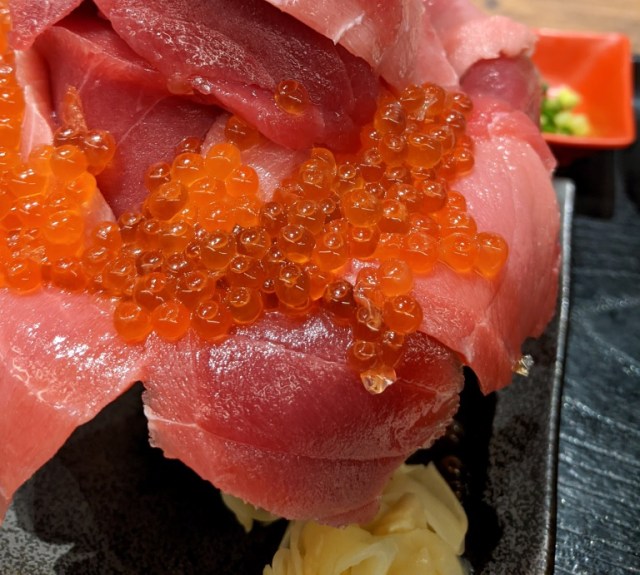
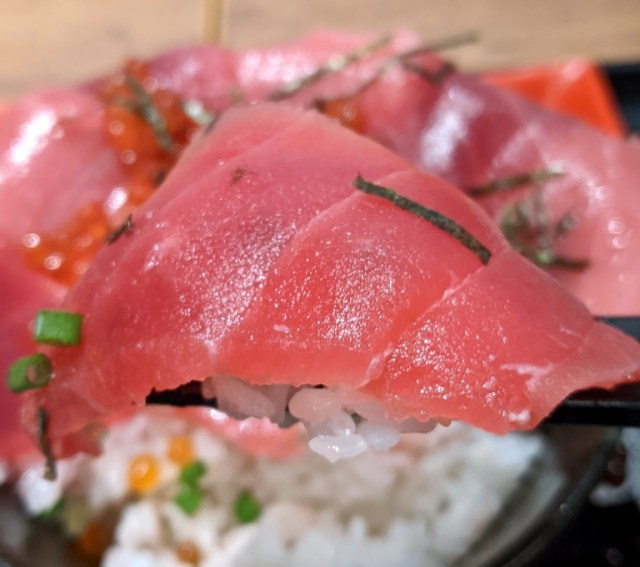
Unlike climbing a mountain, eating the Big Mountain means starting at the top. From the very first bite, Mr. Sato’s palate was rewarded with thick, high-quality cuts of fish, befitting Maguro Soma Suisan’s affiliation with a wholesaler at the world’s most discerning sashimi market.

The chutoro was rich and delicious, and so soft that it practically melted in his mouth.
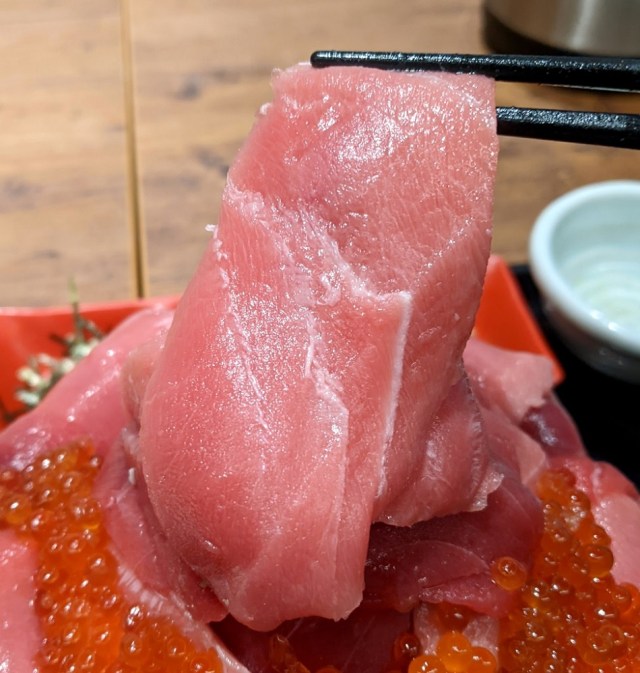
Because of the way it’s structured, you pretty much have to eat the Big Mountain top-down. This doesn’t mean, though, that the good pieces of fish are only found at the top, and they pad things out with lower quality maguro as you make your way down. On the contrary, not only is the flavor excellent throughout, the cuts of tuna actually get thicker as you make your way down, since these are load-bearing sashimi slices that have to provide stability for everything that gets piled on top of them.
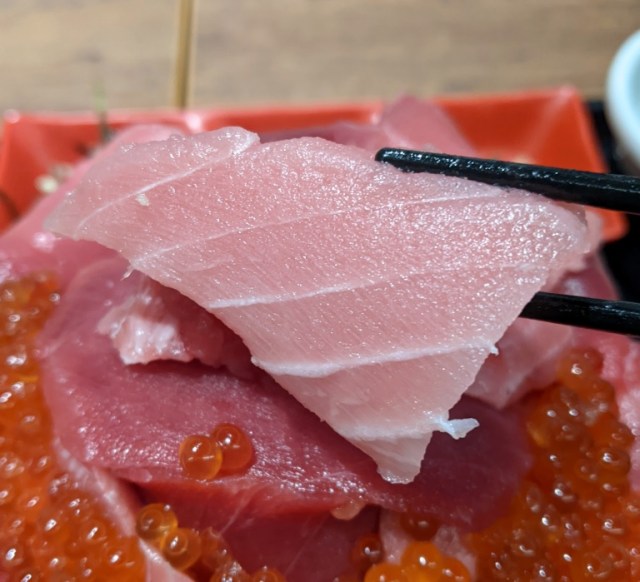
It was about this time that Mr. Sato started to wonder about something: Does the Big Mountain have any rice?
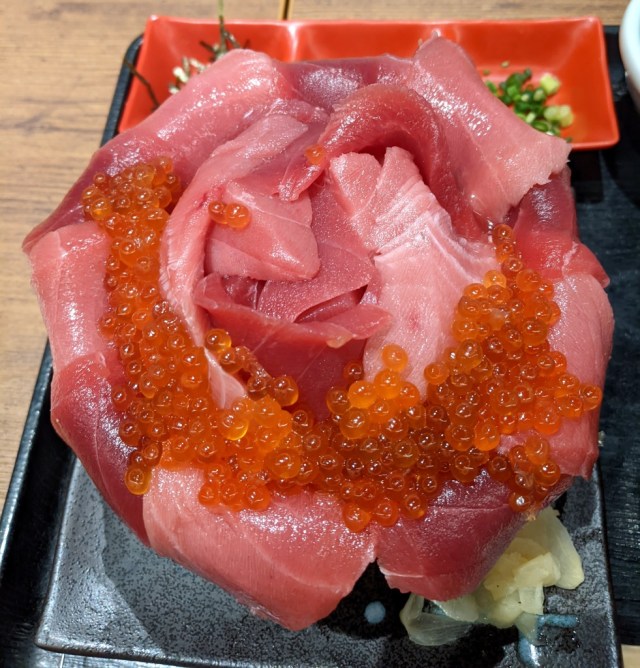
He hadn’t seen any yet, and while he had no complaints about having so much maguro, a mouthful of rice would make a great complement to all the sashimi decadence right about now.
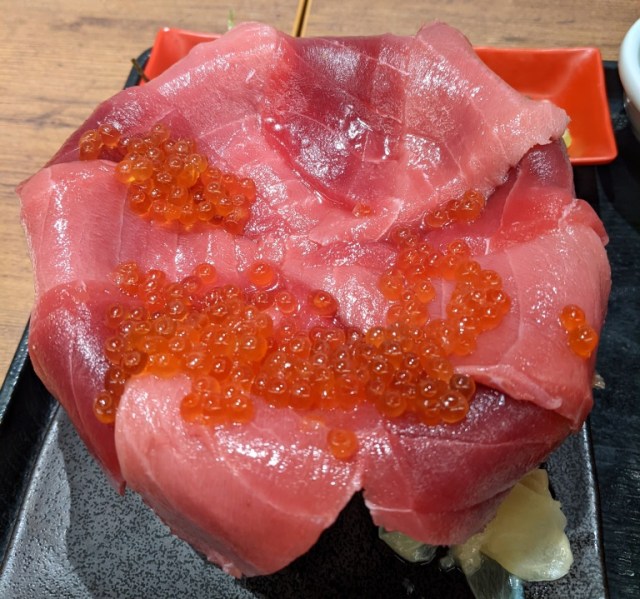
A quick excavational expedition, though, confirmed that yes, there is indeed some rice under all that tuna.
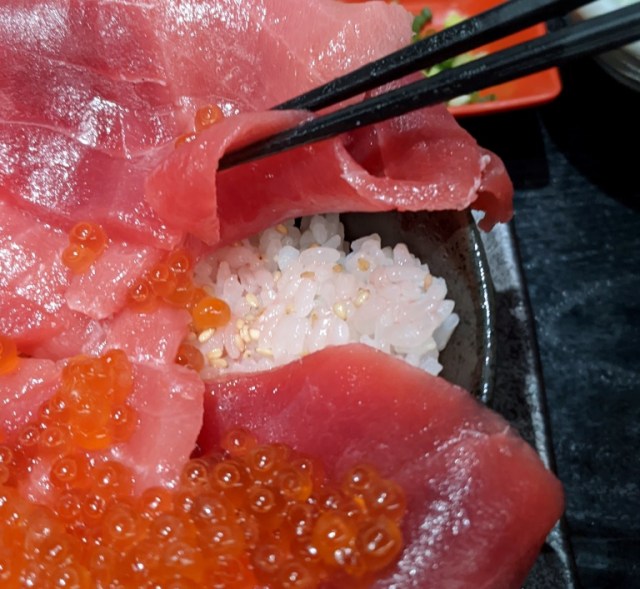
Now Mr. Sato was able to get mouthfuls of tuna and rice in the same bite, which felt like little pieces of maguro nigiri sushi.
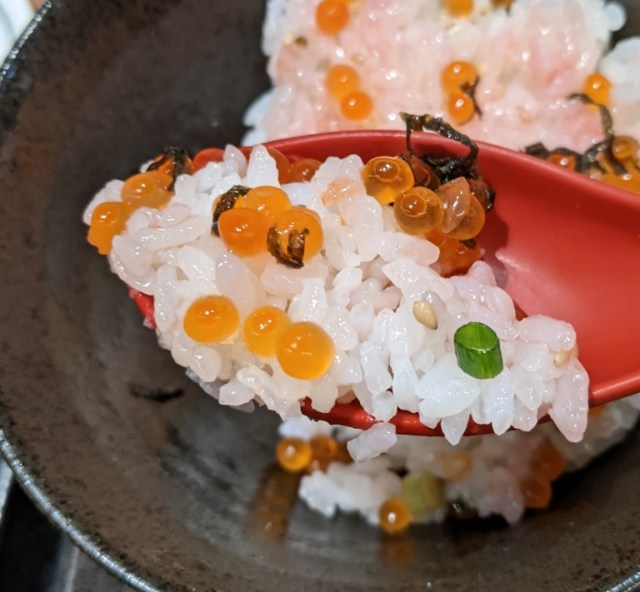
Finally, using a spoon, he was able to scoop up the last of the ikura, because you don’t order something this huge without wanting to eat as much as you possibly can.
At 5,390 yen (US$39.95), the Big Mountain isn’t cheap, but considering it’s enough tuna to satisfy several meals’ worth of maguro desire, and the quality of the fish, we can’t say that it’s at all a bad deal. Maguro Soma Suisan also has more rationally sized lunch sets for just 1,300 yen, so if your friends don’t have the same shark-sized appetite for maguro that you do, they’ll still be able to find something that better fits their stomachs. And if somehow you’re still feeling hungry after eating the Big Mountain, maybe this honey toast with two liters of ice cream is what you need for dessert.

Restaurant information
Maguro Soma Suisan (Ginza branch)/ まぐろ相馬水産(銀座店)
Address: Tokyo-to, Chuo-ku, Ginza 7-2-saki, Ginza Korido 1st floor
東京都中央区銀座7丁目2-先 銀座コリドー1F
Open 11 a.m.-9 p.m.
Website

Photos ©SoraNews24
● Want to hear about SoraNews24’s latest articles as soon as they’re published? Follow us on Facebook and Twitter!

Mass outbreak of Gengar at Pokémon Café means spooky yet delicious food is on the menu

https://ift.tt/ijm0b8O Katie Pask

One of Pokémon’s original 151 gets its moment in the sun.

The term ‘mass outbreak‘ doesn’t usually tend to have positive connotations, with the exception of the world of Pokémon. The announcement of a mass outbreak is usually followed by trainers reaching for their Poké Balls (in game) or their cameras (in real life).

Pikachu tends to take centre stage for a majority of Pokémon’s promotional mass outbreaks, but the spotlight is now shining on a different Pokémon; one of the OG ghost-type Pokémon, Gengar, who will feature in a special new dish at the Pokémon Café to celebrate the upcoming Halloween Harvest Festival.

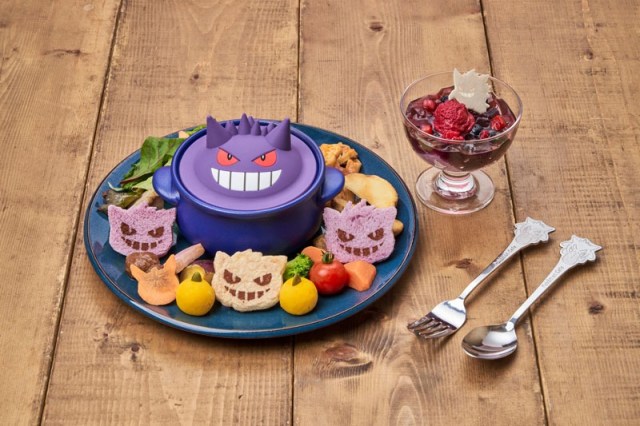
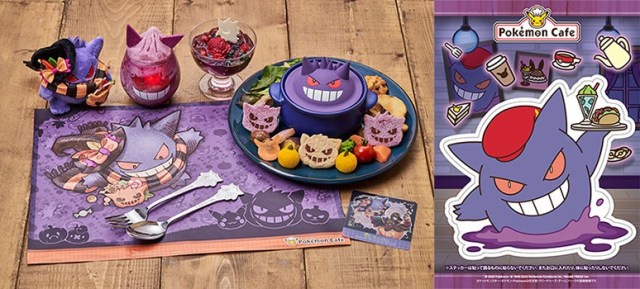
▼ Gengar’s Phantom Force — 2,970 yen (US$21.18)

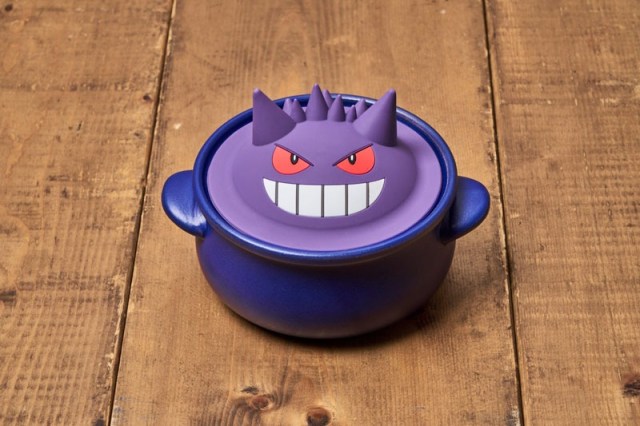
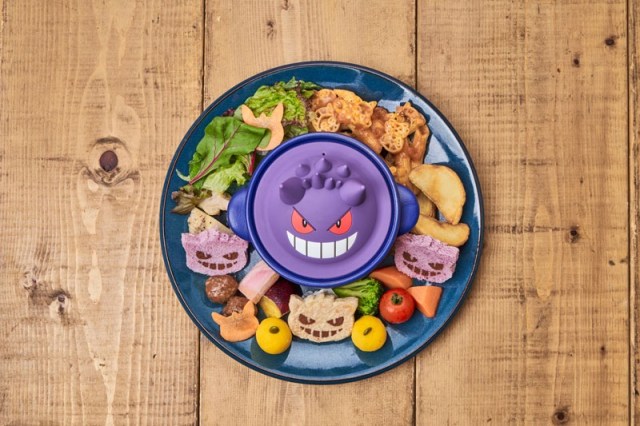
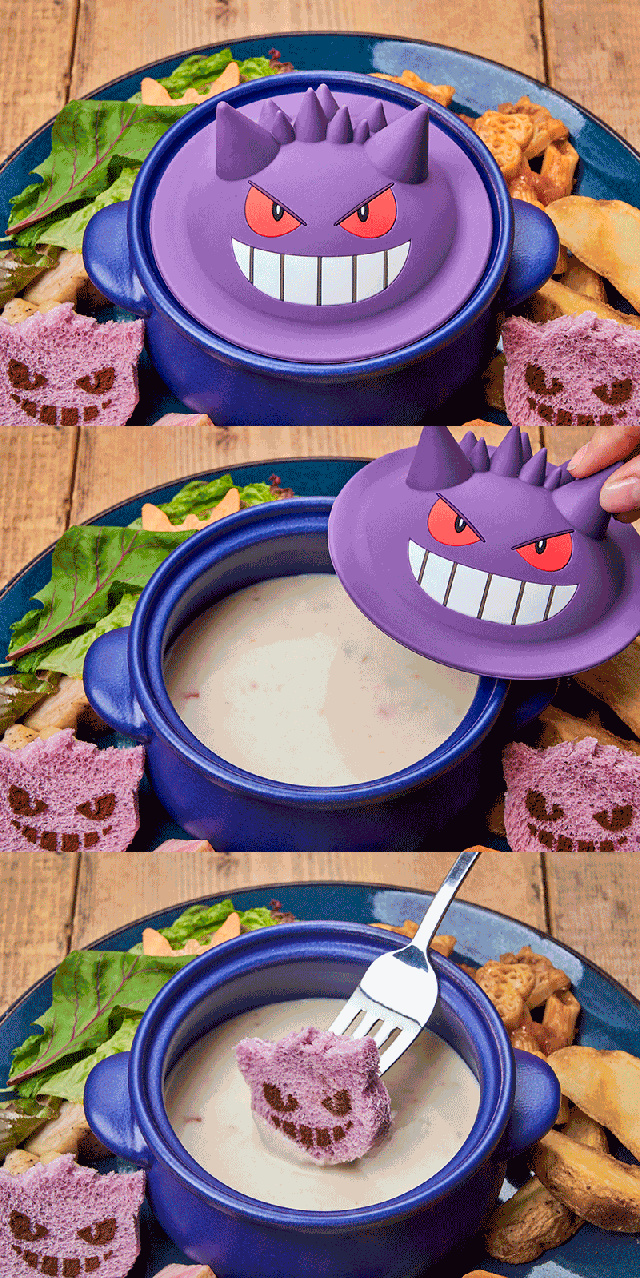
The main dish on offer is a fondue-style meal named after the Pokémon move Phantom Force (in Japanese Ghost Dive). A Gengar-shaped-dish takes centre stage, with a removable lid to reveal a creamy cheese soup inside.

The soup comes with an assortment of food perfect for dipping in the cheese soup, such as Gengar-shaped bread, vegetables and mini-pies. The set also includes a mini parfait inspired by another one of Gengar’s moves, Shadow Ball, and is a sweet grape and blackcurrant flavour.

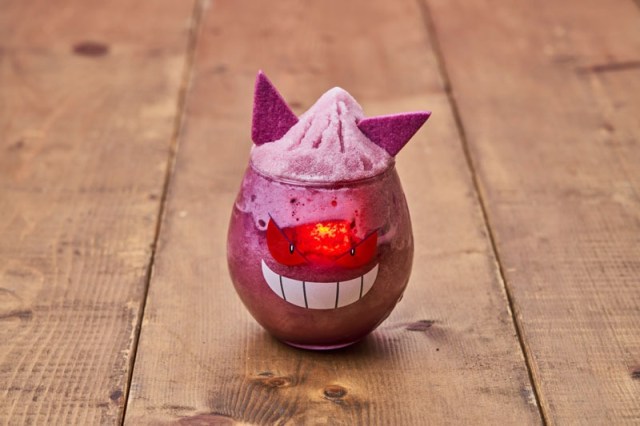
If you feel your meal doesn’t quite have enough Gengar in it, you can also order Gengar’s Confuse Ray Smoothie (pictured below) for 990 yen (US$7.06).

All meals come with a complementary place mat and coaster, both with an original Gengar illustration on them. Customers who share a picture of their Gengar meal on social media with the tag #ポケモンカフェのゲンガー大量発生 (#GengarMassOutbreakAtThePokémonCafe) will also receive a free A6-sized sticker!

But if, on the other hand, you feel like your meal is a little too heavy on the Gengar side, you can always go for the lighter option and order a coffee with Gengar foam art on the top. You can choose from a Pokémon latte (770 yen), a caramel latte or a cafe mocha (both 825 yen).

For those of you who want to keep the spooky spirit going even after you leave the cafe, the Gengar-shaped soup bowl is available for sale for 3,850 yen (US$27.46) so you can recreate the meal at home.

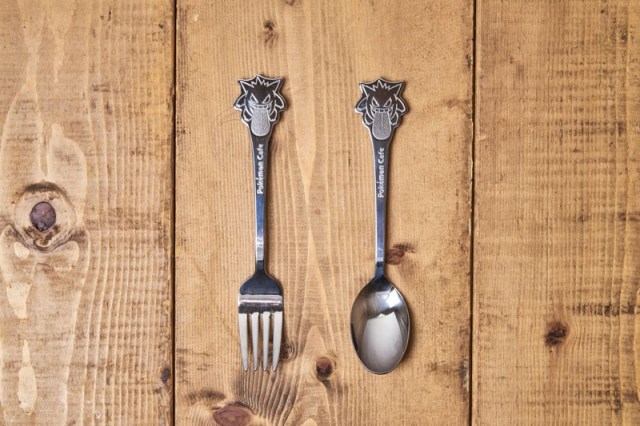
The cutlery is also for sale, with a mid-Lick Gengar at the top. Both the spoon and fork cost 880 yen (US$6.28)

The Gengar Mass Outbreak starts from September 3 in both the Tokyo and Osaka branches of the Pokémon Café. All customers wishing to visit will need to make a reservation in advance, which can be done via the website.

Source, images: Pokémon Café official website
● Want to hear about SoraNews24’s latest articles as soon as they’re published? Follow us on Facebook and Twitter!
Japanese high school’s chime rings in middle of the night, freaks out countryside town【Video】

https://ift.tt/BcRo5Xs Casey Baseel

It’s like something out of a J-horror movie.

Summer has long been the time for spooky tales in Japan, when a chill running down one’s spine can be considered a momentary relief from the summer heat. Another quirk of Japanese ghost stories is that they’re far more likely to take place in an empty school than an abandoned house, perhaps because all those classrooms and hallways provide much more space for unnatural entities and unspeakable deeds than a compact Japanese home.

And so, right as summer was winding down, something both scholastic and incredibly creepy happened in the town of Oshima, Yamaguchi Prefecture. Oshima isn’t a very big town, and it gets very quiet once the sun goes down. On Monday night, though, the silence was shattered by this.

At about 10 o’clock, a school chime began booming. This is, of course, well after classes have ended and students have gone home. What’s more, the sound, which was coming from Oshima Shosen High School, could be heard up to 500 meters (1,640 feet) away, which seems a lot louder than it would ordinarily need to be set to.

The chime didn’t ring once and stop, either, but continued to sound, even though it hadn’t been scheduled to do so. An on-duty school employee managed to shut down the power to the chime’s broadcasting equipment…only for it to start ringing on its own once again.

The chime continued to ring until around midnight, when the school staff eventually yanked out the power cord for the equipment, which finally put a stop to it.

The chime heard in the videos is the same tone and melody used by hundreds of other schools in Japan, and under just about any other circumstances it evokes a sense of nostalgia in most Japanese people. Given the timing, though, it instead seriously creeped people out, with Twitter comments including:

“Geez that’s scary.”
“Caution: Horror story here.”
“That’s freaky that it started up again even after they shut down the power.”
“It’s like something out of [J-horror movie] School Ghost Stories.”

The school says the whole thing was the result of a malfunction within the equipment, and repairs were performed the following day. No late-night chimes have been heard since, so maybe it was all just a glitch, or maybe it’s just that summer is over and the ghosts are lying low until next year.

Source: Chugoku Shimbun via Yahoo! Japan News via Jin
Top image: Pakutaso (edited by SoraNews24)
● Want to hear about SoraNews24’s latest articles as soon as they’re published? Follow us on Facebook and Twitter!
Japanese government, please stop using floppy discs, politician asks

https://ift.tt/J4wEQYO Casey Baseel

And mini discs too.

If you look at Wikipedia’s English-language entry for Taro Kono, it describes the Japanese politician as having “developed a reputation as a political maverick.” So having assumed a new position this month as Japan’s Minister of Digital Affairs, you might expect him to be planning to shake things up, and indeed Kono has wasted no time with a bold proposal: no more floppy discs.

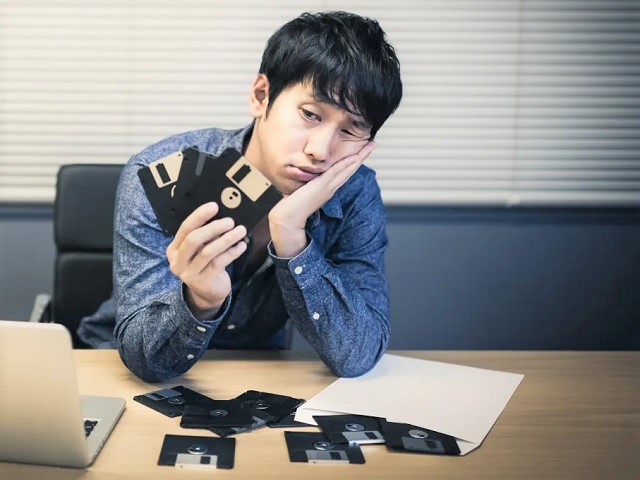
In a press conference held on Tuesday, Kono revealed the results of a review by Japan’s Digital Agency, the Cabinet division he heads, of policy regulations within the Japanese government. The study found that there are roughly 1,900 ordinances that require the submission of applications or storing of data to be on some sort of physical storage medium. In addition to floppy and optical discs, Kono says the study also found rules requiring the use of CD-ROMs, mini discs, and cassette tapes, prompting Kono to exasperatedly remark:

“I’m not sure where people are even supposed to be able to buy floppy discs anymore.”

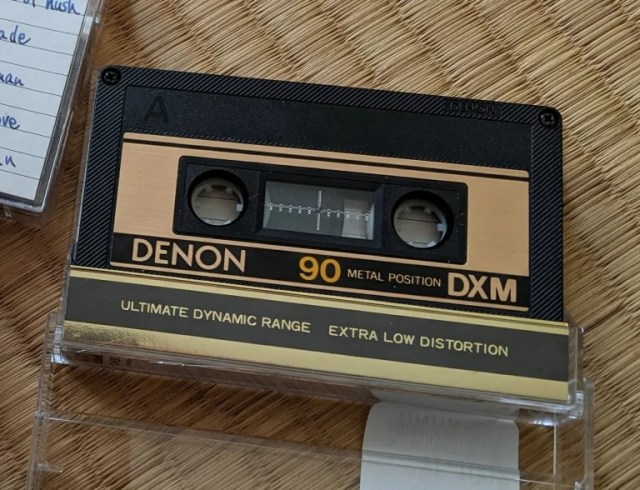
▼ We’re equally puzzled about cassettes. Are you supposed to ask your mid-‘90s high school crush to return the mix tape you made them so you can record over it?

“These policies should be swiftly reconsidered,” Kono said, lamenting how the antiquated requirements are impeding the implementation of online and cloud-based systems, and called for revised regulations to be drafted within the year and presented to applicable government agencies for compliance.

It’s worth noting that while the study found nearly 1,900 instances in which such physical storage media is required, they don’t appear to be the sort of situations that most people are likely to encounter in their daily lives. Government offices aren’t asking people to file their tax return on floppy discs, or to register their car via cassette-recorded voice message. Instead, the physical-media requirements seem to be primarily related to business applications and government archiving, with businesses’ calls for modernization on the government’s part being part of what prompted the review.

Source: Jiji via Yahoo! Japan News via Otakomu, Nihon Keizai Shimbun
Top image: Pakutaso
Insert image ©SoraNews24
● Want to hear about SoraNews24’s latest articles as soon as they’re published? Follow us on Facebook and Twitter!
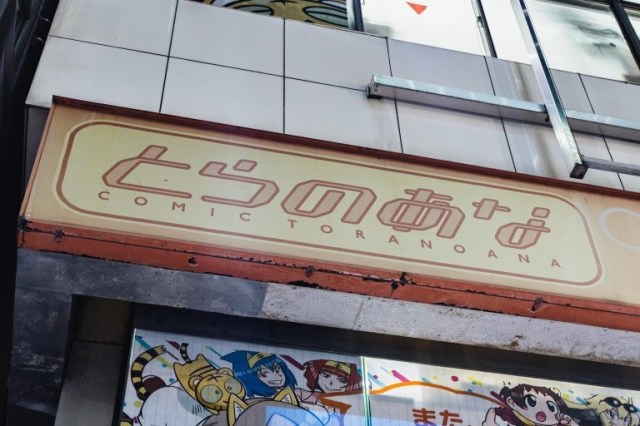
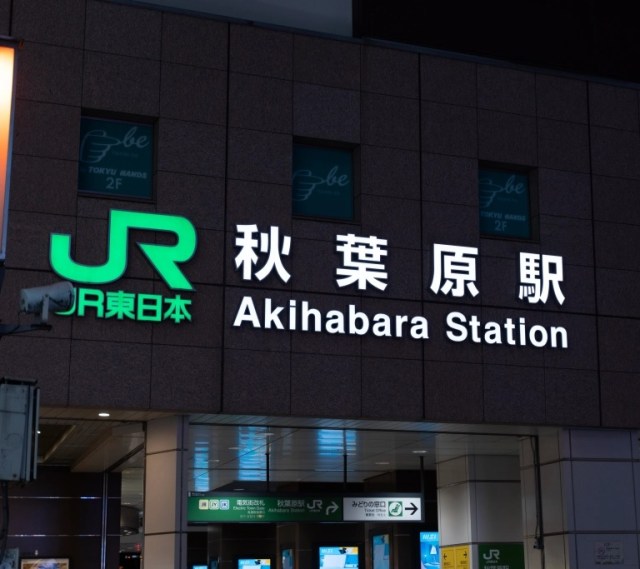
Otaku gather in the Akihabara night as Toranoana dojinshi shop permanently closes【Photos】

https://ift.tt/p7EUG1a Casey Baseel

Goodbyes both heartfelt and snarky mark the end of an era in Tokyo’s otaku district.

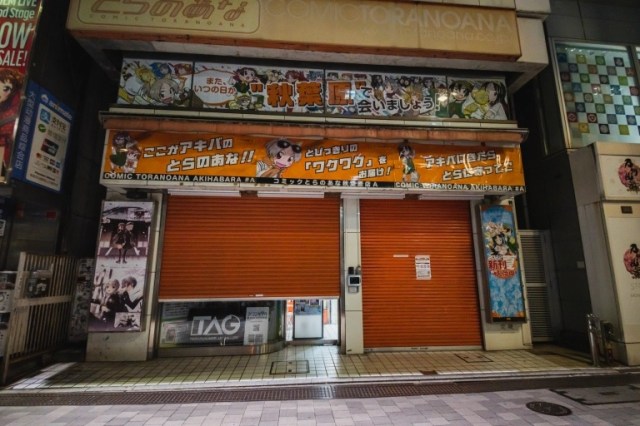
It’s not unusual to feel a little wistful at the end of August, as summer starts to fade and shorter days and colder nights loom. This year, August 31 was especially bittersweet for otaku, though, because it marked the final day of the last remaining Akihabara branch of Toranoana, which was once one of Japan’s premier dojinshi (self-published manga) stores.

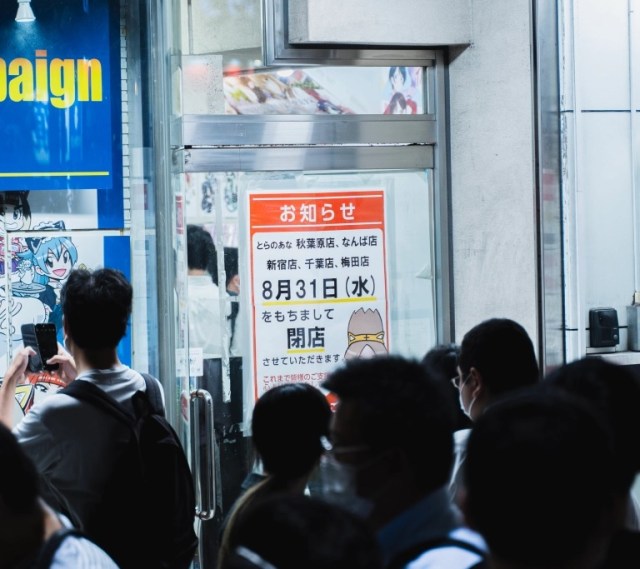
Actually, no fewer than five Toranoana branches were permanently closing on this day, with the others being locations in Tokyo’s Shinjuku, Osaka’s Namba and Umeda, and Chiba City. The Akihabara closure was the most significant, though, since not only is the neighborhood the worldwide mecca for otaku culture, Toranoana’s Akihabara A branch had been a neighborhood fixture for the last 28 years.

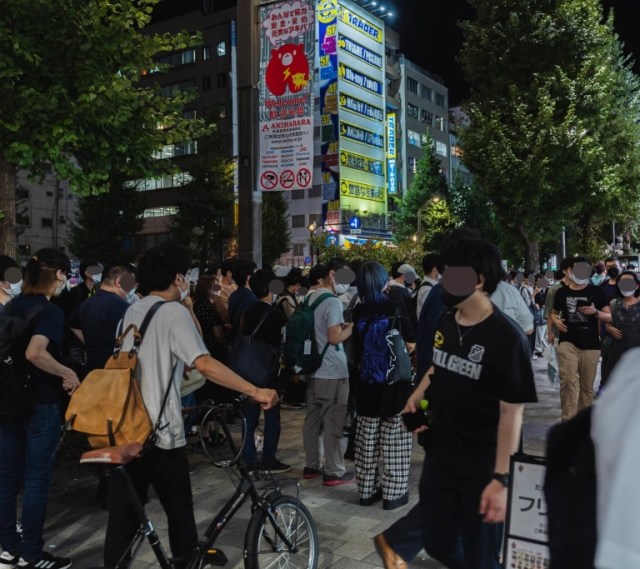
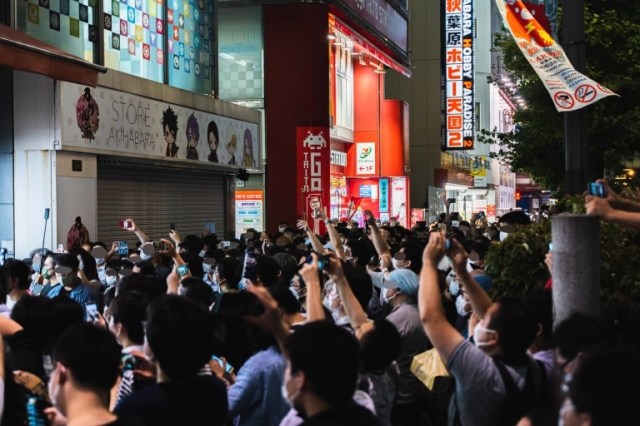
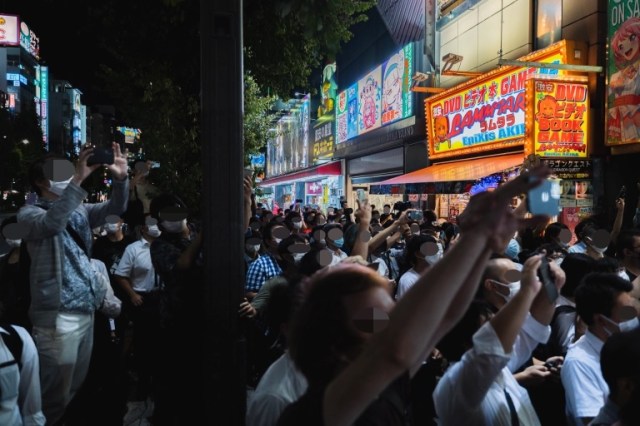
But that was all ending on Wednesday night, so we made our way out to Akihabara. It’s becoming customary for the clientele of fan-oriented shops and entertainment centers to come pay their respects on the final day, and for the staff to make a speech marking the occasion, and when we arrived a little before Toranoana was scheduled to close at 8 p.m., a crowd of otaku had already gathered.

▼ A sign in the window informing passersby of the closing of the five branches on August 31

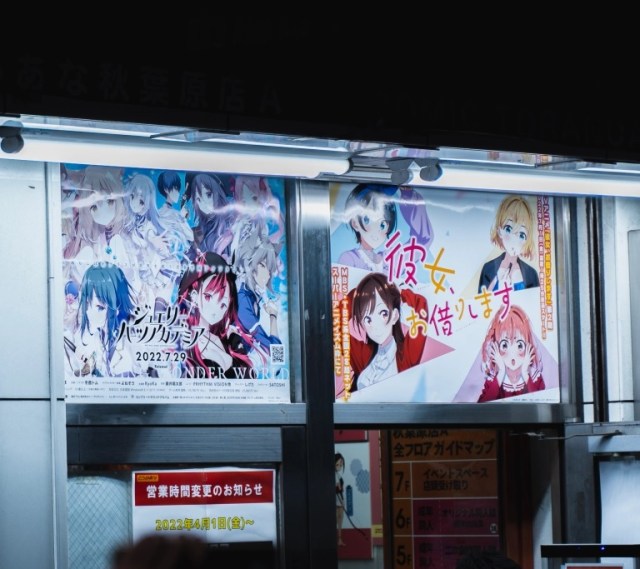
Customers inside were looking through the selection and making one last purchase, while others snapped commemorative photos of the storefront. Serving as a metaphorical time capsule, the final series being promoted outside the shop were Jewelry Hearts Academia and Rent-A-Girlfriend, with posters right above the door…

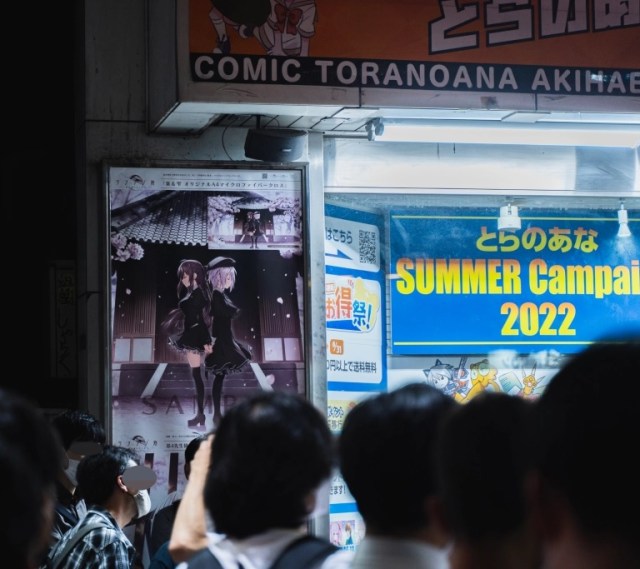
…and Sakura no Toki, with its artwork displayed just to the left of the entrance.

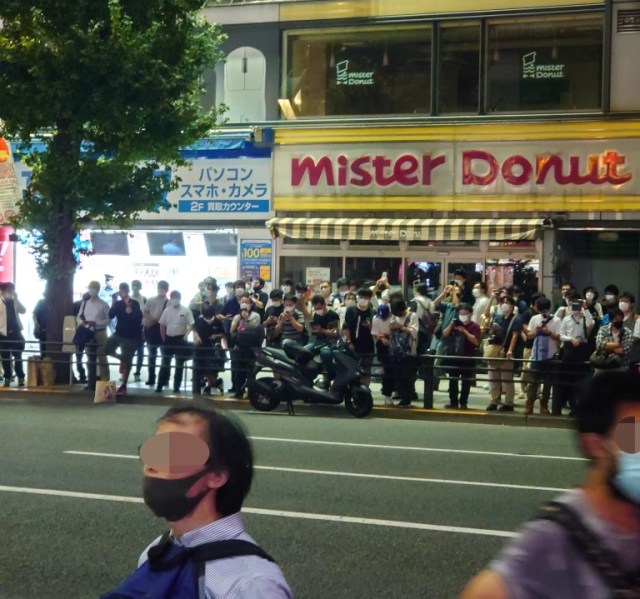
As the time got closer to 8, the crowd continued to grow. Eventually, there wasn’t space on the sidewalk in front of Toranoana, so people started amassing across the street, in front of the Mister Donut and Sofmap stores.

Speaking of other nearby businesses, Melon Books, another dojinshi specialty store, has a branch just two blocks away from Toranoana’s Akihabara shop.

▼ Melon Books

Melon Books was already closed for the night, but earlier in the day they’d put up a sign with the following message:

Thank you for 28 happy years

“Our neighbor two blocks over, Toranoana, will be closing today.
Esteemed rival, and fellow friend who loved Akihabara,
because you were close by, we also could do our best.
Without you here, Toranoana, thinking of the future fills us with sadness.
Selfish though it is for us to say this, everyone, please go to Toranoana today.
Challenging ourselves to be as good as Toranoana has been our goal, so with a smile, we say thank you.”

If that phrasing sounds familiar, it’s the same message that the Akihabara Burger King branch posted when the Akihabara McDonald’s closed down two years ago, with the same layout, which means that if you read the first character in each of the lines of text vertically, they spell out Watashi tachi no kachi,” or “Victory is ours.”

▼ The Melon Books sign, with 私たちの勝チ (“Victory is ours”) hidden in the far left column of text.

We then headed back over to Toranoana, but even though 8 o’clock came and went, the staff was still working hard, ringing up its last-ever shoppers’ purchases. At about 8:25, all the customers had been taken care of, and Toranoana’s staff came out to greet the assembled crowd, and the branch manager said a few words.

Even with a megaphone, it wasn’t easy to hear him over some of the surrounding noise of the city, but Toranoana’s appreciation for its fans was clear as he said:

“Thank you all for coming out, even in this hot weather on a weeknight.

As you are all already aware, today, August 31, is the last day for the Toranoana Akihabara A store to be in operation. We didn’t imagine that so many people would gather, and we are very happy to see that we are so loved. It’s very sad for our store’s time to be ending, but as we close, we hope that we’ll be able to see you all again, somewhere, in a new capacity.

Also, Toranoana itself remains in business, and we’ll continue to do our best through our online sales service, so we hope you’ll make use of it and show it the same love you have shown us here in Akihabara.

Thank you again for coming out tonight. Toranoana Akihabara A branch is now closed. Thank you for shopping with us for so many years.”

As mentioned in the manager’s speech, Toranoana will continue to sell doujinshi online, and it also has a number of regional satellite shops within other stores (essentially Toranoana-branded dojinshi corners inside of bookstores). There’s also one remaining full-fledged Toranona physical branch, the fujoshi-oriented store in Tokyo’s Ikebukuro neighborhood.

Still, as the crowd burst into emotional applause, the staff bowed deeply, and when the shutter on the store came down one last time, the curtain was also coming down on a period of Akihabara history.

Photos ©SoraNews24
● Want to hear about SoraNews24’s latest articles as soon as they’re published? Follow us on Facebook and Twitter!
jueves, 1 de septiembre de 2022

Arcade game coin slot capsule toys bring coin-op style to your home or office【Photos】

https://ift.tt/SOy2RxP Casey Baseel

A clever way to preserve a fading part of video game design.

Japan’s gacha capsule toy vending machines are a lot of fun, but they’re not the only way to transform your loose change into instant-gratification enjoyment. As gamers know, arcade game machines are another worthy candidate for dropping a few coins into.

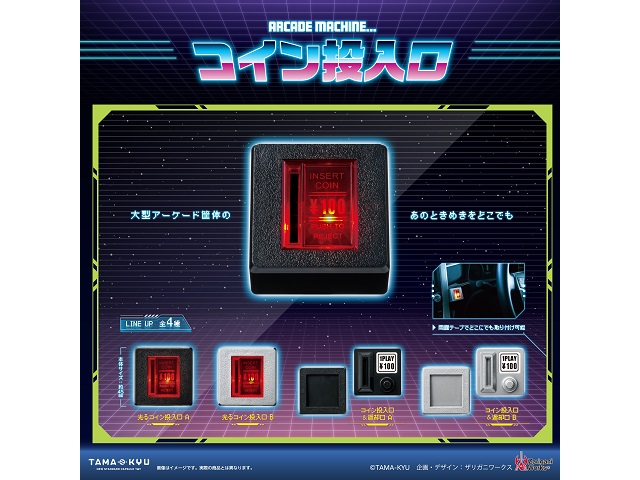
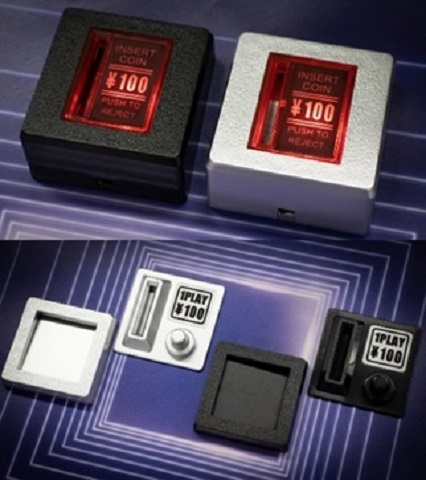
So now there’s a way to combine the two with the Arcade Machine Coin Slot series.

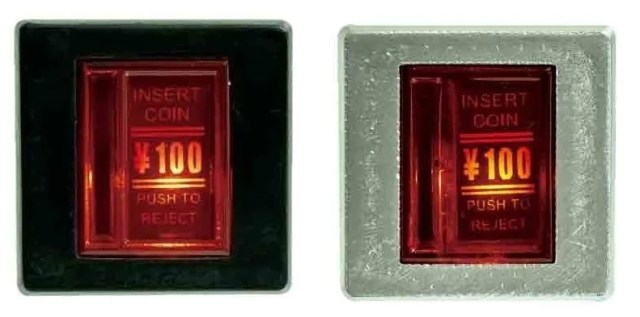
The latest creation from capsule toy maker Tama-Kyu, the Arcade Machine Coin Slot lineup consists of four different designs. Two of them are “light-up style,” with coloring that gives the illusion of the rear-illuminated plastic cover for a powered-on coin-op game’s coil slot cover.

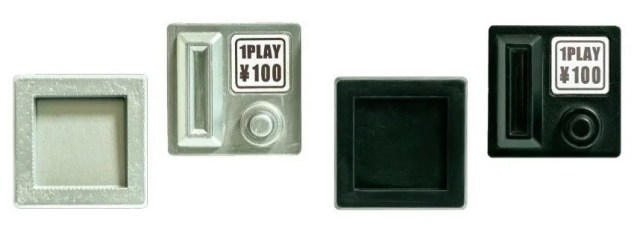
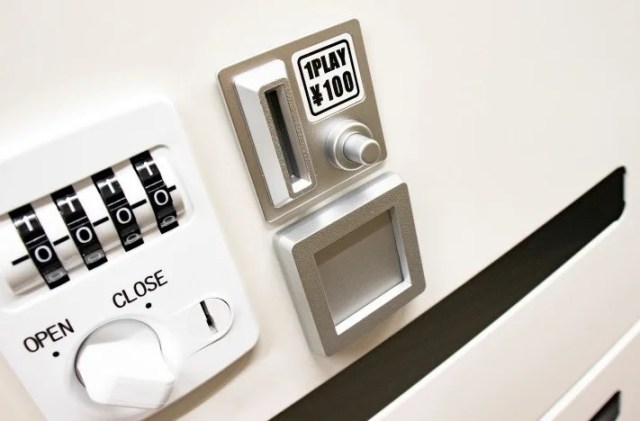
While not unseen in Japan, the above style tends to be more common in overseas arcade games. Within Japan, most of the semi-standardized arcade cabinets have a slot that’s comparatively flush to the machine, with an accompanying plunger-action refund rod.

▼ These versions of the toys come with a separate faux refund tray.

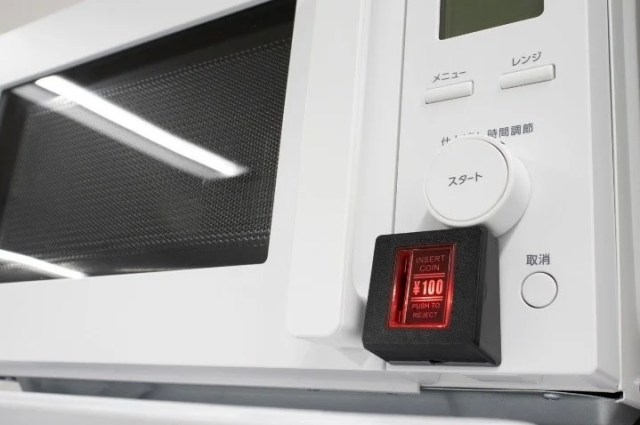
The Arcade Machine Coin Slot capsule toys have self-adhesive backings and are meant for decorative use, and can’t actually accept coins (there’d be nowhere for the coins to go). They do look convincingly realistic, though, especially when stuck on something that theoretically could be coin-operated.

The series is available in capsule toy machines now, priced at 300 yen (US$2.20) each. Granted, you could also use those three hundred yen coins to play three arcade games, but with arcades starting to become rarer in Japan, the Arcade Machine Coin Slot might be the sort of preservation of gamer culture you’ll want to have for your home.

Source: PR Times via IT Media
Images: PR Times
● Want to hear about SoraNews24’s latest articles as soon as they’re published? Follow us on Facebook and Twitter!