Páginas

lunes, 4 de julio de 2022

This plastic wrap is supposed to turn supermarket sashimi into great sashimi, but does it work?

https://ift.tt/DdVQAcI SoraNews24

Taste-testing the effects of Pichit sheets.

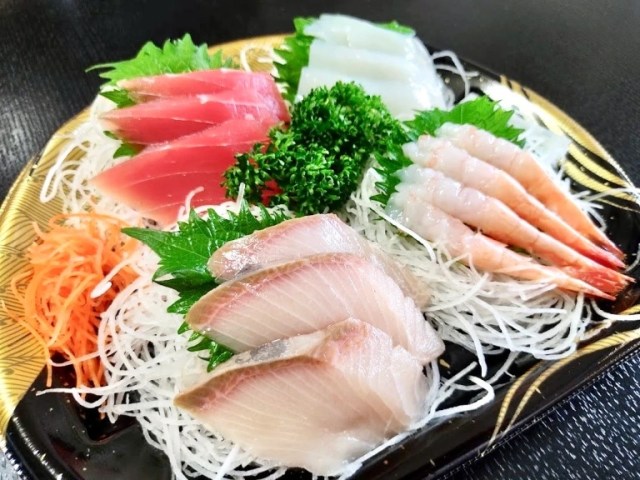
You can find sashimi for sale at every supermarket in Japan, and the quality is usually pretty good. Not necessarily great, but good.

Great sashimi was exactly what our Japanese-language reporter Miho Kozuki was craving. Luckily, she had a secret weapon: Pichit.
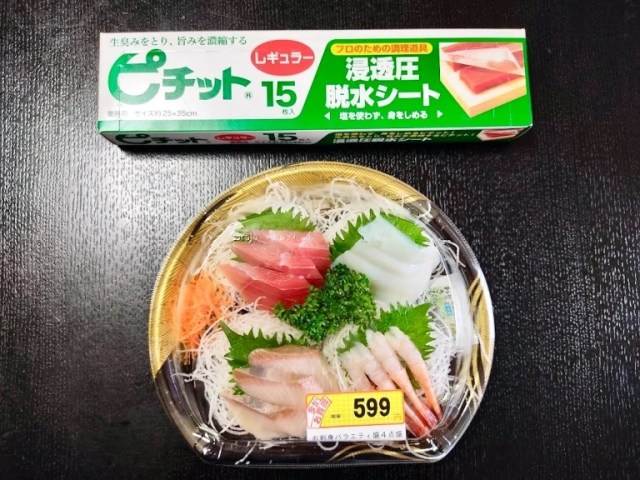
OK, so maybe it’s not really a secret weapon, since the specially treated plastic wrap has been getting a lot of attention on social media recently. But the rumors of Pichit’s flavor-boosting powers had Miho feeling like she had a strong ally on her side as she pulled out a sheet.
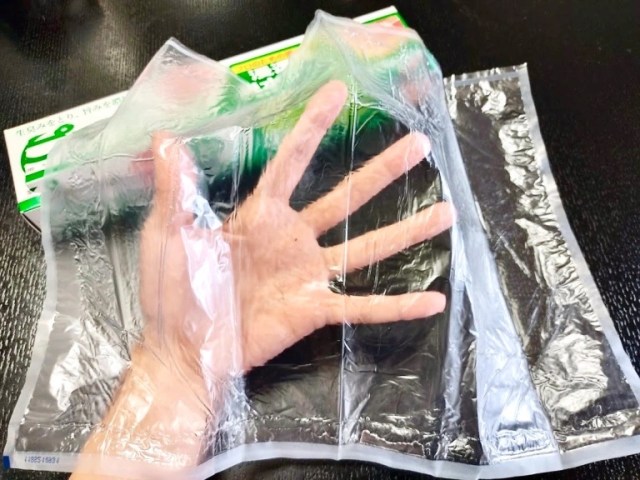
According to its packaging, Pichit is supposed to condense the sashimi’s flavor and umami notes, while simultaneously eliminating any odors. It does this in two ways. First, the sheet draws moisture excess moisture out of whatever you’ve wrapped up in it. As we learned talking to a sashimi expert with decades of experience in the restaurant industry, if you have too much water, or worse, ice crystals, in a cut of fish, it’ll dilute the flavor and overly stiffen the texture. Second, Pichit is treated with starch syrup and seaweed extract, simulating the effects of kombujime, a method of preparing sashimi by sandwiching it between kelp leaves.

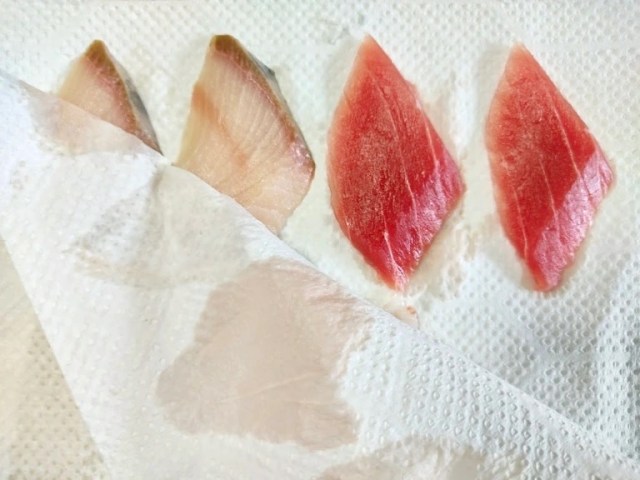
Using the sheet is a snap. First, Miho patted and wiped down some of her supermarket-bought sashimi with a paper towel.
Then she laid them out on the sheet…
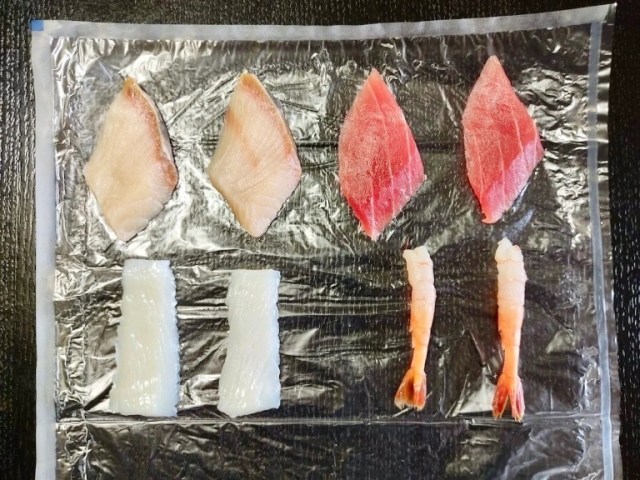
and folded the sheet over them. The Pichit sheet started drawing out moisture right away, forming a seal around the sashimi pieces as it did so.

Now Miho put the sashimi in her refrigerator while the sheet did its thing, and when she took it back out two and half hours later, it had been transformed!
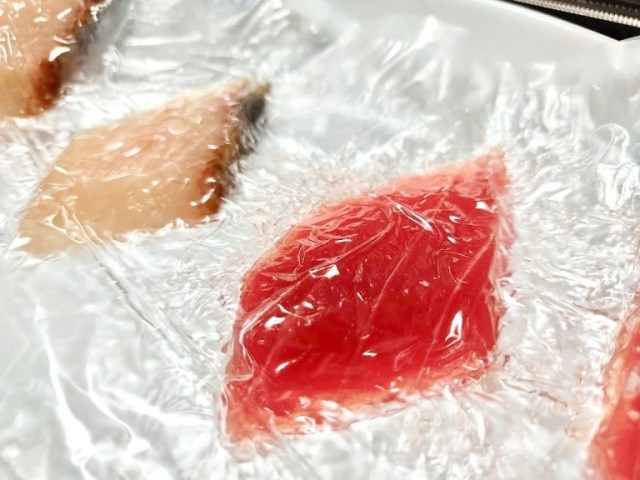
For the sake of a taste-test comparison, Miho had put half of her sashimi into a Pichit sheet, and left the other half un-Pichit-ified, and they were now looking very different from each other.

▼ Left: Pichit sashimi
Right: Non-Pichit sashimi
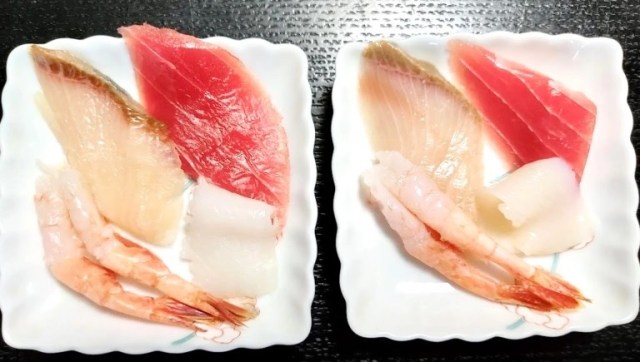
▼ Pichit
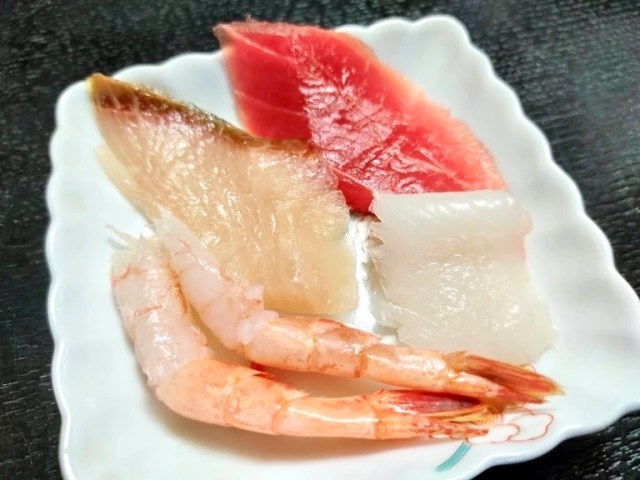
▼ Non-Pichit
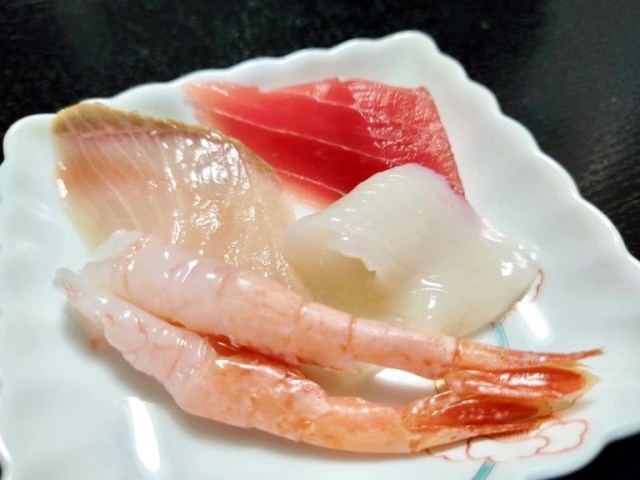
Since the package had said the sheets eliminate odors, Miho performed a sniff test first, but she didn’t really notice a difference between the two. Maybe that was because her sashimi was still pretty fresh from the market, and it didn’t really have any smell to it to begin with at this point.

But the flavor? There Miho noticed a big difference, and the Pichit-treated sashimi was far and away the better tasting. Again, that’s not to say the no-treated pieces were bad, but the ones that had spent time wrapped in the sheet were a lot more flavorful and didn’t have even a hint of sogginess to water down the taste. “It feels like they have twice as much umami as the regular pieces.” Miho says.
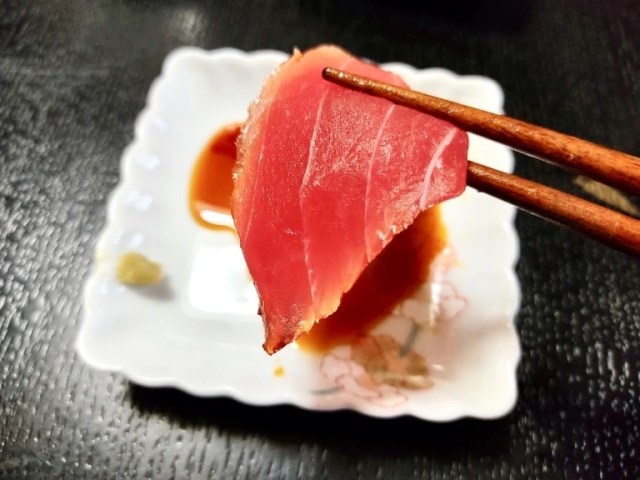
Prices for Pichit vary by store/seller, but Amazon has 32-sheet rolls for 2,048 yen (US$15.30). The only thing to be careful of is that because it removes moisture, Pichit isn’t such a good match for more succulent, extra-fatty types of sashimi, like otoro (extra-fatty tuna). But for things like maguro (regular tuna) or yellowtail, Miho thinks this is an affordable luxury upgrade that’s well worth it

Photos © SoraNews24
● Want to hear about SoraNews24’s latest articles as soon as they’re published? Follow us on Facebook and Twitter!

Weiner Onigiri: Japanese convenience store rice ball has a surprise in store for Mr Sato

https://ift.tt/Mg96ZXC Oona McGee

Celebration sausage opens our mouth to a new way of eating. 

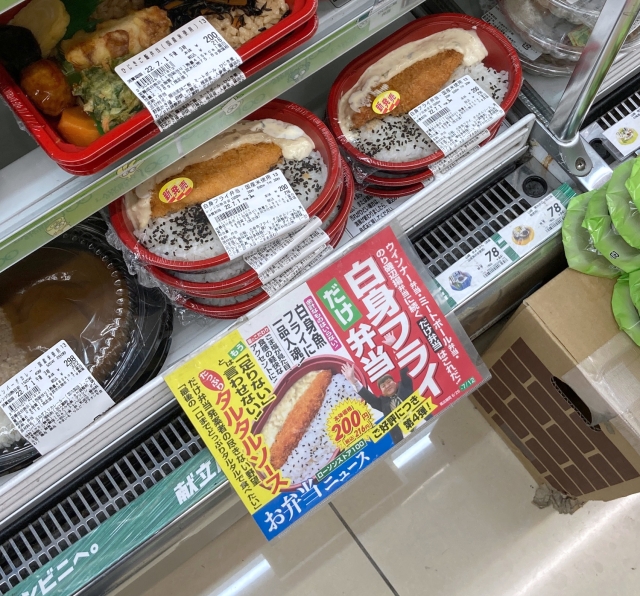
Just last year, convenience store chain Lawson Store 100 made headlines for its unprecedented Weiner Bento. Unlike most bentos, which contain a variety of ingredients, this new lunchbox stripped things down to just two main ingredients: rice and sausages.

▼ The bento became a runaway hit, spawning similarly unfettered offerings like the fried fish bento, seen below.

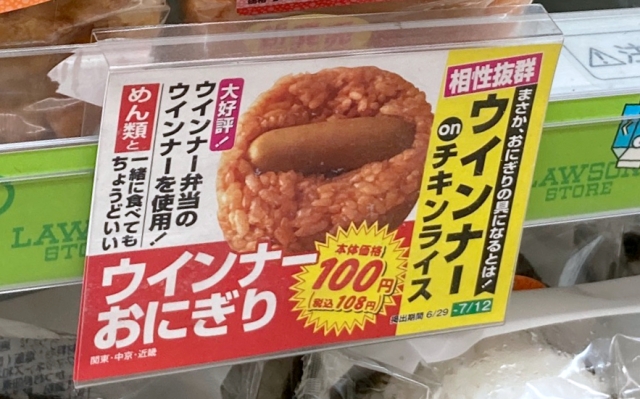
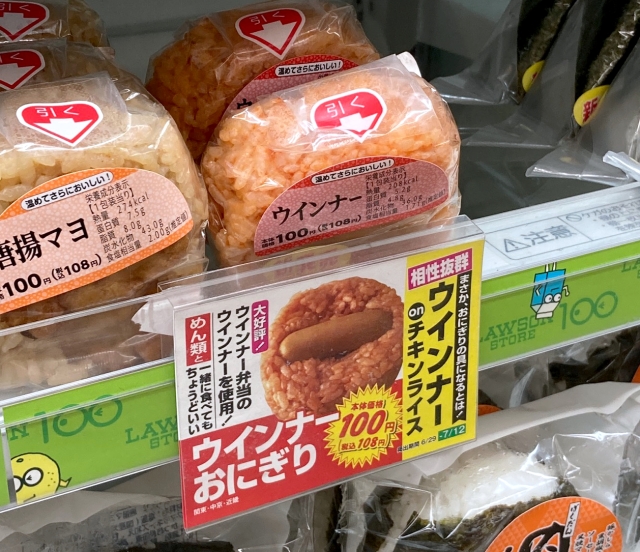
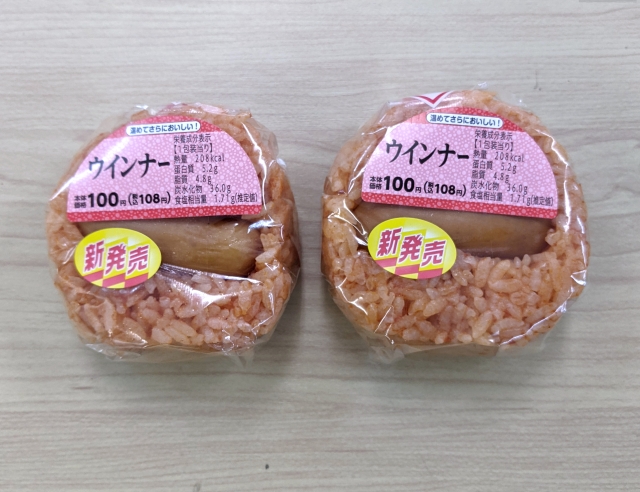
To commemorate the first anniversary of the Weiner Bento’s release, Lawson Store 100 is now giving customers another taste of the sausage, with an all-new onigiri rice ball called “Weiner On Chicken Rice“.

▼ Priced at just 108 yen (US$0.79)

Our weiner-loving reporter Mr Sato — who once ate a bento packed with 16 weiners — couldn’t resist the lure of the weiner onigiri, so he was thrilled to find them in stock at the store when he visited.

▼ People have already been raving about these online, so Mr Sato snatched up the last two for a taste test.

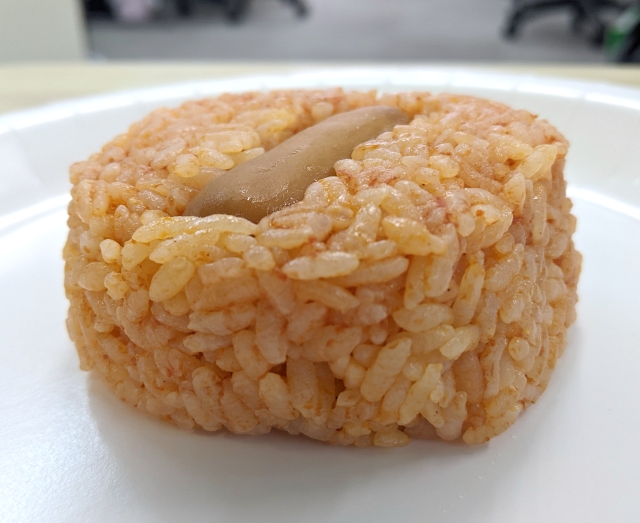
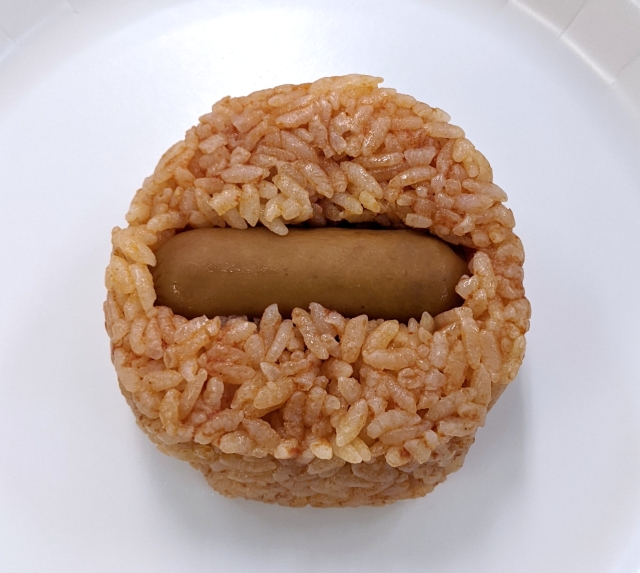
The unorthodox “filling” might be simpler than other rice balls, but it was clear that careful thought and attention had been given to its placement.

It was perfectly tucked into the centre of the ball, and from the side, the Weiner didn’t jut out even a millimetre from its bed of rice.

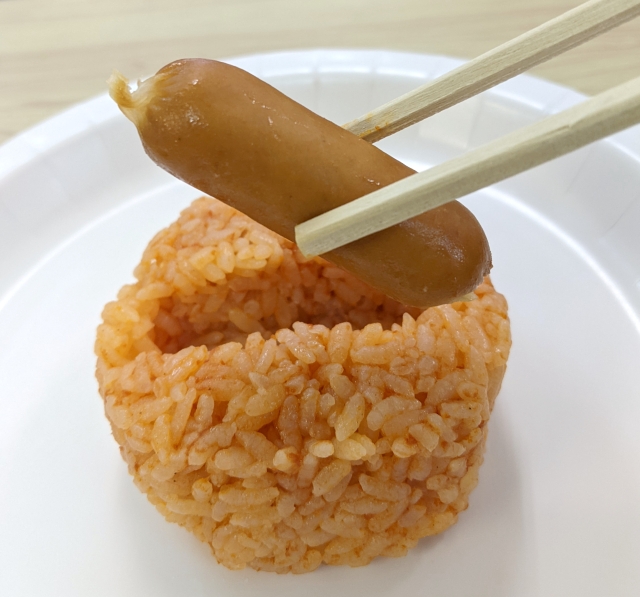
Mr Sato grabbed a pair of chopsticks to examine the Weiner more closely, and when he plucked it out of its resting place, it came loose with a satisfying pop. He was pleased to find that, just as the store had advertised, this was exactly the same type of Weiner used in the popular Weiner Bento from last year.

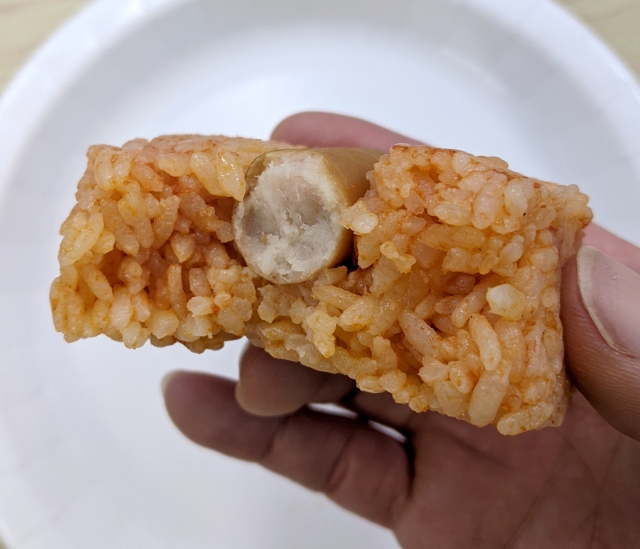
Mr Sato popped the sausage back into position and delved in for a bite. He immediately sensed the well-rounded balance between rice and Weiner in the first mouthful, giving him an even greater appreciation for its placement.

▼ Designed so that both ingredients combine perfectly with every bite.

This sense of unity in the rice ball gave it a high ranking on Mr Sato’s scale of degree of onigiri perfection, but then he remembered something…what about the chicken rice? 

▼ The sign did proudly say “Wiener on Chicken Rice“, after all.

Mr Sato prides himself on his acute sense of taste, and his taste buds were telling him this was no chicken rice.

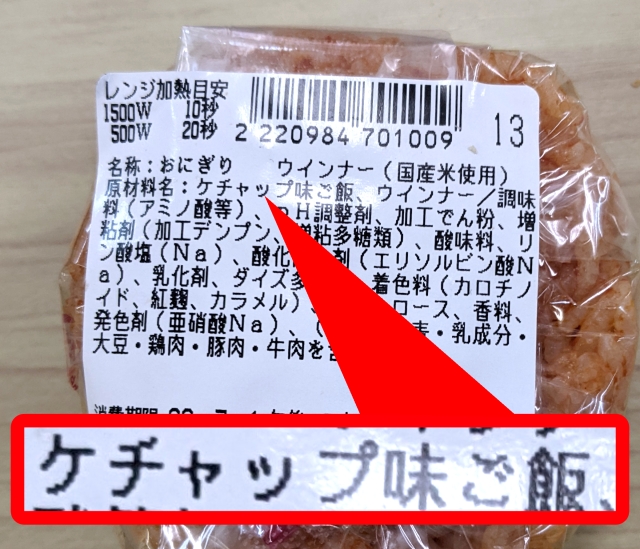
So he took a look at the ingredient list on the back of the product and found…

▼ …it says “ketchup-flavoured rice“!!

As Mr Sato had suspected, this Weiner wasn’t tucked into a bed of chicken rice — it was cosying up to a mound of ketchup rice instead. At first glance, it might seem odd that the store would advertise it as chicken rice instead of ketchup rice, but these dishes do look similar so they’re sometimes used interchangeably.

From his experience working at a restaurant, Mr Sato knows both types of rice contain ketchup and are commonly used in omurice (“omelette rice”). However, “chicken rice” contains bits of chicken, and “ketchup rice” has no chicken, so although they look similar, the flavour is slightly different.

That was the only gripe Mr Sato had with these rice balls, though, because they were absolutely delicious. Unusual rice balls like these often sell out, and they’re only around until 12 July, so if you see them on the shelf, be sure to try them. And if you’re feeling creative, you can always try adding some whiskers and an omelette blanket to give them some kawaii flair!

Images © SoraNews24
● Want to hear about SoraNews24’s latest articles as soon as they’re published? Follow us on Facebook and Twitter!
Naomi Watanabe’s New York food budget leaves TV co-stars and netizens stunned

https://ift.tt/UYVhMco Katie Pask

People were shocked to learn that eating out in the Big Apple comes with a big bill at the end of your meal.

Beloved Japanese comedian Naomi Watanabe made headlines when she announced that she was moving to the U.S. last year. She’s currently back in Japan temporarily to rehearse for her upcoming role in the musical Hairspray, and to celebrate her brief return she appeared on popular talk show Shabekuri 007.

During her time on the show, Naomi talked about meeting Beyonce again during her stint as a model for Ivy Park and got to meet her crush, Shota Totsuka from Japanese boyband ABC-Z.

But naturally, the chat turned to Naomi’s time spent in the U.S. and her lifestyle there. On her days off, she commented, she enjoys walking around Central Park. “No one knows who I am in New York, so I can go for walks without any problem,” she said.

But it was when the topic turned to food and eating out that the conversation really heated up. “New York is really expensive. It’s on a level that can’t even be compared to food in Japan.” When pressed further, Naomi said, “For breakfast, a fried egg, bread, and tuna salad costs about 7,000 yen (US$51.31).”

▼ But you can just round it up to an even $52.

The chat show hosts were shocked, with co-host Ken Horiuchi commenting “Isn’t a hamburger about 1,000 yen (US$7.33)?” Naomi was quick to correct Ken, commenting “They’re more like 2,400 yen (US$17.60) these days.”

Co-host Teppei Arita questioned Naomi further, saying “Surely that’s just because you eat at fancy rooftop restaurants, right?” Naomi quickly denied it, saying “Please don’t assume that.”

But it wasn’t just the Shabekuri 007 hosts who doubted Naomi’s claims of exorbitant prices. Japanese netizens were quick to crunch the numbers, and looked up how much a McDonald’s Big Mac in the U.S. costs. “The current price of a Big Mac meal is US$5.99, or about 790 Japanese yen. Where is she getting 2,400 yen from?” one user commented. Other netizens were left similarly stunned at the amount of money Naomi was dropping on breakfasts in New York.

7,000 yen for breakfast is what you’d expect to pay at a fancy hotel.”
“I wonder if it’s equally expensive to cook at home?”
“If breakfast at Sukiya cost me 7,000 yen… I couldn’t live like that.”
“You could buy seven Big Mac sets for that price!”
“Buying food at the supermarket is much cheaper in the US than in Japan, but eating out is way more expensive.”

While obviously no one knows her breakfast habits more than Naomi Watanabe herself, it’s quite possible that the amount she’s spending is so high due to, like the chat show host said, the fact that she’s likely forgoing McBreakfasts and favouring somewhere slightly more upmarket for her morning meals.

It’s also equally plausible that, as one of the biggest cities in the world, life in general is just more expensive in New York. Using McDonald’s once more as an example, a single Big Mac in the US costs US$3.99 [543 yen], whereas here in Japan it will cost you just 390 yen [US$2.86].

Either way, while she’s back in Japan, Naomi Watanabe might want to take advantage of how much cheaper eating out here can be, and if she’s looking for a breakfast that won’t break the bank, this breakfast donut is less than two dollars.

Source: Sponichi Annex via Otakomu
Top image: Pakutaso
Insert image: Pakutaso
● Want to hear about SoraNews24’s latest articles as soon as they’re published? Follow us on Facebook and Twitter!
Grab your pantyhose and let’s make inverted eggs, a Japanese foodie favorite from the Edo period

https://ift.tt/9ZzhN5b Casey Baseel

Today in the SoraKitchen we’re trying out hand at one of the 10,000 Cooking Treasure Secrets of a samurai-era cookbook.

With the proliferation of social media and high-quality smartphone cameras, photographing your food has become a worldwide phenomenon. Japan was ahead of the game in that regard, though, as taking snapshots of gorgeous or unique-looking meals was a thing among Japanese foodies even before digital photography.

Actually Japan’s deep appreciation for aesthetics in edibles goes back even further. In 1785 the Manbo Ryouri Himitsubako (“Box of 10,000 Cooking Treasure Secrets”) was published, and this Edo-period cookbook contains a recipe for something called hanten yudetamago, or “inside-out boiled eggs.”

So what makes them inside-out? If properly prepared, the white and yolk of the egg will swap places, so that when you peel away the shell the egg will be yellow on the outside with a white center.

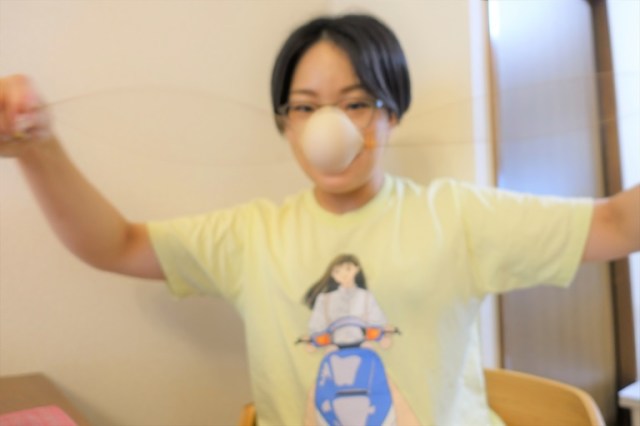
▼ The plan

Our Japanese-language reporter Haruka Takagi wanted to try making some inside-out eggs, but seeing as how it’s been more than two centuries since the Manbo Ryouri Himitsubako’s recipe was published, she decided to use some more modern tools and technology.

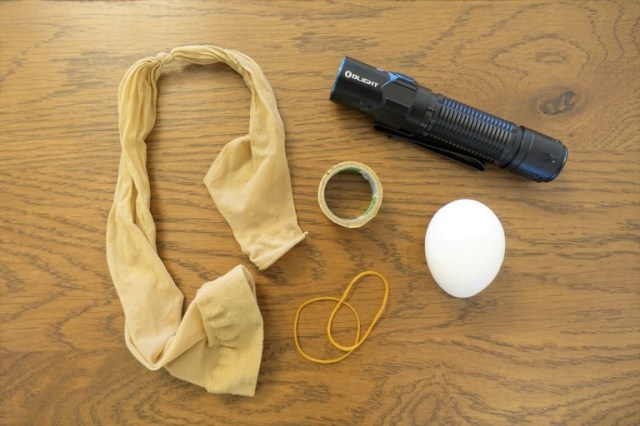
For this recipe, you’ll need:
● An egg
● One pantyhose stocking
● A flashlight
● Tape
● A rubber band

▼ Yeah, it’s weird that the food is the outlier in what’s needed for this recipe, but here we are.

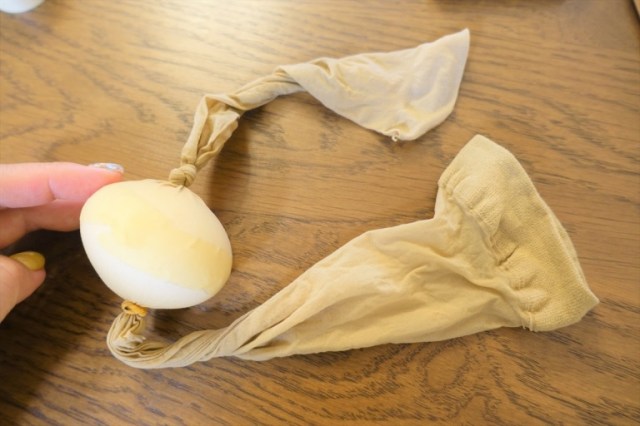
Step 1: Tie a knot near the middle of the stocking. Place the egg inside the stocking, then seal the stocking tightly with the rubber band. You want to make sure the egg is situated like it is in the photo below, with the tips pointing out away from the stocking.

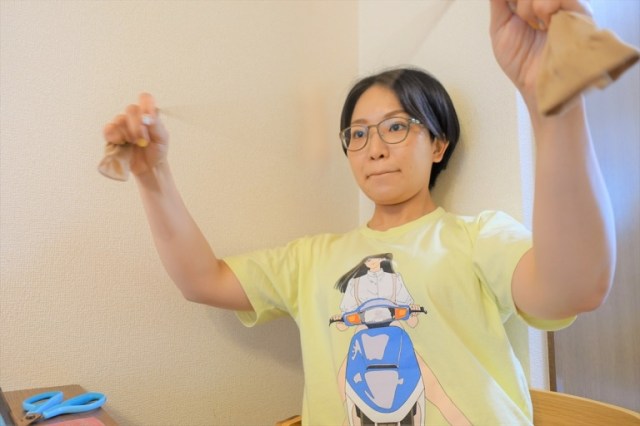
Step 2: Grab the two ends of the stocking, and start spinning!

Why? Because in order to invert the contents of the egg, we need to break the yoke without breaking the shell, so we’re going to use the high-speed momentum to get the inside sloshing around enough to do just that.

Step 3: Things start to get tricky here. You want to spin the egg until the yolk breaks, but not too much more than that. So how do you know if the yolk is broken without cracking the shell?

There are two ways. One is to listen for a popping or tearing sound coming from inside the egg, which should occur when the yolk breaks. Unfortunately, you may not be able to notice this sound (Haruka didn’t), especially if you’re shouting “Wheeeeeeee!!!!” while you’re spinning the egg around.

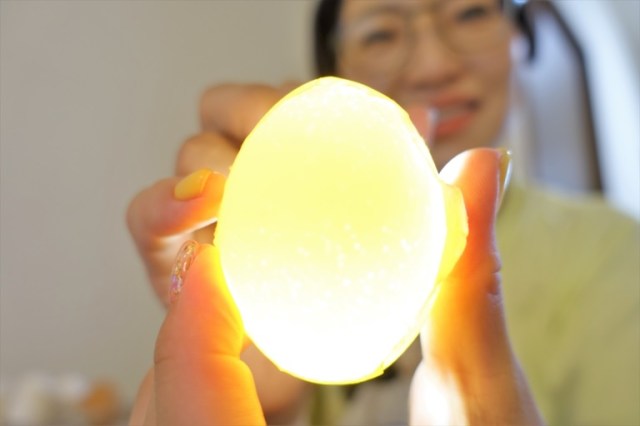
In that case, you’ll need to use the flashlight. Normally, if you shine a bright light on an egg and look at it from the other side, the light should pass through easily, and it’ll look like this.

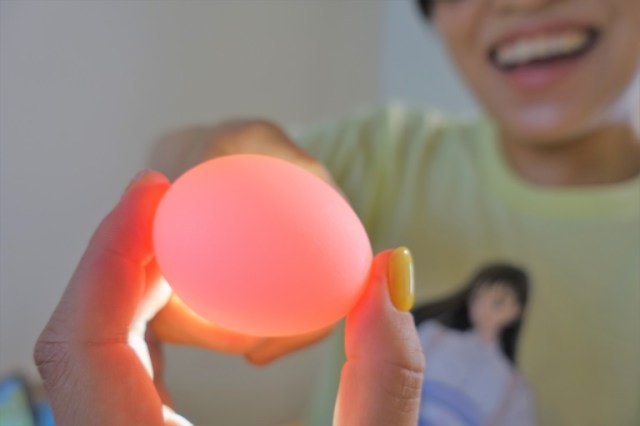
On the other hand, if the yolk has broken it’ll be harder for light to pass through, and the egg will look like this.

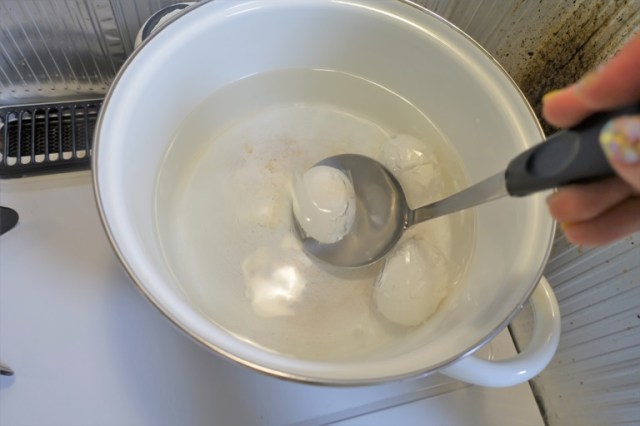
Step 4: Wrap the eggs with tape, then boil them for 10 minutes.

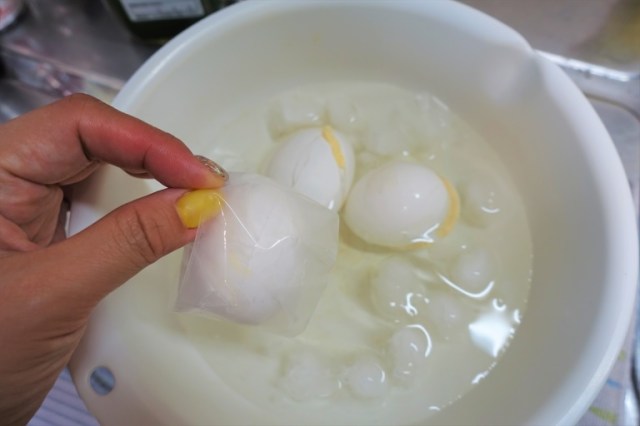
Step 5: After boiling, remove the eggs and chill them in a bowl of ice water.

Step 6: After the eggs have chilled, peel their shells, and you’re done!

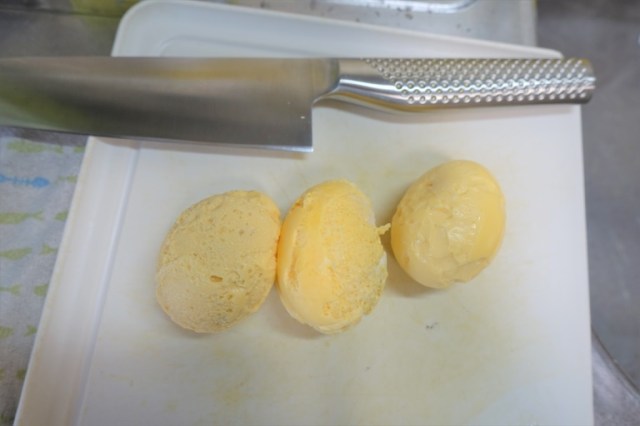
Sure enough, Haruka’s eggs were yellow on the outside! And on the inside…

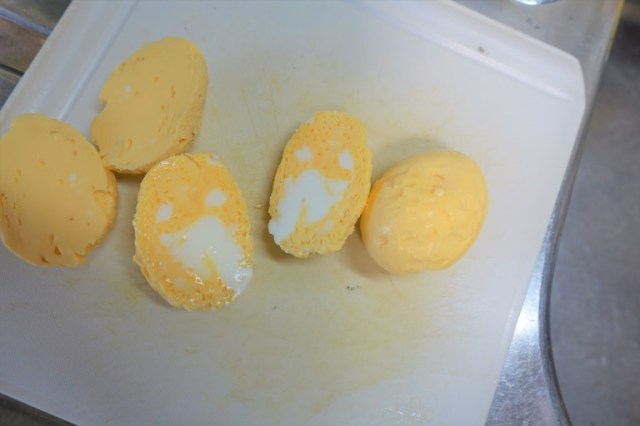
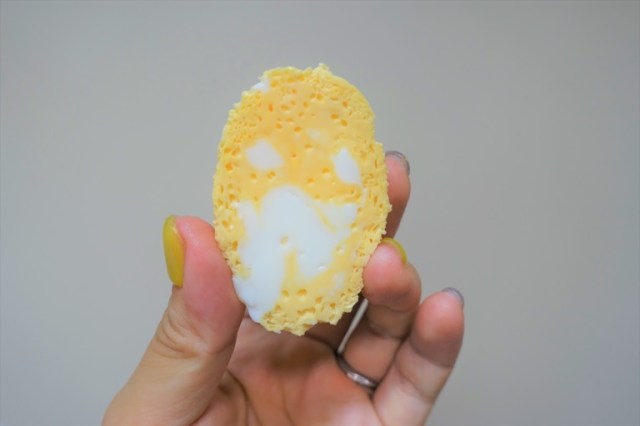
…they were sort of white!

Remember when we said that you have to spin the egg enough to break the yolk, but don’t want to spin it much more than that? It seems like Haruka kind of overdid things, and her excessive spinning meant that after the yolk broke, she ended up mixing it too thoroughly with the rest of the egg, which is why some of hers turned out a uniform yellow, like a scrambled egg. That also explains why some of the eggs became more inverted than others.

For Haruka, taking a bite felt a little discordant, since you’re essentially getting the stronger eggy flavor and more powdery texture of the yolk as your first sensation, which is the opposite of what happens when you eat a regular boiled egg.

▼ It’s not just how they look, but the eating experience too that’s inside-out.

But hey, maybe that’s something you’d get used to, just like how you probably get used to how long you have to spin the egg for the best visual results.

Photos © SoraNews24
● Want to hear about SoraNews24’s latest articles as soon as they’re published? Follow us on Facebook and Twitter!
sábado, 2 de julio de 2022

Sony’s wearable air conditioners selling like cold cakes in heat-stricken Japan

https://ift.tt/7bhmfZI Master Blaster

Sony’s got what now?!

I always thought it’d be nice if someone could develop wearable air conditioning tech that’s a little more sophisticated than those working AC capsule toys we tried out a while back. So, imagine my surprise to find that Sony had already done it, and three years ago no less.

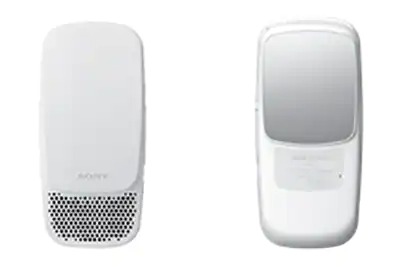
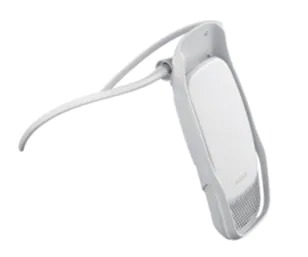
Reon Pocket is the name of this device which is now in its third generation. It’s a small unit designed to be pressed against the middle of your shoulders and deliver cool air right down your spine.

Image: Sony

The first Reon Pocket was made from a successful crowdfunding campaign in July of 2019, in which their target amount of 66 million yen (US$485,000) was hit in one week. Thanks to that success, Sony then put them out for retail the following year and moved 10,000 units in two days.

Despite the huge popularity in these limited releases, Sony has been pretty low key about the product so far. There’s a slew of videos featuring YouTubers trying out Reon Pockets, but no actual promotional videos from Sony themselves.

▼ Since all the review videos are in Japanese, here’s one of the more physically animated ones to give a more universal sense of how it works

Perhaps it’s because they feel the product still isn’t quite up to their notoriously high standards. Since 2019, they’ve been constantly making improvements which have so far resulted in the Reon Pocket 3, which came out earlier this year and features heightened cooling efficiency that’s 50 percent better than the previous model.

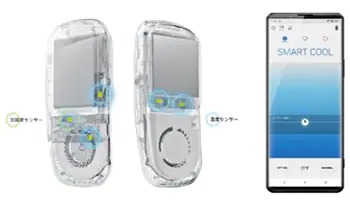
Sony has also picked up some tricks from smartphone development and applied them to this devices as well. Reon Pocket 3 is equipped with motion sensors to detects the wearer’s movement and provide cooling appropriately. For those who would prefer to control their own cooling power manually, that can be done to via a dedicated smartphone app.

Image: Sony

It also has a built in battery that fully charges in about 100 minutes via USB-C and lasts from eight to 61 hours in cooling mode or 27 to 54 hours in warming mode depending on the intensity. That’s right, these little things can also act as wearable heaters in the winter.

In either case, they can be worn using a specially designed neckband harness.

Image: Sony

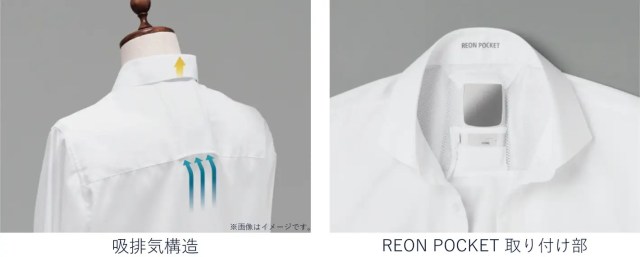
For more seamless cooling and heating, Sony has also teamed up with several labels to produce a line of business shirts and golf shirts that have built-in pockets for Reon Pocket.

Image: PR Times

Surprisingly for a Sony product, they’re not all that expensive either, retailing for about 14,850 yen (US$109) a pop. At such a price during a potentially unprecedented heat wave in Japan, it’s no wonder that a Sony rep said that sales have been “more than expected.”

Comments online certainly seem to be expressing a lot of desperation to find any kind of relief from the heat.

“It’s good for the season that’s coming, but I’m just impressed with the technology of it.”
“I like the sound it makes when it’s working. People don’t think about that, but it’s important when you use it every day.”
“I want to put on sunscreen, but I sweat too much from the heat. Maybe this can help.”
“I wonder how long they last. I don’t want to have to get one every year.”
“Sony’s making everything these days.”
“I can’t handle the summer, so I’m going to get one soon.”

I might just do the same. Even though I’m still skeptical about how much it really cools people while the Japanese summer is hurling it’s worst at them, it’s still got to be better than everything else we’re tried so far.

Source: Sony, PR Times via ITmedia Business Online
Top image: Sony
● Want to hear about SoraNews24’s latest articles as soon as they’re published? Follow us on Facebook and Twitter!
Adult video mosaic destroyer’s trial ends with guilty verdict in Kyoto district court

https://ift.tt/FVYgIch Casey Baseel


Machine-learning A.I. used to try to skirt Japanese censorship laws.

Last October, officers from the Kyoto Prefectural Police arrested Masayuki Nakamoto, a resident of the city of Takasago, in Hyogo Prefecture. Nakamoto stepped into the sights of law enforcement when he began selling copies of adult videos online, and on Wednesday a verdict was reached in his trial.

The videos the 44-year-old Nakamoto had been selling weren’t just simple pirated copies, though, but videos that he had altered to appear uncensored. Japanese adult videos are required by law to obscure the performers’ genitals, with placing a mosaic over them the most common form of compliance. Nakamoto, though, was selling adult videos that looked like they had their mosaics removed.

“Looked like” is because since the mosaic is hard-coded into the image of the commercially released video, it can’t really be removed. Instead, Nakamoto used an A.I. program, which via machine learning gained an understanding of what uncensored genitals look like, then used that knowledge to create a photorealistic simulated visual representation. Nakamoto then placed the simulated image over the mosaic, making the on-screen performers appear completely uncensored, despite this actually being the second round of digital additions to the original footage, and offered his doctored videos for sale online.

All of that brought charges of copyright violation and “display of obscene electromagnetically recorded media” down on Nakamoto once the authorities caught wind of what he’d been doing. Though he was released on his own recognizance, Nakamoto was back in the courtroom of Kyoto district court on June 29, where presiding judge Shinsuke Danjo sentenced him to two years in prison, with the sentence suspended for three years. The harsh two-year sentence, Danjo explained, was because Nakamoto had regularly and repeatedly engaged in selling the videos over the course of roughly 10 months, while the three-year suspension, which gives him the opportunity of avoiding doing any actual jail time, was in recognition of the remorse he has shown since his arrest. Nakamoto was also fined two million yen (roughly US$15,000), which isn’t chump change, but is still quite a bit less than the approximately 11 million yen he reportedly earned selling the videos.

Twitter reactions to the verdict have included:

“So close!”
“[He] made the dream that men have had for so long come true, but has now been suppressed by the power of the state.”
“Thank you for making our impossible dream come true.”
“Our modern-day Jesus has been crucified. How could they treat a man of such holiness like this…”
“Nowadays, you can find uncensored foreign adult videos online pretty easily, but he wanted to see uncensored Japanese ones so much that he went to all that trouble to try to get around the mosaic? I don’t know if that makes him amazing or an idiot.”

Regardless of how clever Nakamoto’s technique may have been, let his case serve as a cautionary tale and a reminder that other uses for A.I., like using it to design a cool-looking katana or turn a hugely popular anime character into an office building receptionist, is less likely to have you ending up in court.

Source: Sankei News via Otakomu, Twitter (1, 2)
Top image: Pakutaso
● Want to hear about SoraNews24’s latest articles as soon as they’re published? Follow us on Facebook and Twitter!