Páginas

domingo, 2 de mayo de 2021

Japan has $10 bananas from the coldest prefecture in the country, but how do they taste?

https://ift.tt/3nFc6io Casey Baseel

Tropical fruit from Japan’s frosty north.

Bananas aren’t rare in Japan, in the sense that you can find them in any supermarket and also just about any home, as they’re one of the most commonly eaten fruits in the country. However, bananas in Japan are super-rare in the sense that 99.98 percent of the bananas that people eat in Japan are imported.

That statistic means, though, that 0.02 percent of Japan’s bananas are domestically grown, and we were pretty shocked to learn that some of those 0.02 percent come from Hokkaido.

▼ Hokkaido
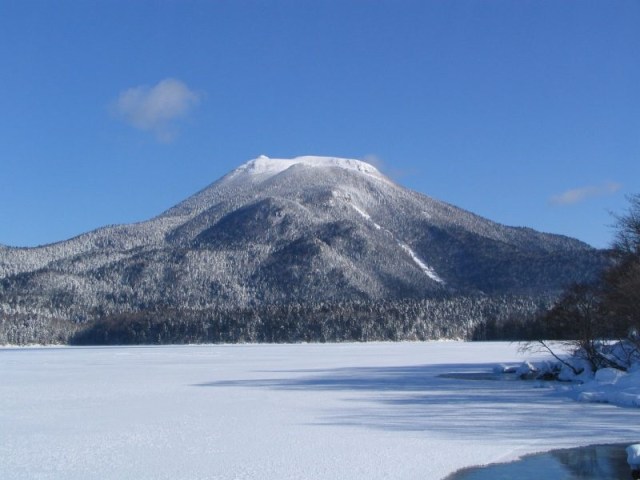
Yes, Hokkaido. Japan’s northernmost prefecture, which spends winter under a blanket of snow, and has the lowest temperature and humidity of anywhere in Japan throughout the year. But they really do grow bananas in the Hokkaido town of Kushiro, and we decided to see what they taste like.
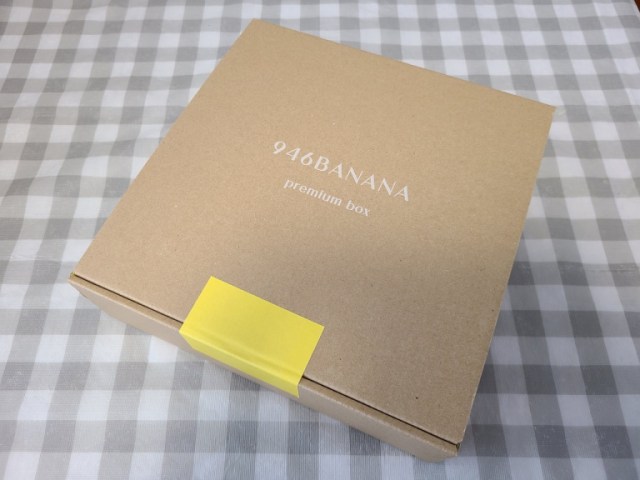
As you might suspect, though, they don’t come cheap. Called 946 Bananas (the digits can also be read as “Kushiro” in Japanese), the price for one is 1,080 yen (US$10.40), about 20 times what an imported banana will cost you at a Japanese grocery store. Oh, and if you splurge for the box set of three bananas like we did? That’ll set you back 4,860 yen (US$50).
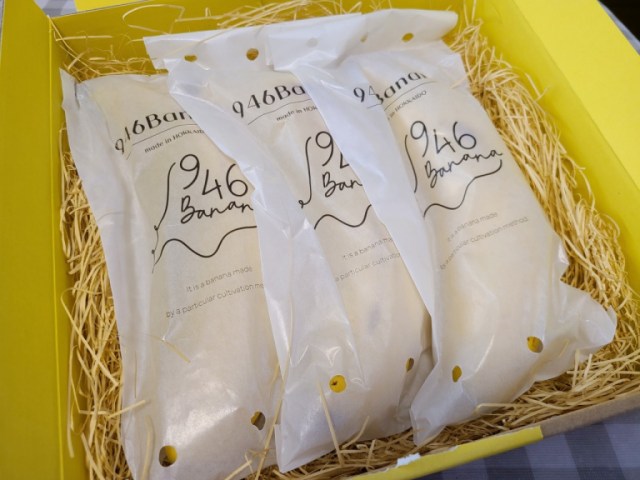
You do get a nice box, though, with individually wrapped bananas nestled in packing straw. The wrappers also have air holes, so that the bananas can continue to ripen during shipping.

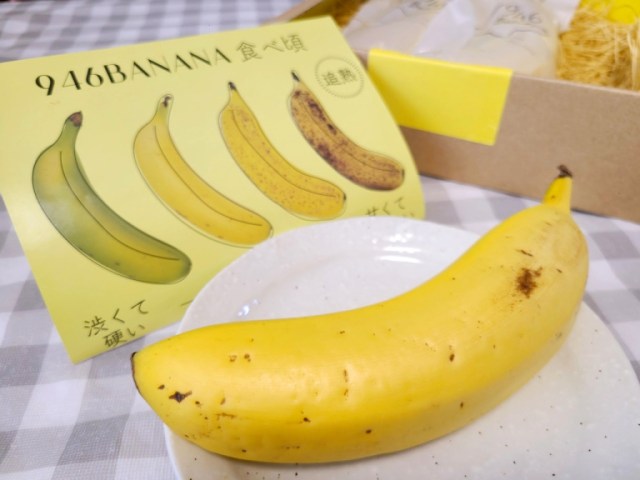
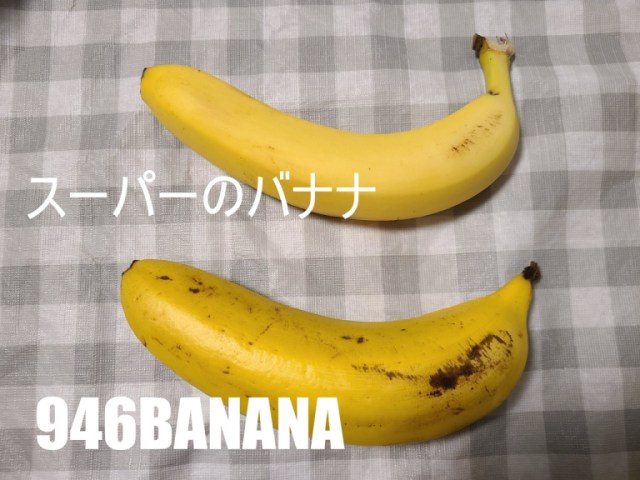
We unwrapped one, and the first thing that struck us was the size, as the 946 Bananas are especially large.

▼ Imported supermarket banana (top) vs. 946 Banana (bottom)
But we’re not Victorian-era aristocrats buying tropical fruit for decorative purposes. Food is for feasting, and it was time to dig in!
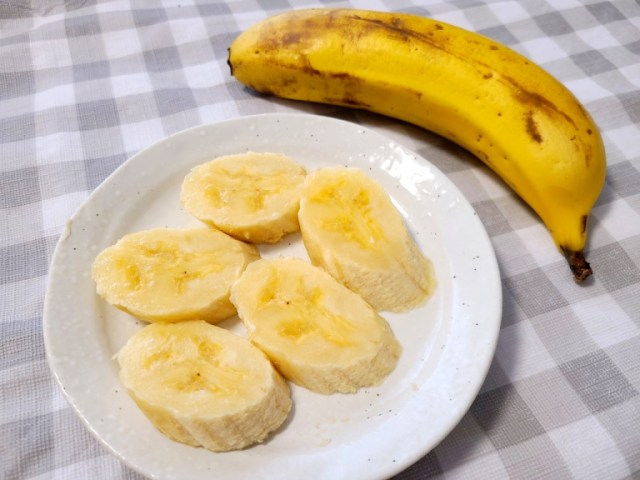
The 946 Banana immediately makes its presence felt on your taste buds. Grown with no pesticides or chemical fertilizers, they have a powerful, but not overpowering, sweetness, which the farmers attribute to the large gap between the high and low temperatures in Kushiro. Moist and rich, our taste-testing reporter Maro was fully satisfied with the fruit.
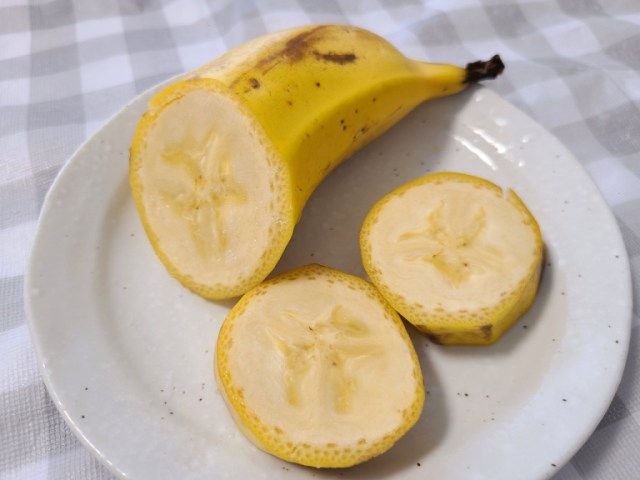
It’s not just their region of origin that makes the 946 Bananas unique, either. They also have remarkably thin peels, so thin that you can eat them!
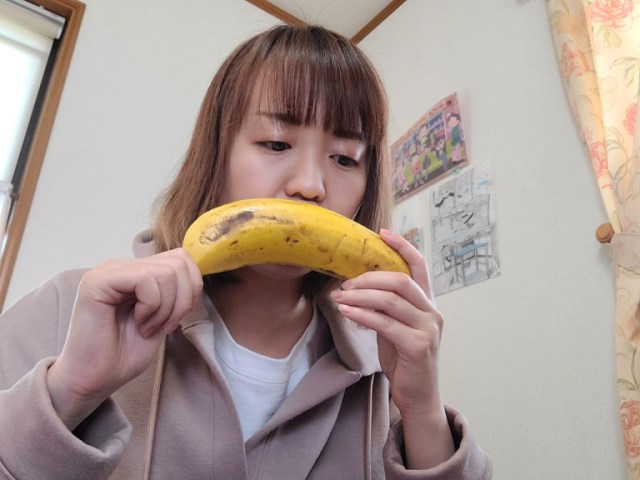
Just because you can, though, doesn’t necessarily mean you’ll want to, at least not raw, as Maro took a bite and found the peel to be pretty bitter. However, the peel is supposedly highly nutritious, and 946 Bananas distributor recommends leaving its bananas unpeeled if you’re tossing them in a blender to make a smoothie, or even slicing and sautéing the peels in a manner like the traditional Japanese vegetable dish kinpira gobo.

946 Bananas can be purchased through their online shop here.

Top image: SoraNews24
Insert images: SoraNews24, 946 Banana
● Want to hear about SoraNews24’s latest articles as soon as they’re published? Follow us on Facebook and Twitter!

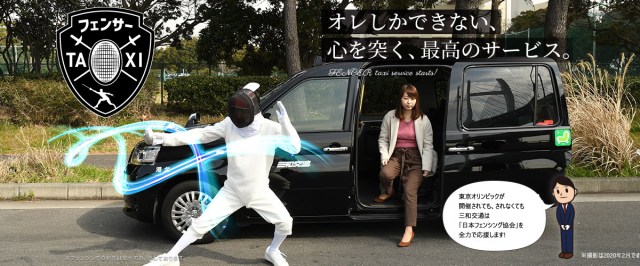
En garde! Fencer Taxi begins in Tokyo, Saitama, and Kanagawa

https://ift.tt/3h2rIvn Master Blaster

“Pointless” you say? Touché…

Even before the pandemic had kneecapped much of their business, Japanese taxi companies have long embraced novel theme cabs as a way to drum up extra business. From sleeping beauty taxis to instant noodle cabs, there have already been scores of creative ideas touring the streets.

They usually have some underlying logic. For example, Kit Kat taxis were deployed during university entrance exam season because the candy bar’s name sounds a lot like the Japanese phrase for “certainly succeed” (kitto katsu).

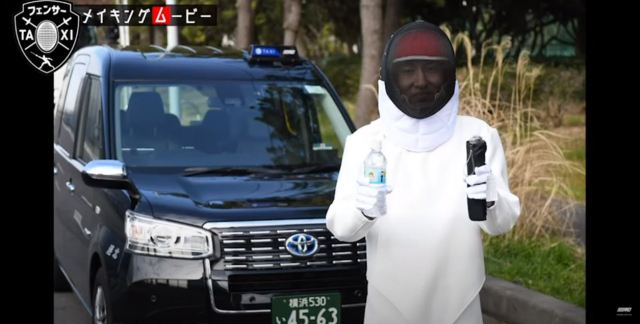
And then there are some that feel logic is overrated, such as Fencer Taxi. This service began on 19 April and charges a base fare of 5,500 yen (US$50) for the privilege of been driving around by a guy in full PPE – fencing PPE that is, not the other kind you always hear about in the news.

It should be noted that the driver is a professional taxi driver, not a professional fencer, though it’s probably best that way. That being said, the driver is quite knowledgeable in the ways of fencing and can answer your questions about the sport to some extent. He will also treat passengers with all the grace and civility of a proper man of arms.

By now you might be thinking, “this is certainly pointless,” and not even know how right your are!

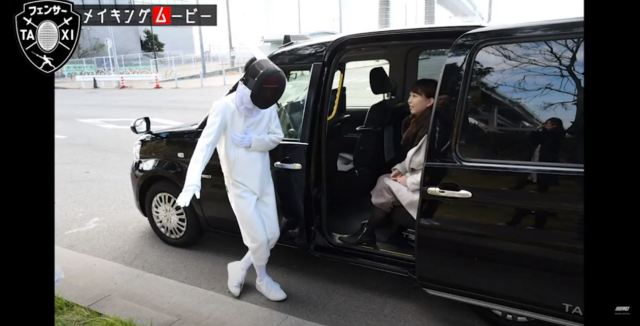
Thanks to Japan’s stringent sword control laws, it’s very hard to prowl around the city with a replica épée, foil, or sabre, let alone a real one. So Fencer Taxi took a real foil and cut off the blade so that it literally “has no point” at all anymore. Just how difficult it is to cut one of those things can be seen in the following making-of video.

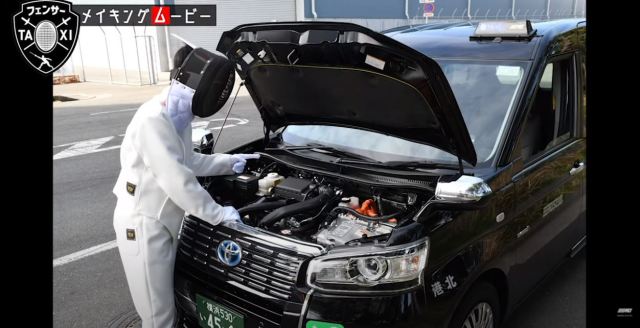
So it would seem for the whole ride, you just kind of have to imagine the blade. However, during trips that cover the Tokyo, Kanagawa, and Saitama area, if at some point the driver doesn’t check the oil and then do a few fancy moves with the dipstick, it’d be a huge waste.

▼ C’mon man! Pull it out!

There are also other services such as bottled water, umbrellas, and facemasks sold at nominal prices. The driver will also be more than happy to pose for photos for people who want to post on social media which really seems to be the target market that Fencer Taxi’s parent company Sanwa Kotsu is lunging for with all this.

It’s also a nice little way to get into the spirit of the Tokyo Olympics, that will probably…maybe happen soon. Considering how hard it’s been to do that recently, every little bit helps.

Source: Sanwa Kotsu, PR Times, Netlab
Top image: PR Times
Insert image: YouTube/三和交通
● Want to hear about SoraNews24’s latest articles as soon as they’re published? Follow us on Facebook and Twitter!

Gorgeous gold Gundams are good-God expensive【Photos】

https://ift.tt/3gSphLG Casey Baseel

For the discerning, deep-pocketed fan who wants to go from Gunpla to Gungold.

The great thing about Gundam merchandise is how the franchise makes sure there are models and figures of its anime robots available at all sorts of different price points. You can pick up a simple plastic Gunpla model for a few hundred yen, and if you’ve got more room in your budget, the Perfect Grade and Metal Build series, with their spiffy diecast components, are waiting for you.

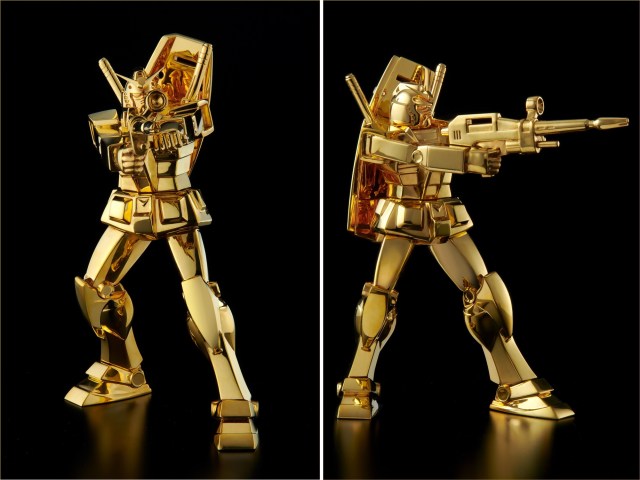
And for those who want to go beyond that? Well, now there’s a pure-gold Gundam.

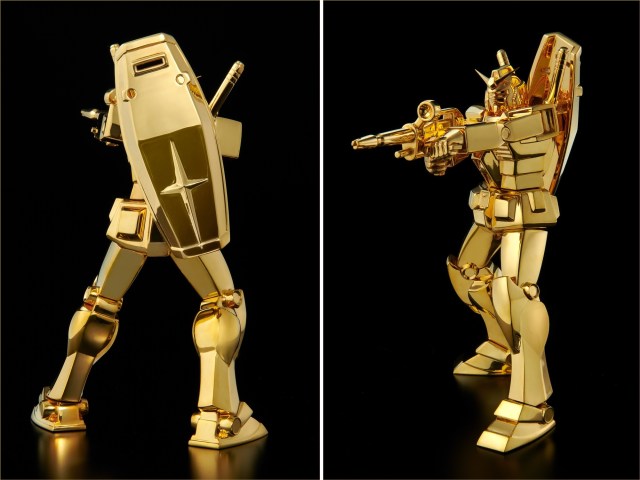
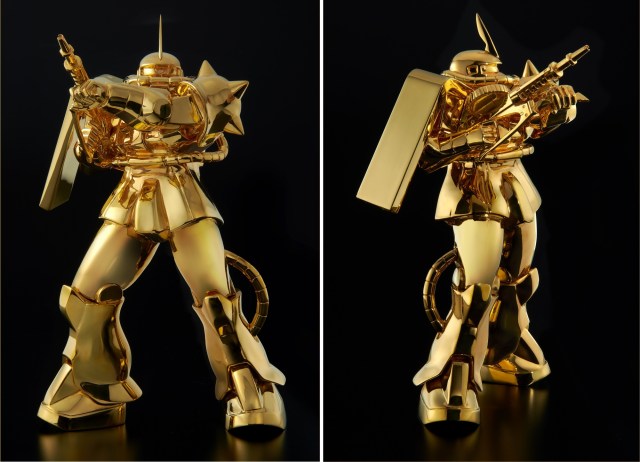
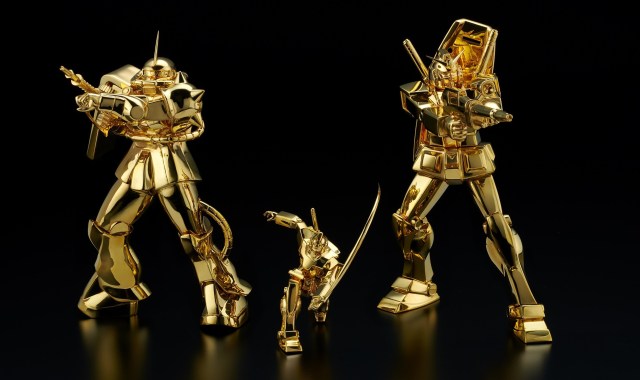
Actually, there are two gold Gundams, both modeled on the RX-78-2 Gundam model from the original Mobile Suit Gundam TV anime. Created by high-end Tokyo-based crafting/jewelry company Kougei in conjunction with U-Works, the larger of the figures, the RX-78-2 Gundam (Beam Rifle Version) stands 18 centimeters (7.1 inches) tall and is made of approximately one full kilogram (2.2 pounds) of 24-karat gold.

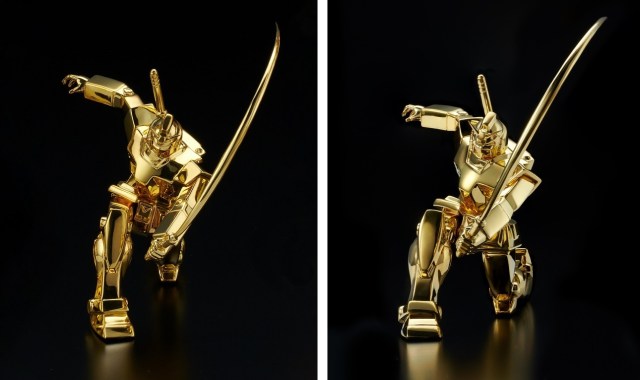
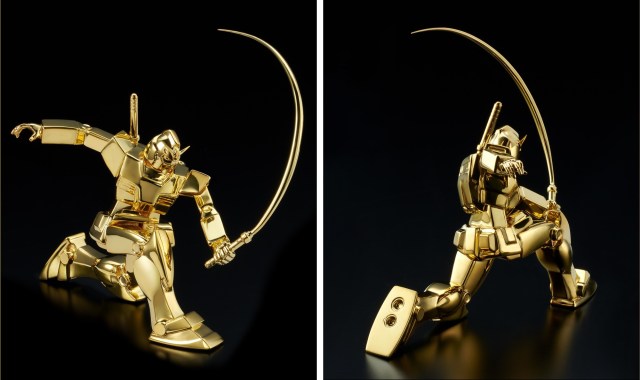
Meanwhile, the RX-78-2 Gundam (Beam Saber Version), also made of 24-karat gold, is a more compact 10 centimeters from base to sword tip and weighs 140 grams.

▼ While the Beam Saber is canonically straight, the figure recreates the motion blur rendered in the anime’s hand-drawn animation.

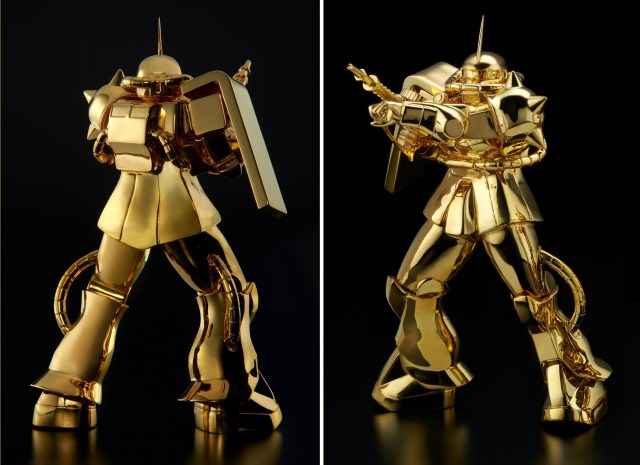
And because no matter where RX-78-2 Gundam pilot Amuro goes his eternal rival, Char, isn’t far behind, Kougei also has a 24-karat gold Zaku II Char Custom.

Though it’s slightly shorter than the Beam Rifle Gundam at 17.5 centimeters tall, its weight is also listed at one kilogram.

▼ The in-anime Char Custom is red, but the gold version retains the horn-like accouterment denoting the Zeon ace’s personal-use mobile suit.

Obviously, these don’t come cheap. The Beam Rifle Gundam and Zaku are priced at 26.4 million yen (US$255,070) each, while the smaller Beam Saber Gundam is a comparative bargain at 3.96 million yen (US$38,260), making them much more expensive than the Gundarium Alloy Gundam figures that were sold last year.

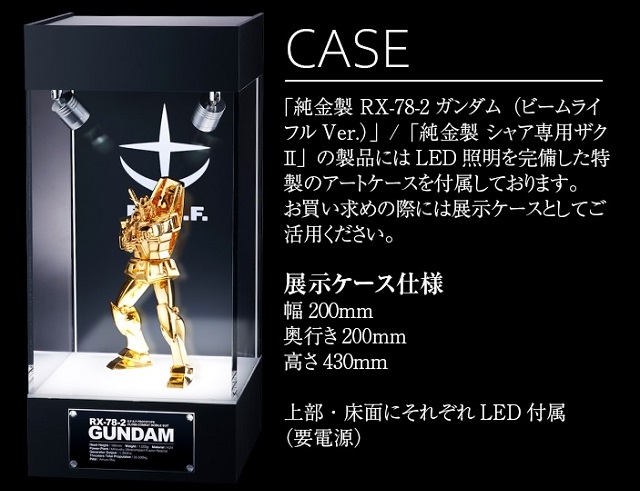
▼ But hey, they come with an LED-illuminated display case!

Only 20 units each of the Beam Rifle Gundam and Zaku will be made, while the Beam Saber Gundam is rarer still, limited to just 10 units. Interested buyers can contact Kougei via their contact form here, since these aren’t the sort of anime trinkets you just punch in your credit card number to buy.

Source: PR Times via Otakomu
Top image: Kougei
Insert images: U-Works, Kougei
● Want to hear about SoraNews24’s latest articles as soon as they’re published? Follow us on Facebook and Twitter!
Japanese schoolgirl and karate teen subdue violent shoplifter

https://ift.tt/3tkTFkB Casey Baseel

Martial artist happy to be able to put skills to use.

In a Japanese city, you’re never very far from a vending machine or convenience store. Those who are both thirsty and savvy, though, will skip them and instead head for a supermarket, where the prices of individual drinks are much cheaper.

However, even the prices at a supermarket in Yokohama’s Isogo Ward apparently weren’t low enough for one 19-year-old shopper. Well, maybe he shouldn’t be called a “shopper,” since instead of buying anything he decided to just steal a drink last Tuesday night. Showing off a talent for multi-tasking, the shoplifter decided to add assault to his list of crimes by punching a 54-year-old security guard in the face after he spotted the theft and confronted the man about it.

Luckily, help was nearby, though not in the form of additional security staff. A 17-year-old high school girl who had been on her way home and heard the commotion came to the rescue, grabbing the violent shoplifter by the arm. When the shoplifter shook her off and tried to run away, the schoolgirl’s 18-year-old male companion gave chase. He quickly caught up to the shoplifter, put him in a headlock, and delivered a series of knee strikes to subdue him until the police arrived and placed the shoplifter under arrest.

The teens have been issued a letter of commendation from the Kanagawa Prefectural Police’s Isogo Precinct, and it turns out there’s a reason for the 18-year-old’s combat prowess. “I was able to put my experiences from nine years of studying karate to use,” he said with a smile, adding “I’m glad I was able to help with the arrest.”

So remember, among the many reasons shoplifting is never a good idea is the chance that a crime-fighting schoolgirl or someone who’s been studying martial arts for half their life might be walking by and decide to show you their fists (or knees) of justice. Sure, the odds are pretty low, but just like with giant robots appearing, sometimes those anime-sounding scenarios actually do happen in real life.

Source: Yomiuri Shimbun via Golden Times
Top image: Pakutaso (edited by SoraNews24)
● Want to hear about SoraNews24’s latest articles as soon as they’re published? Follow us on Facebook and Twitter!
Georgian diplomats like to kick back with a can of Georgia Coffee

https://ift.tt/334ZYOt Master Blaster

A can of joe keeps Georgia on their minds.

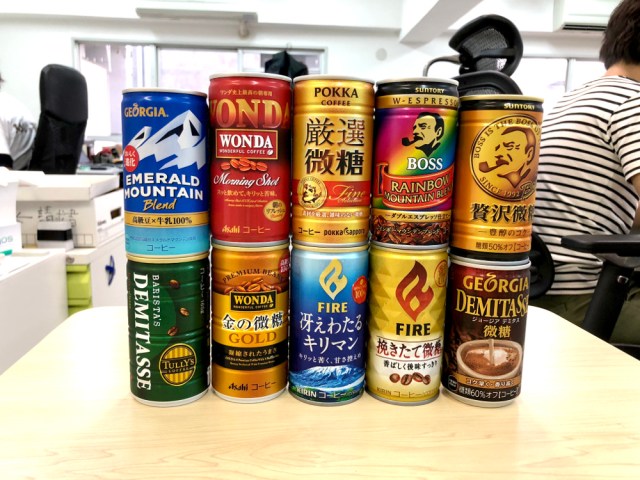
A treat fairly unique to Japan is the vast array of canned coffee sold in vending machines, convenience stores, and supermarkets everywhere. Available in hot or cold and a spectrum of favors and sizes, they can provide the perfect pick-me-up for people on the go.

One of the leading brands of this coffee is Georgia, of which there are many varieties but probably the most well-known is their Emerald Mountain Blend flavor that’s a no-nonsense cream-and-sugar affair, delivering the straight coffee experience.

Emerald Mountain is loved by thousands of Japanese people, and as luck would have it, even nationals of the European country Georgia has come to embrace it, as evidenced by the following tweet from Teimuraz Lezhava of the Georgian Embassy in Tokyo.

“After work drinking Georgia Coffee with members of the Georgian Embassy and thinking about our Georgian hometowns which we haven’t returned to in a while.”

Like much of the world, it seems that these diplomats have been unable to travel far due to the COVID-19 pandemic and are longing for a taste of home. While it’s not exactly the “taste” they were looking for, Georgia Coffee probably helped a bit. Perhaps the image of a snow-capped rocky mountain like one might find in Georgia did the trick.

The whole scene is touching enough that I wouldn’t have the heart to tell them that the name is actually based on the American state of Georgia, where the brand’s distributor Coca-Cola is headquartered. But as luck would have it, this happened on Twitter where there is no shortage of people who did have the heart to tell them among the many other comments that the tweet generated.

“Georgia is named after the U.S. state of Georgia because Coca-Cola is based there.”
“You guys should try Georgia Max.”
“I like how everyone is holding the can so the logo faces the camera, very professional!”
“They look like Jedi knights.”
“Imagine walking out of the convenience store and seeing that.”
“Someone should give these guys a commercial offer.”
“It’s like they just got beamed in from a distant land and time.”
“What are those tubes on their chest?”

The Georgian Embassy’s mascot Zaza the Lion stepped in to answer that last question about the tubes.

▼ “A long time ago there was gunpowder in those so they could carry a lot on their chest and load it into their guns quickly! Of course, it doesn’t have gunpowder any more, but it’s still cool!”

Thanks Zaza! Well, we certainly learned a lot about the country of Georgia and canned coffee today, and considering this is the second time Lezhava has made big waves in Japan with his tweeting, it probably won’t be the last time.

Source: Twitter/@TeimurazLezhava
Top image: Twitter/@TeimurazLezhava
Insert image: ©SoraNews24
● Want to hear about SoraNews24’s latest articles as soon as they’re published? Follow us on Facebook and Twitter!
Japanese apparel maker GBL releases first accessory series featuring Nausicaa characters

https://ift.tt/3vF1yTt Shannon

Because a quality anime deserves quality merch.

If you’re a Studio Ghibli fan, you know they’ve got the best merch. Whether it’s cozy knit sweaters or adorable reusable shopping bags, you can find something Ghibli-related that’s both fashionable and practical.

Now, Japanese apparel maker GBL has teamed up with brass accessory maker My Treasure to release a special accessory series based on Nausicaa of the Valley of the Wind.

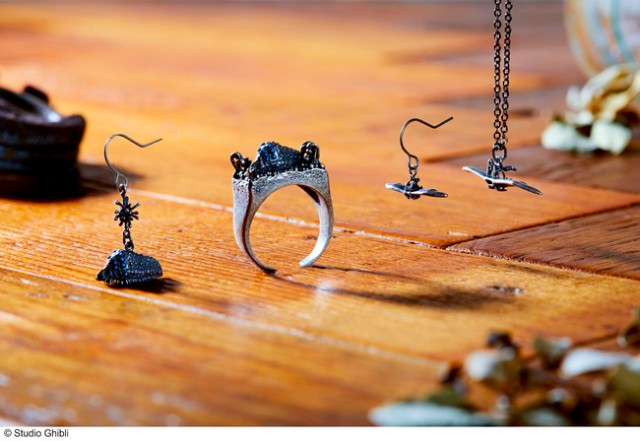
This “Nausicaa of the Valley of the Wind My Treasure” series includes four exquisite items that depict two popular characters in the film: the heroine Nausicaa, and the gigantic monster-like creatures called Ohmu.

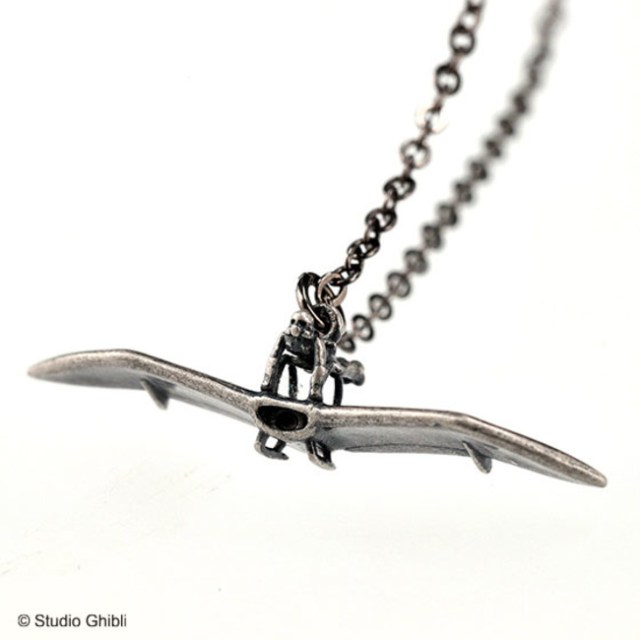
▼ First, a necklace of Nausicaa riding her signature Möwe glider (9,900 yen, US$91).
Nausicaa and her skirt blowing in the wind are depicted in painstaking detail.

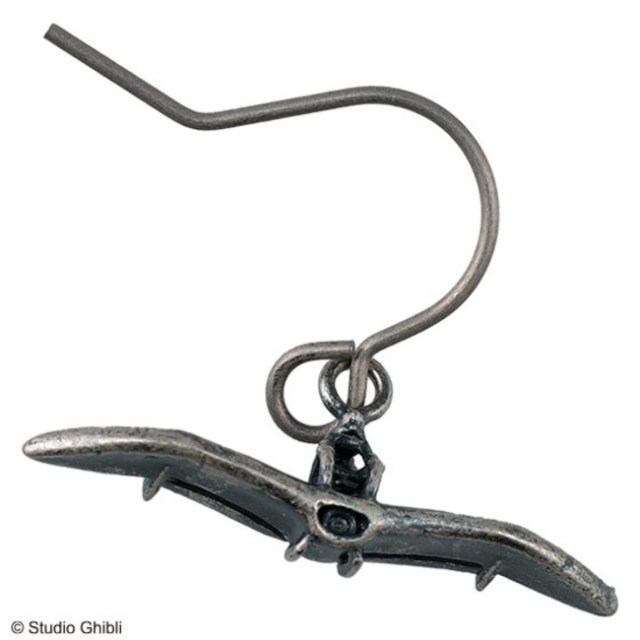
▼ There’s also an earring version of the glider (5,500 yen). As is common with
Japanese earrings, they’re sold one at a time, so you’ll have to purchase two for a set.

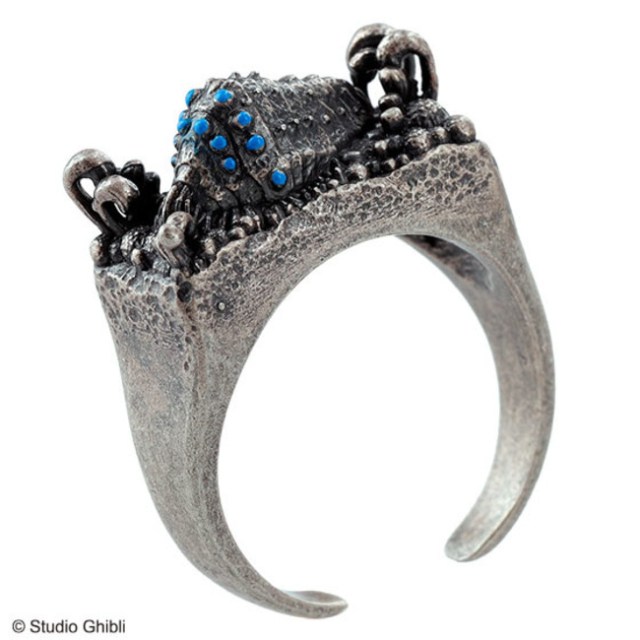
▼ The Ohmu ring (9,900 yen) features the iconic creature with its calm blue eyes.

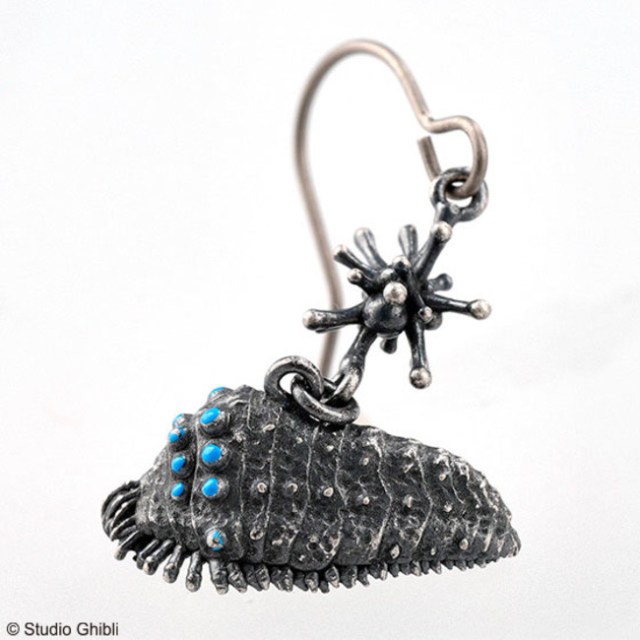
▼ And there’s also an earring version of the Ohmu available too (5,500 yen).

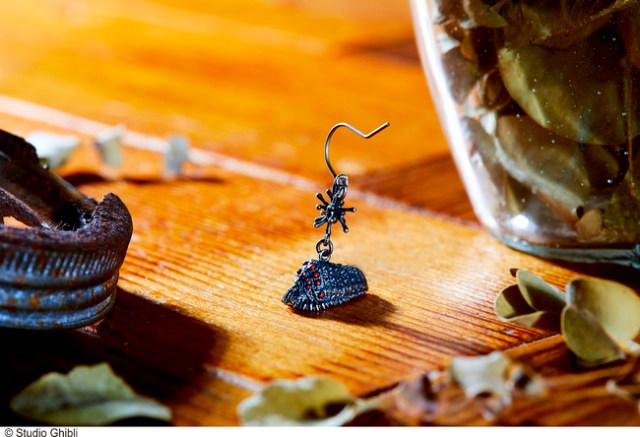
The official GBL shop in Shibuya’s Miyashita Park also has an exclusive set of the Ohmu items with red eyes instead of blue eyes. These can only be reserved in person, but since the shop is currently closed for Tokyo’s third pandemic-related state of emergency, you can only sign up to own one of these babies once the shop opens again.

▼ Here’s what the ones with red eyes looks like.

This “Nausicaa of the Valley of the Wind My Treasure” series will go on sale sometime in July, but reservations have already begun on Donguri Kyowakoku and GBL as of April 27.

So if you’re looking for a way to pay tribute to one of your favorite anime films without making too much of a statement, consider these classy and subtle accessories! They’ll go great with your Spirited Away jacket.

Sources: PR Times via Japaaan Magazine
Images: PR Times
● Want to hear about SoraNews24’s latest articles as soon as they’re published? Follow us on Facebook and Twitter!
New dinosaur fossil discovered on Awaji Island, named after Japanese god

https://ift.tt/3t6TOI1 Master Blaster

Well, new to us at least.

Being the relatively small country it is, Japan doesn’t come across dinosaur fossils as easily as other places like neighboring China, so it’s always a special treat when one is unearthed.

Fukui Prefecture is one place where dino remnants were found, and as a result they went all out decorating one of their stations in full Jurassic fare and established a leading museum in paleontology.

At about the same time, back in May of 2004, an amateur fossil hunter named Shingo Kishimoto came across an interesting specimen in Sumoto City on Awaji Island, part of Hyogo Prefecture. The fossil was in a layer of rock that dated back to the late Cretaceous period, some 72 million years ago.

▼ Sumoto City stretches across the center of Awaji Island

This find caused the nearby Museum of Nature and Human Activities to launch a full survey of the area, which eventually turned up a further 22 fossils. They were all turned over to noted paleontologist Professor Yoshitsugu Kobayashi of The Hokkaido University Museum who, after careful analysis, determined the fossils to be the jaw of a new species of Hadrosauridae.

Hadrosauride were a family of herbivorous dinosaurs known for a duck-bill-like shape in their snouts. That family of dinosaurs was said to thrive during the late Cretaceous period, and this new species is believed to have evolved from it based on the unique arrangement of these jaw bone fragments.

With all the parties involved in this discovery, the big question was who would become this newly discovered species’ eponym. Kishimototops and Kobayashidon certainly had a ring to them, and even though it doesn’t roll of the tongue, Museumofnatureandhumanacivitiesaurus couldn’t be ruled out completely.

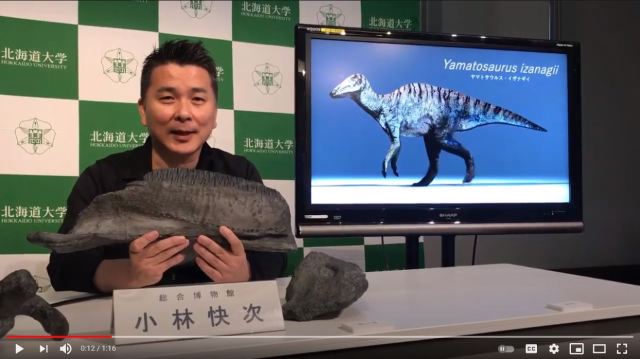
In the end, it would seem a compromise was struck and the long-extinct beast’s name became Yamatosaurus izanagii.

▼ Prof. Kobayashi announcing the dino’s new name,
which you can see in the upper right.

“Yamato” is the name of the the ancient center of Japan, and by extension eventually referred to the entire country itself.

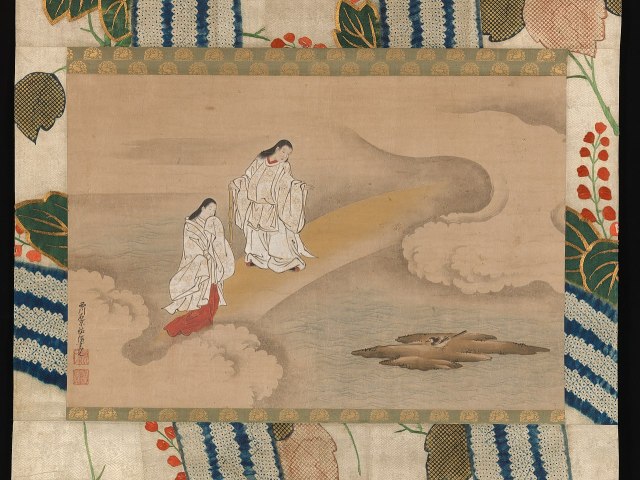
“Izanagi” is the name of one of the creation gods in ancient Japanese mythology. He and his sister-wife Izanami gave birth to all the islands of Japan with none other than Awaji Island the first – the first one they didn’t cast away for being imperfect at least.

▼ Izanagi and Izanami were twins, if you couldn’t tell.

So the name of this dinosaur is linked to the very origins of the country. It’s a poetic appellation that ties together the very long history and prehistory of Japan. Kishimoto said of the name, “I am grateful that it was given a name that identifies it as a Japanese dinosaur from Awaji. I want many people to know about it.”

Yamatosaurus izanagii was believed to have weighed between four and six tons and measured about 7.5 meters (25 feet) long. Prof. Kobayashi believes the location of the fossils in a costal area may help shed light on the effects that environment has on evolution in the species.

All of the fossils will be on display at the Museum of Nature and Human Activities from 12 May for those who would like a peek at these pieces of history. Personally, I’m going to hold out until the inevitable creation of a Yamatosaurus izanagii yurukyara mascot so I can see that too, and kill two dinosaurs with one stone.

Source: NHK
Top image: YouTube/北海道大学【公式】
Insert image: Wikipedia/Nishikawa Sukenobu
● Want to hear about SoraNews24’s latest articles as soon as they’re published? Follow us on Facebook and Twitter!