Páginas

viernes, 29 de abril de 2022

We eat a canned omelette from a Japanese vending machine and hope for the best

https://ift.tt/CzT1WPL Oona McGee

Fingers crossed this dashimaki doesn’t end up looking as old as the machine that sold it.

Our Japanese-language reporter Mr Sato likes to think of canned products as secret treasure boxes, with the contents totally concealed until you open the lid for the big reveal.

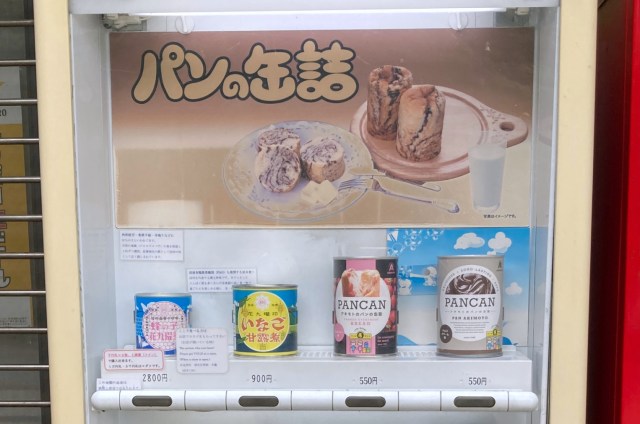
So whenever he spots a new can he hasn’t tried, it twinkles out of the corner of his eye, drawing him towards it like an irresistible beacon, no matter what’s inside it. That’s what happened the other day when he was passing an old vending machine in Tokyo’s Inokashira Park that was stocked with unusual items like canned bread and canned crickets.
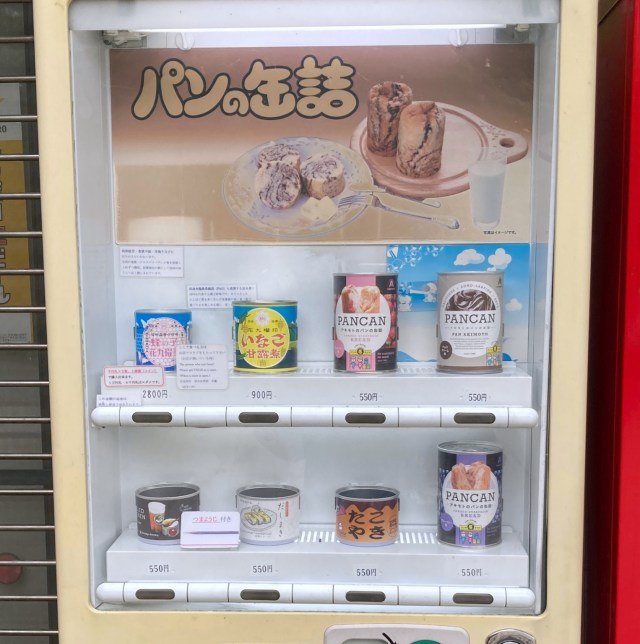
Being a well-seasoned can connoisseur, Mr Sato had already tried these unusual canned products, but as always, the one he hadn’t tried before twinkled before his eyes, and it was labelled “dashimaki“.
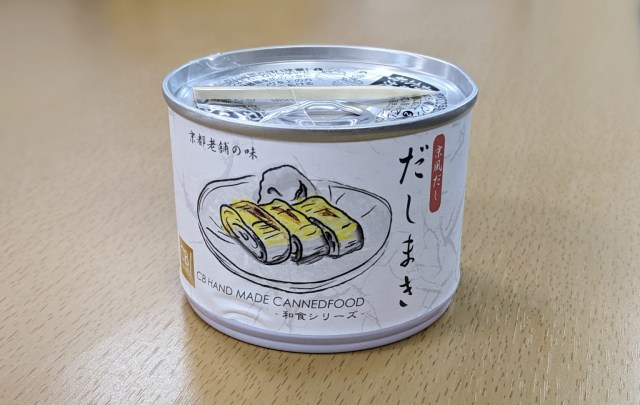
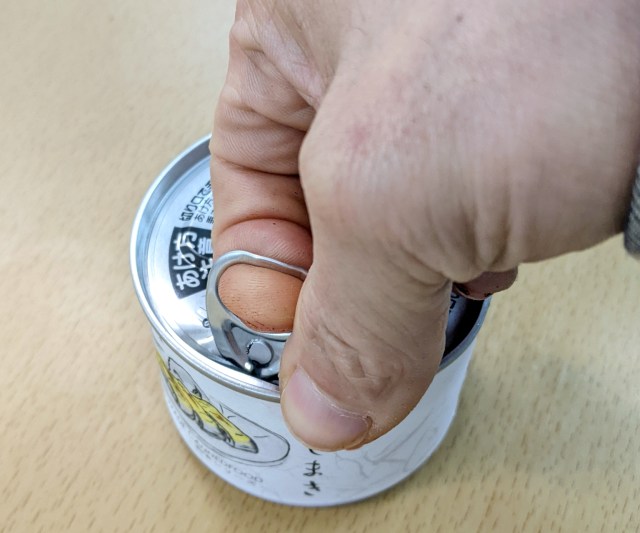
Dashimaki is Japanese rolled omelette, commonly served at restaurants and izakaya taverns, so Mr Sato was keen to find out how a substantial dish like this would fit into a can. He immediately purchased one and took it home, and when he reached for the tab to open it, his heart was pounding with excitement.

▼ Are you ready for the big reveal?
▼ Ta daaa! Treasure!!!
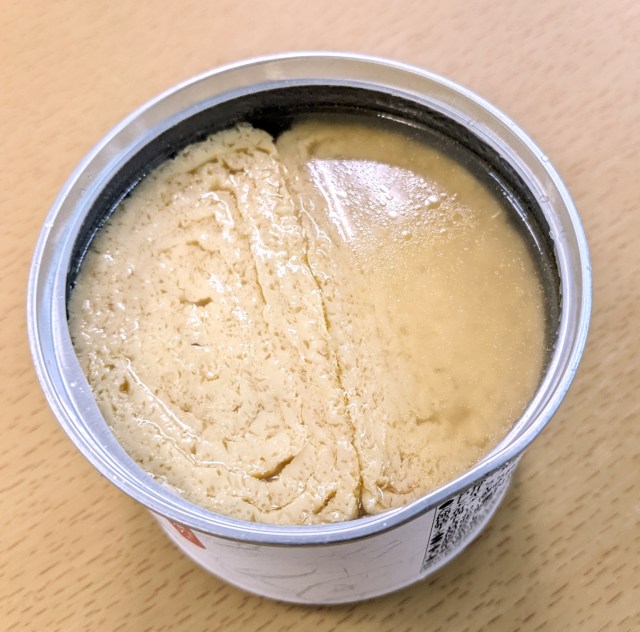
The treasure here was two slices of dashimaki, lying face-up to reveal their beautifully rolled omelette layers. As Mr Sato lifted them out and onto a plate, he was thrilled to discover there was even more treasure waiting for him inside.

▼ Two more omelette rolls!
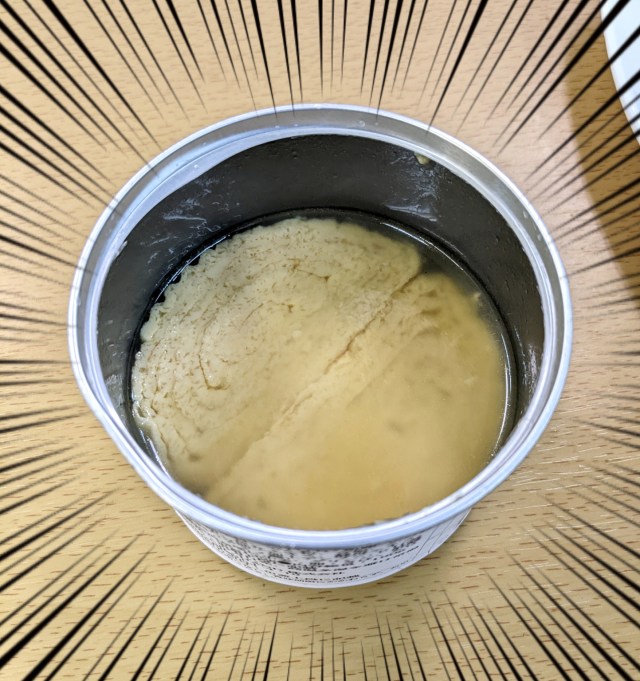
Wow, so that’s how they fit the long omelette roll into such a tiny can! Impressed by the smart packaging skills involved, Mr Sato was now curious to find out if the flavour of the omelette displayed a similar sense of expertise.

▼ Each omelette is hand packed into its can.
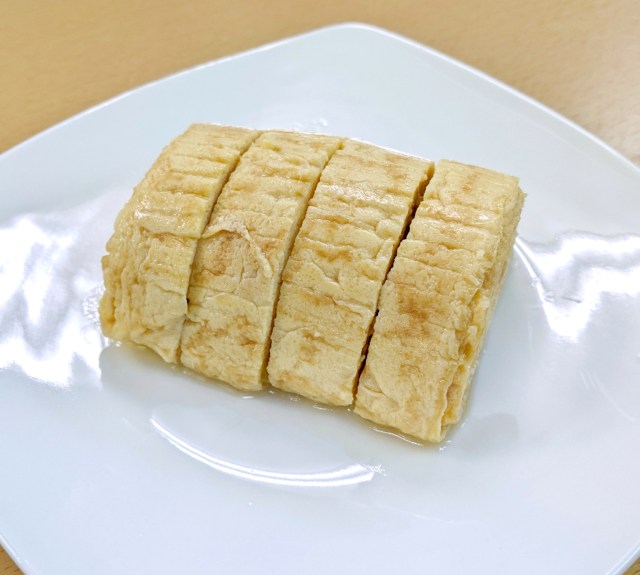
Taking another look at the meal he was about to devour, Mr Sato was pleased to find the dashimaki retained plenty of dashi (soup stock), which was sure to add flavour to the mix. The delicate layers promised to create a light and easy-to-eat texture as well.
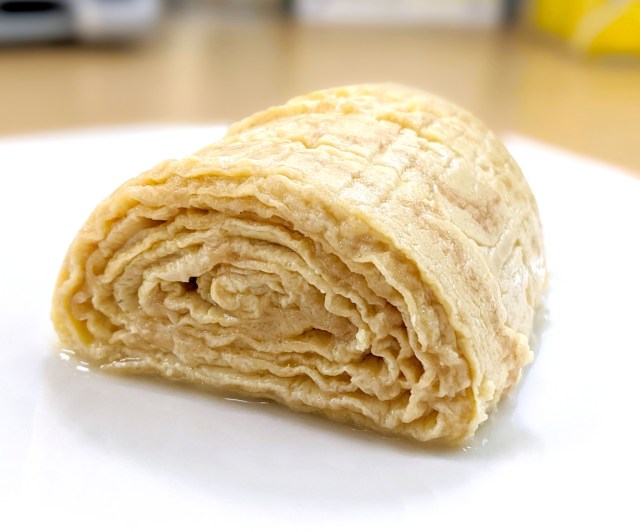
Taking a bite, Mr Sato’s taste buds were immediately flooded with the delicious taste of the soup stock that oozed out from the inside of the omelette. It had an elegant, refined flavour, thanks to the Kyoto-style soup stock that’s used, which gave it the quality of an omelette you’d enjoy at a Japanese restaurant.
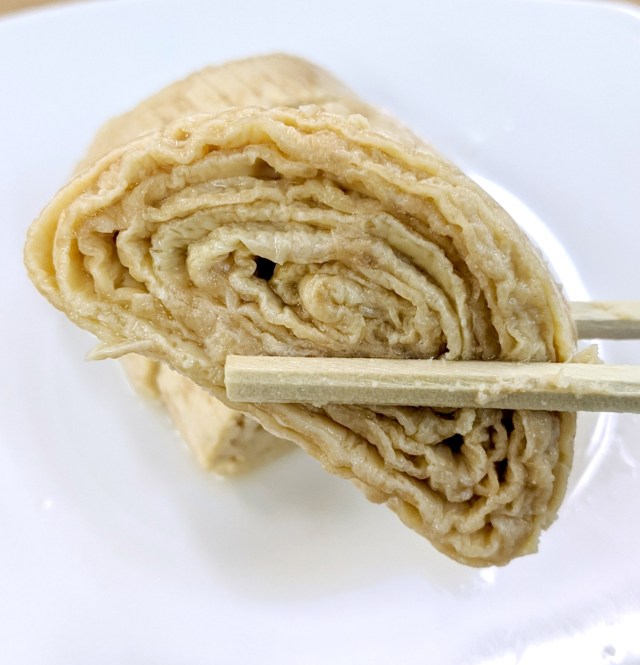
The quality was so high that Mr Sato believes you wouldn’t be able to pick it out as a canned product in a blind tasting. And given the amount of canned food Mr Sato has tried over the years, that’s certainly saying something. 

For 550 yen (US$4.23), this is a great, fun way to try dashimaki, and if you have a bowl of rice handy, you can easily turn it into a tasty meal. Don’t forget to finish it off with a can of hot ramen broth to really complete the experience!

Related: CB・HAND
Images ©SoraNews24 

● Want to hear about SoraNews24’s latest articles as soon as they’re published? Follow us on Facebook and Twitter!


Sonic the Hedgehog creator files lawsuit against Square Enix over disappointing Balan Wonderworld

https://ift.tt/3ieLUWb Casey Baseel

“I want to truly apologize to the people who bought Balan Wonderwold.”

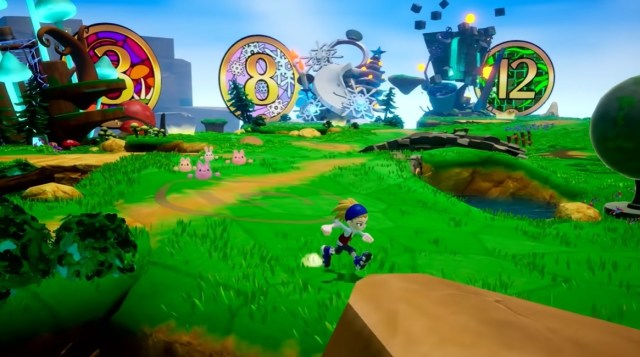
Balan Wonderworld was one of the biggest headscratchers in video games in 2021, and not because of the titular Balan’s odd wardrobe choice of a tophat/eye mask hybrid or the level-ending dance numbers with gibberish vocals. No, the real mystery was how a game directed by Yuji Naka, creator of Sonic the Hedgehog, could have such bland, unengaging gameplay.

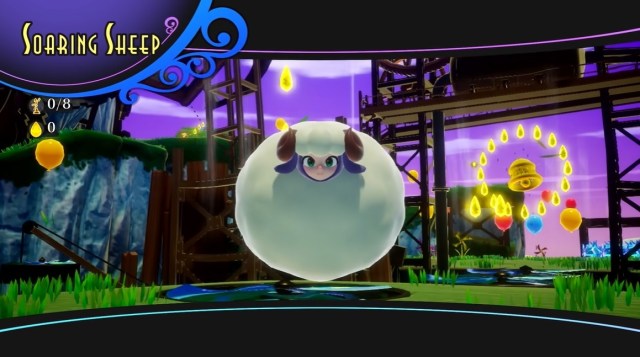
Upon release, Balan Wonderworld was swiftly blasted by critics and consumers for its simplistic one-button gameplay and bloated list of power-up transformations that added little to nothing in terms of functionality or fun, such as the immediately infamous Box Fox, which, to quote the in-game description, “transforms between fox and box when it feels like it.”

While Naka may not have a perfect track record, his creative missteps tend to be of the overly ambitious and experimental sort, pretty much the opposite end of the spectrum of the sort of the looks-and-sounds-nice-with-boring-gameplay sort of game that Balan Wonderworld became. It turns out, though, that Naka wasn’t actually serving as director for the final six months or so of Balan Wonderworld’s development, and he’s filed a lawsuit against the game’s publisher, Square Enix, as revealed in a series of tweets in which Naka also blasts Balan Wonderworld developer Arzest.

▼ Naka, snapping a selfie outside a courthouse in Japan

Naka went on a lengthy diatribe against the two companies, with multiple apologies to gamers sprinkled in.

Roughly half a year prior to the release of Balan Wonderworld, I was removed as director of Balan Wonderworld via an administrative order, and so I filed a lawsuit in court against Square Enix. The trial had ended and the administrative order is no longer in effect, so I would like to talk about the situation.

I think it’s no good that Square Enix doesn’t value games and game fans. According to the court documents, I was removed as director because of two things. The removal was carried out by the game’s producer, head of promotions, sound producer, executive in charge of the project, and the human resources department.

The first thing was that a YouTuber was going to play a piece of music from the game on the piano and release the score. I thought it was strange to use an arranged version, and one from a ghost writer, at that, when we were releasing an original game. I asserted that I wanted to use the original score, and this created trouble.

The other thing, according to the court documents, is the things I said in response to Arzest submitting in-development builds without fixing defects that were occurring in them. In the documents it was written that the comments I made to Arzest were damaging the relationship, and that [Balan Wonderworld] producer [Noriyoshi] Fujimoto spoke to [Balan Wonderworld artist Naoto] Oshima about that.

Another point is that in an email from Oshima to Fujimoto, he said, “I gathered the staff together and told them that we’re moving the date for the release of the game’s trial version back. I told them, ‘This was a decision by Producer Fujimoto. Let’s do our best for him,’ and the staff clapped and cheered. It was surprisingly moving. Recently the staff has been feeling down, but this gave their spirits a boost. Thank you very much. The whole staff will do our best.”

That’s what the email said, but it doesn’t matter because the schedule is decided by the producer. The schedule is tight because the producer decided on it. Doesn’t something seem strange?”

I really just can’t think it’s good to send an arranged musical score for an original game out into the world. I think everyone knows that there is game music that people hum to themselves, and I think those pieces of music are the original versions from the games themselves.

I think games are things that you put effort into making good up to the very end, so that game fans will enjoy them after they make the purchase. I think it’s strange to say you don’t have time for the director’s comments, or to remove the director and not let them be involved without first consulting with him.

I was prohibited from retweeting and liking on social media and things like that, so I don’t think Square Enix is valuing game fans. I received many comments and wonderful illustrations about Balan Wonderworld, but I couldn’t do anything, and I feel sorry.

I want to truly apologize to the people who bought Balan Wonderwold, which, to me, was unfinished. In the future, if you mention and tag me alone on social media and the like, I believe there are times when I can react.

Because you are making a game, I think it’s obvious to request corrections to make it better. If that can’t be done, then I think it’s OK to discuss it, but it seems that can’t be done. I don’t think [Square Enix] values games.”

This is about Sonic the Hedgehog, but two weeks before we finished the master I changed it so that if you had even one ring, you wouldn’t die. As everyone knows, because I continued trying to make the game better up to the last moment like this, even now people all over the world can still enjoy playing it, I think. #SonicTheHedgehog

Making a game better up to the very last chance is what makes a game creator, and I really think it’s strange to make it so you can’t do that. I contracted a lawyer and tried to negotiate to at least be able to issue development comments until the end, but [Square Enix] didn’t listen to me at all, so I filed a lawsuit.

I think this situation is a big part of why Balan Wonderworld turned out as it did and got the reviews everyone is aware of. I am truly disappointed that a game I started making from the beginning ended up like this.

All I can feel is regret that Balan Wonderworld was sent out into the world as, what is to me, an unfinished game. I had many thoughts about how to release a proper action game into the world. I think that Square Enix and Arzest are companies that do not value games and game fans.

In case you’re wondering, no, Naka hasn’t specified what specific charge he was accusing Square Enix of in the lawsuit, what damages he was seeking, or whether or not the court ruled in his favor.

Source: Twitter/@nakayuji via Hachima Kiko
Images: YouTube/Nintendo
● Want to hear about SoraNews24’s latest articles as soon as they’re published? Follow us on Facebook and Twitter!
The end of Sailor Moon is coming with new Sailor Moon Cosmos theatrical anime【Video】

https://ift.tt/FHPLe32 Casey Baseel

Paired anime films from new director seek to put finishing flourish on the Sailor saga.

Despite a huge level of hype, Sailor Moon Crystal got off to an underwhelming start, with the remake/reboot failing to hit fans with the same mix of fun and drama that the original Sailor Moon manga or its 1990s anime adaptation did. The franchise has been on a steady upward trend in recent years, though, with later episodes of Crystal and last year’s two-part Sailor Moon Eternal movie being much bigger crowd pleasers.

And now the modern Sailor Moon anime is getting a chance to stick the landing, as the last arc of the manga is being adapted as Sailor Moon Cosmos.

Cosmos will cover the portion of the Shadow Galactica arc of creator Naoko Takeuchi’s Sailor Moon manga, which also served as the basis for Sailor Moon Sailor Stars, the fifth and final season of the ‘90s anime. With Sailor Stars arriving in 1996, as the franchise was starting to run out of steam in Japan, Cosmos represents an opportunity to tell the tale with a grander scale of spectacle, especially since Sailor Stars never had an associated theatrical feature, unlike the ‘90s series’ second, third, and fourth seasons.


With the modern Sailor Moon anime sticking closer to the manga than the ‘90s series, and Shadow Galactica being the manga’s last arc, odds are Cosmos is also the last Sailor Moon animation we’ll be seeing for quite some time. The preview video is certainly leaning into a climactic atmosphere, with Sailor Moon’s voice-over saying:

“If I wasn’t a Sailor Senshi, would my friends have reached out to me? Would we have even ever met?”

“Everything, always is my fault. Because of the power I have, everyone gets sucked into things. I don’t know if I can stop it anymore. My friends always risk their lives to protect me. So that’s why there’s something that only I can do. I believe that, without fail, our future will come.”

Like Eternal, Sailor Moon Cosmos will be a two-part theatrical anime, with both movies directed by franchise newcomer Tomoya Takahashi, whose resume includes credits as director of boys’ love movie Sekaiichi Hatsukoi: Propose and episode director for Den-noh Coil, From the New World, and Pokémon XY & Z. Kazuko Tadano, character designer for the original ‘90s Sailor Moon anime and Eternal returns in the same role, as does scriptwriter Kazuyuki Fudeyasu, who penned Eternal.

Both parts of Sailor Moon Cosmos are scheduled for release in Japanese theaters in summer of 2023.

Related: Sailor Moon Cosmos official website
Top image: Sailor Moon Cosmos official website
Insert images: YouTube/sailormoon-official
● Want to hear about SoraNews24’s latest articles as soon as they’re published? Follow us on Facebook and Twitter!
Weird Japanese vending machine find of the day: Cream in cans?

https://ift.tt/32lIsN1 Oona McGee

You’ll only find one thing in this machine, and it’s heaven for cream lovers.

Sweet trends have been sweeping through the country recently, with the maritozzo boom saturating the market with cuteness and weirdness at the same time. Now, a new trend is emerging with the release of cakes in cans, which are becoming a sell-out hit at exclusive vending machines around Japan.

These cans, developed by a Japanese company called Gaku, have revolutionised the way we eat cakes, as they can now be eaten on-the-go with a spoon. After wowing us with their perfectly packed strawberry shortcake, the company now has a new can that ups the cream content so much it’s branded simply as “Namakuri“, which is short for “Nama Cream“, or “Fresh Cream“.

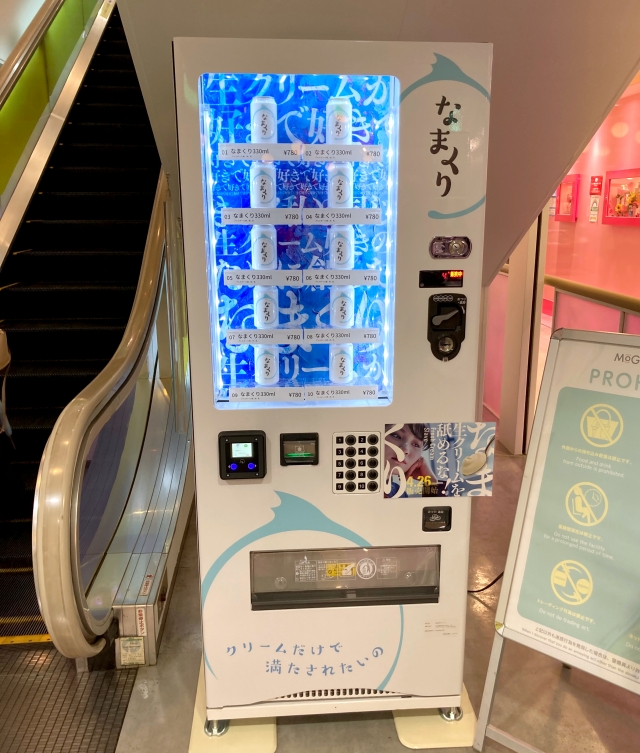
It’s an apt description of what’s inside, as 90 percent of the contents of this can is said to be fresh cream. The new product made its debut on 26 April at a vending machine inside Tokyo’s hip 109 shopping mall, a hub for youth culture, so our sweets-loving reporter Mr Sato headed out to buy one and see what it was like.

The machine looked like a regular drinks machine at first glance, but a closer look at the prices revealed these are no ordinary drinks. Each 330-millilitre (11-ounce) can costs 780 yen (US$6.06), which is about seven times more expensive than a regular vending machine beverage.

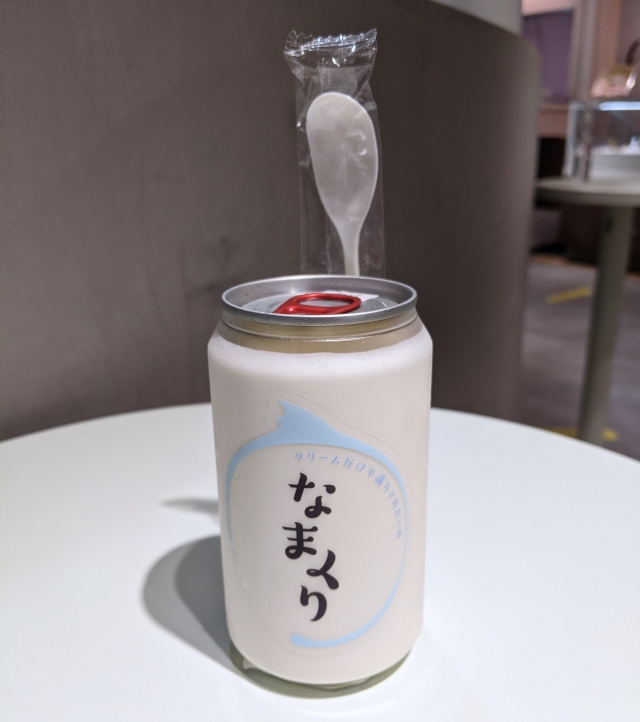
Mr Sato fed his coins into the machine and out popped his can of cream, complete with a long spoon. Thankfully, there was an eat-in area close by, so Mr Sato was able to take a seat and enjoy his sweet indulgence fresh from the machine.

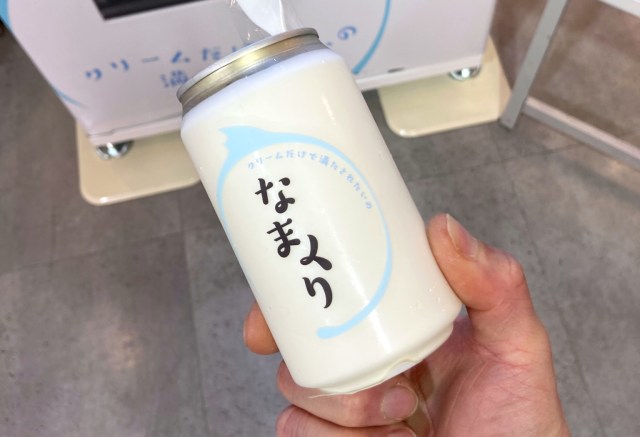
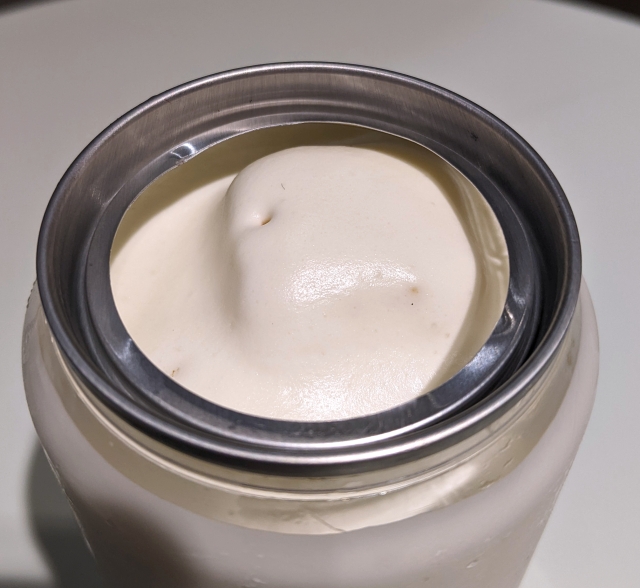
The first thing he noticed was the can itself, which was cleverly designed to create an optical illusion, making it look as if the can were see-through and the cream-coloured packaging was actually the cream inside.

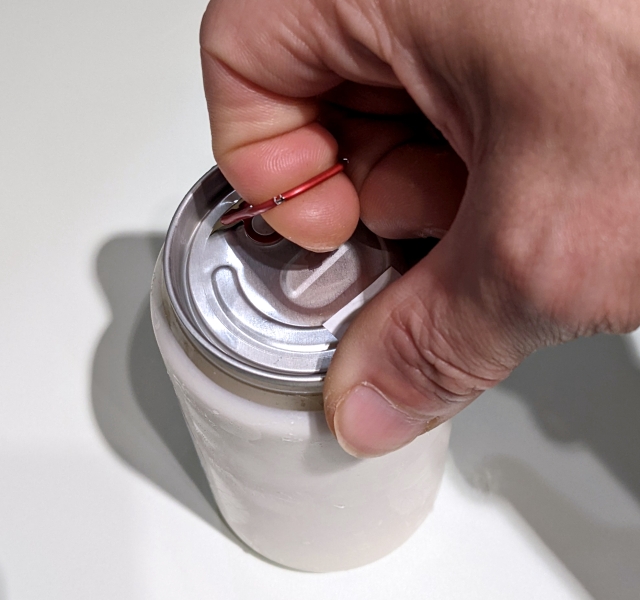
Another unusual treat here was the fact that the can came with a pull-lid to open it, fooling the mind into thinking there might be a beverage inside.

However, one the lid is removed, it’s clear that this is no beverage — the can looks to be filled right to the brim with fresh cream! 

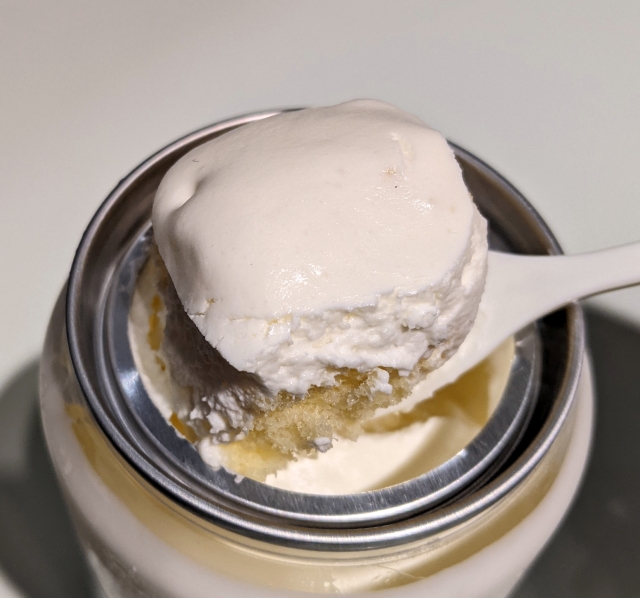
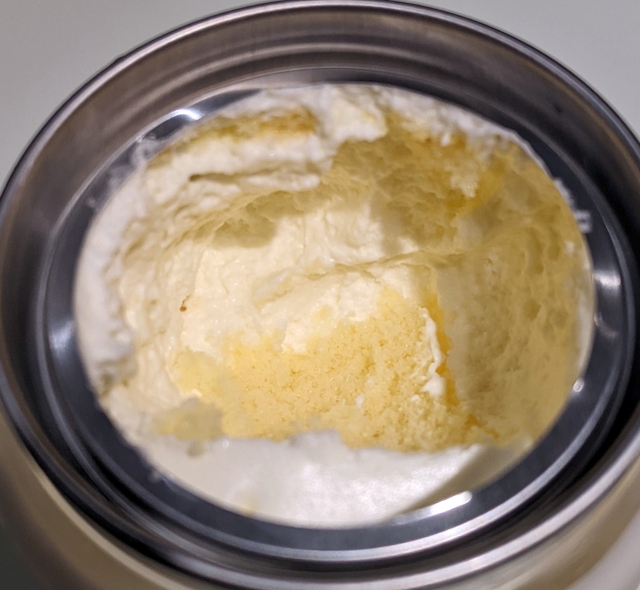
It’s no wonder they call this the “Namakuri”. Scooping up a spoonful, Mr Sato could see it was mostly cream, with a liiiiiitle bit of sponge tucked away inside, to add some textural contrast.

As soon as he took a taste, Mr Sato closed his eyes in delight at the sweet richness and super soft texture of this decadent dessert. Apparently, mascarpone is used as a secret ingredient, along with fresh cream from Hokkaido, to give it its luxurious flavour. Each serving is handmade and delivered fresh from the factory to the vending machine each day, providing customers with a high-quality product that’s just as good as any sweet you’d buy from a high-end patisserie.

It was absolutely delicious, but seeing as Mr Sato has the taste buds of a middle-aged man, and not a teen girl, which is Shibuya 109’s target customer, he found it difficult to finish the entire can. As he dipped his spoon into the bottom half of the dessert, he longed for another accent of flavour, perhaps something like chocolate sauce, to give him a break from the richness of the cream.

That’s when he came up with the brilliant idea of taking it back to the office where he could pop into the convenience store across the street and pick up a banana and some strawberries to add to the cream. That made the whole thing even more delicious, and gave him two or three desserts in one, which, as we know, is the way Mr Sato likes to eat his desserts — the more there is to consume, the better!

Vending Machine Information

Namakuri Vending Machine / 「なまくり」自販機
Address: Tokyo-to, Shibuya-ku, Dogenzaka 2-29-1, Shibuya 109 Building B2F Mogu Mogu Stand (beside the escalator)
東京都渋谷区道玄坂2丁目29-1 SHIBUYA109 地下2階モグモグスタンド(エスカレーター脇)
Hours: 11:00 a.m.-8:00 p.m.

Photos © SoraNews24
● Want to hear about SoraNews24’s latest articles as soon as they’re published? Follow us on Facebook and Twitter!

Mix-and-matching Yoshinoya, Matsuya, and Sukiya to create the ultimate beef bowl【Taste test】

https://ift.tt/hcoIuCM Casey Baseel

We tear the Big Three’s gyudon apart to see if we can rebuild them into something better.

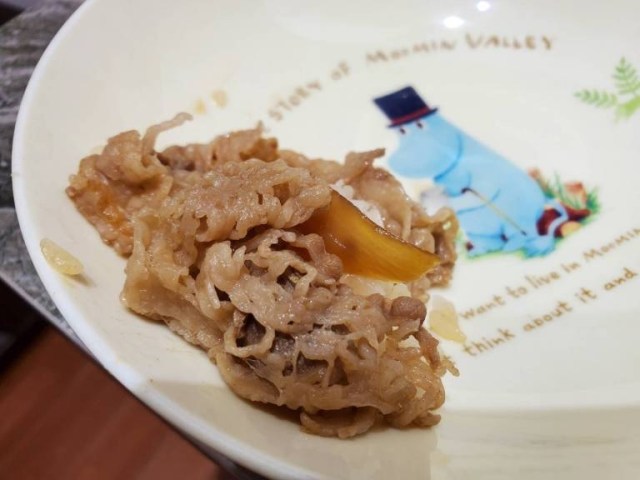
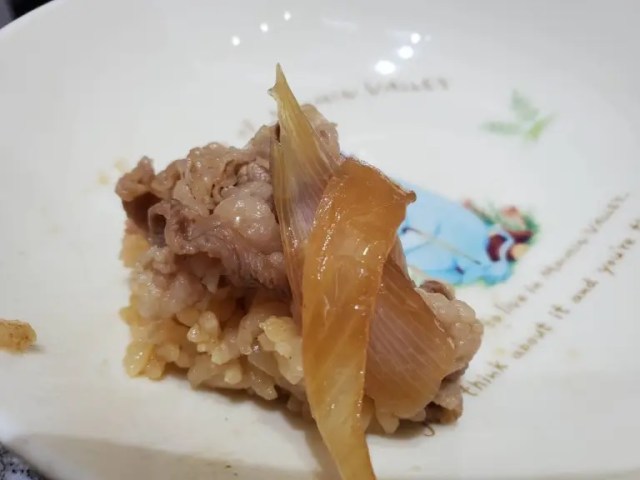
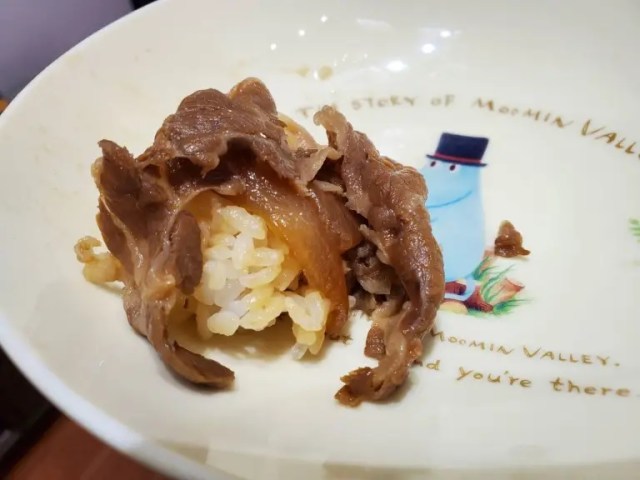
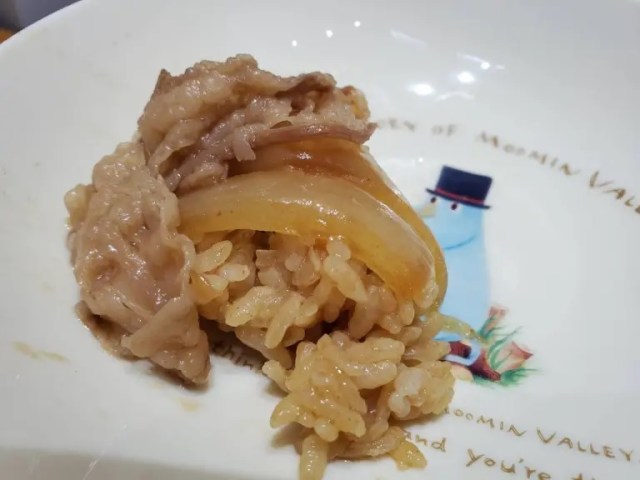
Beef bowls, or gyudon, as they’re called in Japanese, are about as simple as a meal gets. You’ve got stewed beef, of course, plus onions and white rice, and that’s it.

And yet, Japan has three major gyudon chains, Yoshinoya, Matsuya, and Sukiya, all with their own version of the dish. So we started wondering, what would happen if you took the three gyudon components, beef, onions, and rice, from the big three chains and mixed them together? Could you stumble on the combination to unlock the ultimate gyudon?

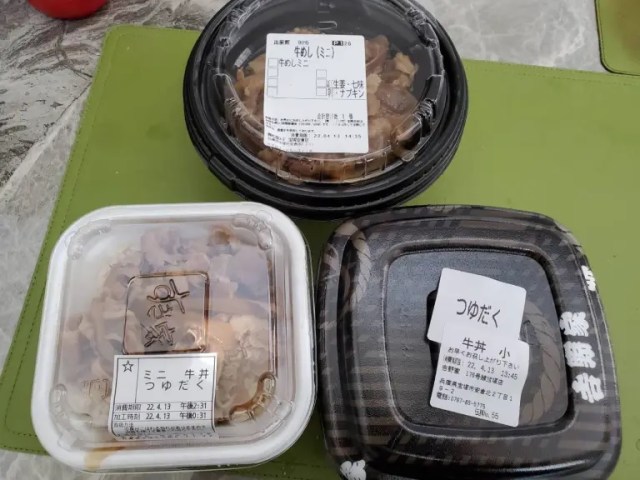
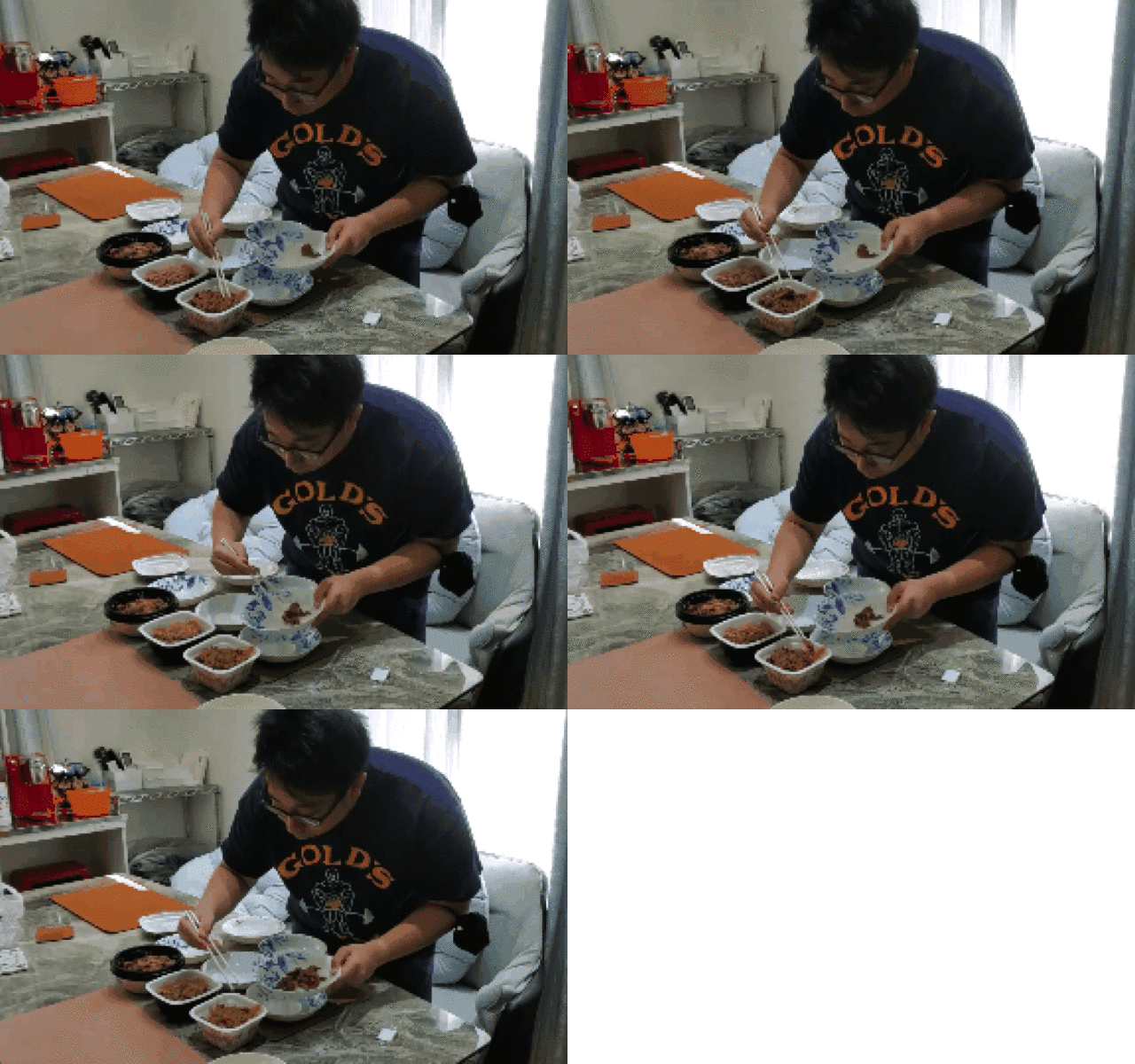
We put our Japanese-language reporter MG Ogawa in charge of this highly scientific investigation, and he started by making a run to the local branches of Yoshinoya, Matsuya, and Sukiya, coming back with a beef bowl from each.

▼ Clockwise from top: Matsuya, Yoshinoya, and Sukiya

Arriving back at the taste-test center while each was still piping hot, MG removed the takeout containers lids, and a triple-spout of mouthwatering gyudon fragrances wafted up to stimulate his appetite and challenge his willpower.

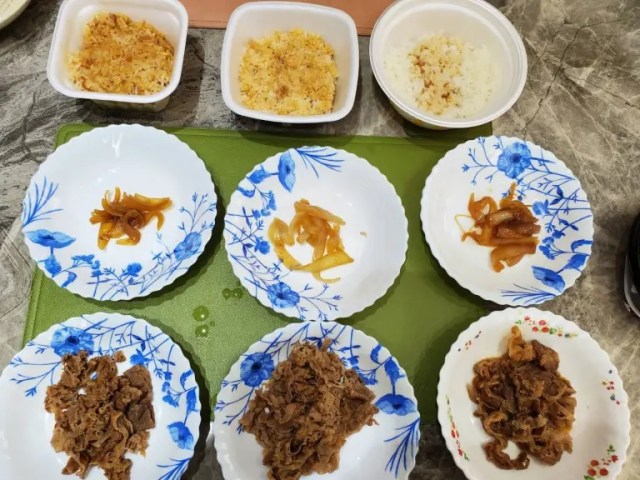
MG stayed firm in his resolve, though, and got to work quickly separating the beef, onions, and rice for each.

▼ Left to right: Sukiya, Yoshinoya, and Matsuya

We’re going to have MG wait just a little longer to start digging in while we go over the rules. For this taste test, the three ingredients for each combination have to all come from different chains. So, for example, Sukiya beef-Yoshinoya onions-Matsuya rice is eligible, but Sukiya beef-Sukiya onions-Matsuya rice isn’t an admissible candidate.

That gives us a total of six different combinations to taste test, so let’s look at MG’s notes.

● Combination 1: Sukiya beef, Yoshinoya onions, Matsuya rice

“Sukiya’s beef [which has a touch of sweet and tangy citrus in its marinade] makes a surprisingly powerful impression. By comparison, Yoshinoya’s onions seem more like an occasional guest on the taste buds, and the flavor of Matsuya’s rice ends up completely hidden.”

● Combination 2: Sukiya beef, Matsuya onions, Yoshinoya rice

“Matsuya’s onions are the most flavorful of the three chains’, with a bit of crispness to them. With those factors in their arsenal, I thought they might clash with the Sukiya beef, but they actually go really well together, with the Matsuya onions supporting the flavorful beef nicely for a well-balanced result.”

● Combination 3: Yoshinoya beef, Sukiya onions, Matsuya rice

“Yoshinoya’s meat really comes on strong here. Its beef strips are the largest of the three, and their flavor envelops the onions and rice. This was pretty good, but so far none of the combinations have really surpassed what you get with a regular as-is beef bowl from one of the chains.”

● Combination 4: Yoshinoya beef, Matsuya onions, Sukiya rice

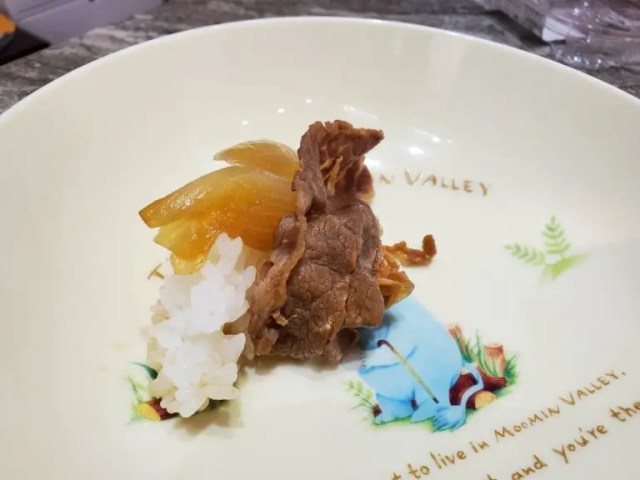
“HERE IT IS! This is the ultimate beef bowl-level I was waiting for. The Yoshinoya beef achieves a delicious harmony with Matsuya’s top-tier-flavorful onions, and because Sukiya pours on the most stew juices when putting together its gyudon, that flavor gets soaked into their rice, letting it make a great contribution here. This was shockingly good.”

● Combination 5: Matsuya beef, Sukiya onions, Yoshinoya rice

“Matsuya’s marinade has the strongest soy sauce notes, and that flavor hits you right at the start as you bite into a piece of beef. That’s followed by the gentle arrival of Sukiya’s onions, but together they kind of bury the taste of Yoshinoya rice. Maybe it’s because Sukiya and Yoshinoya’s seasoning is sweeter than Matsuya’s, but the beef kind of overpowers everything else here.”

● Combination 6: Matsuya beef, Yoshinoya onions, Sukiya rice

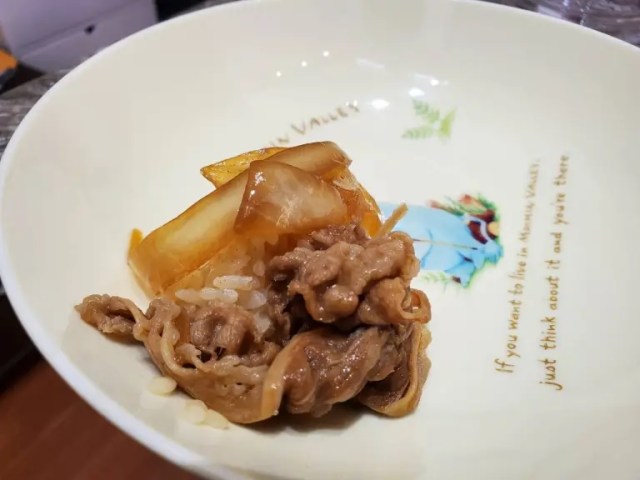
“Wait a second, what’s going on here? I’m supposed to be eating mix-and-match beef bowls, but this…everything goes together so perfectly. All the flavors come together so perfectly that this really feels like something that’s on the menu at one restaurant, instead of a combination of food from three different places.”

So in the end, it’s Combination 4, Yoshinoya beef-Matsuya onions-Sukiya rice, that packed the biggest pleasurable punch, while Combination 6, Matsuya beef-Yoshinoya onions-Sukiya rice did the best job of feeling, to MG, like a natural evolution and enhancement of the basic gyudon recipe. It’s worth noting that in both cases, the rice, bringing with it the marinade flavor, comes from Sukiya, so they’re really onto something with their seasoning.

Of course, the downside to making your own gyudon like this is that you end up with three gyud-…wait, actually there isn’t any downside at all.

Photos ©SoraNews24
● Want to hear about SoraNews24’s latest articles as soon as they’re published? Follow us on Facebook and Twitter!

jueves, 28 de abril de 2022

AI-powered Super Great Robo Goalkeeper employed at sports center in Saitama

https://ift.tt/qcYFeSl Master Blaster

I wouldn’t put it past Teppeki-kun.

For quite some time now, we have had robots that could display lightning fast reflexes and react to motions and images faster than a human eye could perceive. Fortunately, this has so far only had implications for paper, rock, scissors, and most popular sports have been spared robotic domination.

For example, if someone were to use the same high-speed image processing in the paper, rock, scissors robot and apply it to, say, a football goalkeeper, it would be unstoppable. And that’s just what sports tech firm Air Digital set out to do by creating what they playfully call a “S.G.R.G.K.” or “Super Great Robo Goalkeeper,” which is a nod to S.G.G.K. from Captain Tsubasa.

Captain Tsubasa creator Yoichi Takahashi tried an early version of this robot keeper himself back in 2015

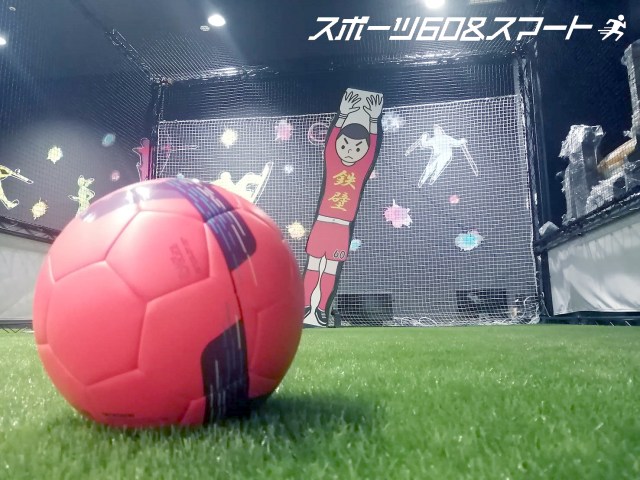
After years of development, they are now beginning to roll out what they have officially named Goalkeeper Teppeki-kun, where “teppeki” means “iron wall” in Japanese. Unlike other robotic goalkeepers, Teppeki-kun utilizes advancements in AI to boast a compact size and efficient power consumption, which allows it to be easily installed and used at most venues.

It also has a wide range of settings and functions. The difficulty can be adjusted to one’s choosing, all the way up to a 99 percent blocking rate. Meanwhile, the Automatic Level Adjustment Mode can determine a suitable difficulty based on an analysis of the player’s shooting. In addition, there is a Miss Mode, in which Teppeki-kun will intentionally take a dive once or twice, just so you don’t feel too bad.

▼ Teppeki-kun is also immune to dirty looks, scowls, and even stink-eyes

Teppeki-kun will measure shot speeds and provide video replays when desired. It’s even equipped with an accident prevention protocol that stops it from colliding with players in a potentially injurious situation.

Its debut has been scheduled for the grand opening of Sports 60 & Smart on 28 April in the Ario Washinomiya mall in Kuki City, Saitama Prefecture. This sports center was developed by Air Digital and features an array of AI-equipped sports training facilities across a range of sports such as baseball, cycling, and archery.

Air Digital is planning on renting the systems out to other venues too, so be sure to keep an eye out for Goalkeeper Tappeki-kun or some of their other equipment in the future at a location near you.

Unfortunately, this also means that humans’ days of enjoying soccer are numbered. Once Skynet goes live and strikers everywhere get their spirits crushed by an army of AI keepers, our last hope will be to capture a Teppeki-kun unit and send it back in time to find a young Pelé and convert him into an ageless cybernetic scoring machine.

That, or we could just take our balls and go play somewhere else… But I still vote for an immortal cyber-Pelé.

Source, images: PR Times
● Want to hear about SoraNews24’s latest articles as soon as they’re published? Follow us on Facebook and Twitter!

The new Bake Off Japan on Amazon Prime is everything we ever wanted (aka more Bake Off!)【Review】

https://ift.tt/r28vFtP Dale Roll

Bake Off Japan provides the same wholesome, endearing entertainment we know and love, with Japanese bakers, hosts, and judges!

Unless you for some reason hate wholesome television (or more likely cooking contest shows), you’ve probably been drawn in by the charms of the U.K.-based televised baking contest The Great British Bake Off. With lovable contestants, comedic hosts, exciting challenges, beautiful and tasty-looking pastries and cakes, and only the slightest bit of drama, it’s become an international sensation, more than just any old reality show.

Luckily for fans of the original Britain-based show who have already binged all of the episodes available online, there are lots of international spinoffs, including the most recent one that appeared on Amazon Prime Japan: Bake Off Japan. Having just been released on April 22, we took some time to watch it, and we gotta tell you–it’s just as good as the original!

In case you’re unfamiliar with the basic premise of the show, 10 amateur bakers compete in three challenges per episode, baking sweets, pastries, cakes, and bread according to a theme or to the instructions of the two judges, who are themselves professional bakers or patissiers. Every episode ends with the announcement of a Star Baker, the baker who performed exceptionally well that episode, and with an unfortunate (and usually tear-filled) elimination. At the end of the show, one very talented home baker is declared the winner.

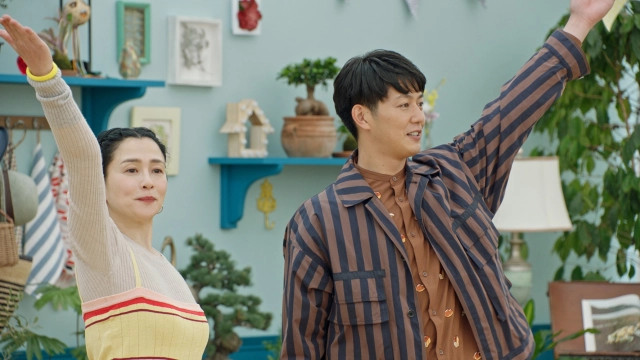
▼ Actors Maki Sakai (left) and Asuka Kudoh (right) serve as hosts.

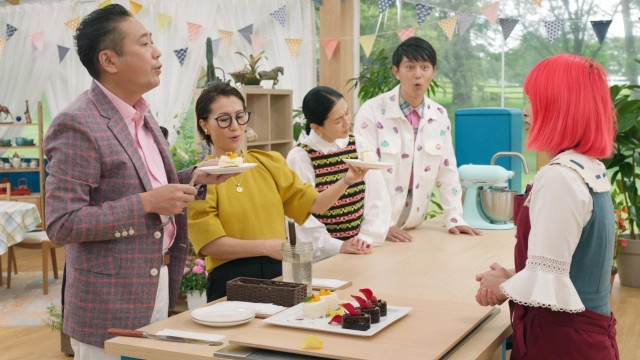
The Japanese version follows the very same pattern as the original Bake Off, with ten contestants, two hosts, three challenges per episode, and two judges who select a Star Baker at the end of each episode. The judges for the Japanese version are internationally renowned patissier Toshihiko Yoroizuka and bread artisan Yoshimi Ishikawa, who is active in both Japan and France.

▼ Yoroizuka (left) and Ishikawa (right)

Our Japanese-language reporter Kaori Saito, who was the one who got to write this review, has seen the original British version of the show, so she knew more or less what to expect. Like the British version, the contestants faced challenges that made Kaori really appreciate how delicate the baking process is, and how especially difficult it is to work within a time limit.

As we’ve mentioned, Bake Off episodes have three challenges, the Signature Challenge (called “Original Challenge” in Japanese), the Technical Challenge, and the Showstopper Challenge, and each challenge is conducted over a limited time frame. Bakers generally have recipes on hand to use for each challenge, but their ability to execute the recipes–in the allotted time–requires a significant amount of knowledge and skill to succeed. And let’s not forget the artistry required, as the look of the final product is often as important as the taste!

While the bakers are undoubtedly talented, they each have their strengths and weaknesses. Some are good at baking bread but not cakes, while some have never made pastries before,so each challenge provides fresh new hurdles for them to overcome.

Not only that, but things don’t always go to plan: perhaps the item won’t finish baking in time, or the cream won’t whip properly, or they put in milk instead of cream. In short, the Japanese contestants face the very same difficulties as the British contestants, and the result is an hour of tense anticipation for the viewer!

Additionally, just like in the original show, friendships develop between the bakers, who lend each other unused kitchen items and help out their panicked cohorts when they’ve finished ahead of time. Everyone is just so nice! In the interviews, the contestants always say they bake for others, like their significant others or their grandparents, and when one person is eliminated at the end of every episode, some people even cry to see them go. One of the hosts, Maki Sakai, also cries in the first episode while announcing the eliminated baker. It’s really wholesome how full of love everyone seems to be.

In the end, Bake Off Japan inspires the same sense of camaraderie with the viewer as does the original. We watch, enthralled, as the bakers work hard on their cakes, cheer when they manage to finish them in time, and feel disappointed when things don’t go to plan. Naturally, the caliber of sweets that the contestants create in Bake Off Japan can rival some of the most lauded bakes on British Bake Off, so we get the same beautiful visuals throughout the series as well. In short, if you like the original show, you’re going to love Bake Off Japan, and if you haven’t watched any Bake Off shows before, this is a great place to start!

Bake Off Japan is now streaming its first four episodes exclusively on Amazon Prime Video Japan, and the other four are expected to drop together on April 29. If you’re a fan, you won’t want to miss out! And if you’re looking for more Japanese reality TV to watch, don’t forget to check out the hotly debated show Old Enough on Netflix, and you can look forward to the new version of Takeshi’s Castle coming out on Amazon Prime next year!

Related: Amazon Prime Video Bake Off Japan Season1
Top image: Amazon Japan
Insert images: YouTube/Amazon Prime Video JP – アマゾンプライムビデオ
Show ©2022 Amazon Content Services LLC All Rights Reserved
● Want to hear about SoraNews24’s latest articles as soon as they’re published? Follow us on Facebook and Twitter!