Páginas

domingo, 30 de abril de 2023

Eel-topped takoyaki is delicious in any season, but here’s why now is the best time to try it

https://ift.tt/EfeCQZc Dale Roll

Hint: it’s because you can only buy it at one specific place. 

You’ve heard of takoyaki, octopus pieces in doughy balls of batter grilled on a hot plate, but have you heard of “Unagi Takoyaki?” This version of “octopus balls” is totally unique to Tsukiji Gindaco, a takoyaki chain restaurant, and comes with eel as well as octopus. But if you were to ask our Japanese-language reporter Yuichiro Wasai what it tastes like, he’d be hard-pressed to tell you anything beyond “takoyaki and eel”.

Still, he’d make sure you understand how delicious it is. It may just be “takoyaki and eel”, but with two such solid ingredients, there’s no way it wouldn’t be good. The only problem is that not all Tsukiji Gindaco branches serve it–in fact, it’s a dish exclusive to just one branch.

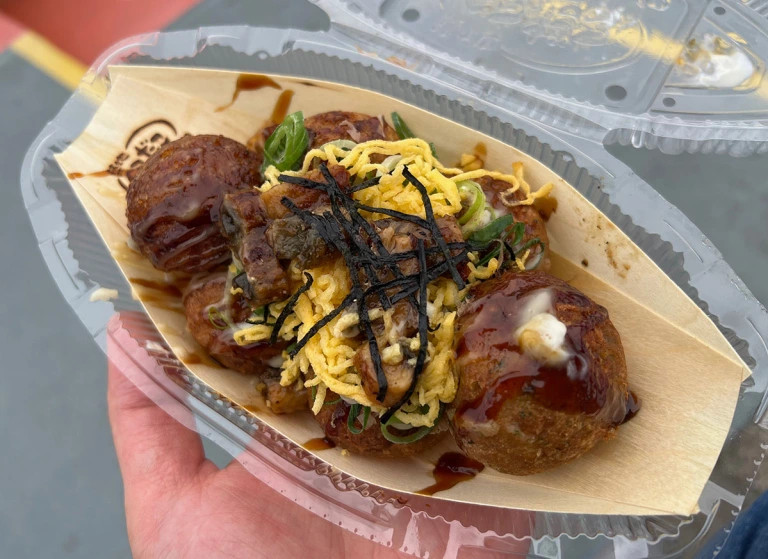
The official name of the dish is “Unatama Takoyaki“, combining the word for eel (“unagi”) and ball (“tama”), and it comes as a plate of six for 800 yen (US$5.99). It’s made with Tsukiji Gindaco’s signature crispy batter and dressed with takoyaki sauce, green onions, thin-cut omelet strips, kabayaki eel (eel broiled with soy sauce), and shredded seaweed. The eel isn’t baked into the takoyaki, but rather loaded on top.

▼ It’s hard to see, but the end of a piece of eel is poking out here where the red arrow is pointing.
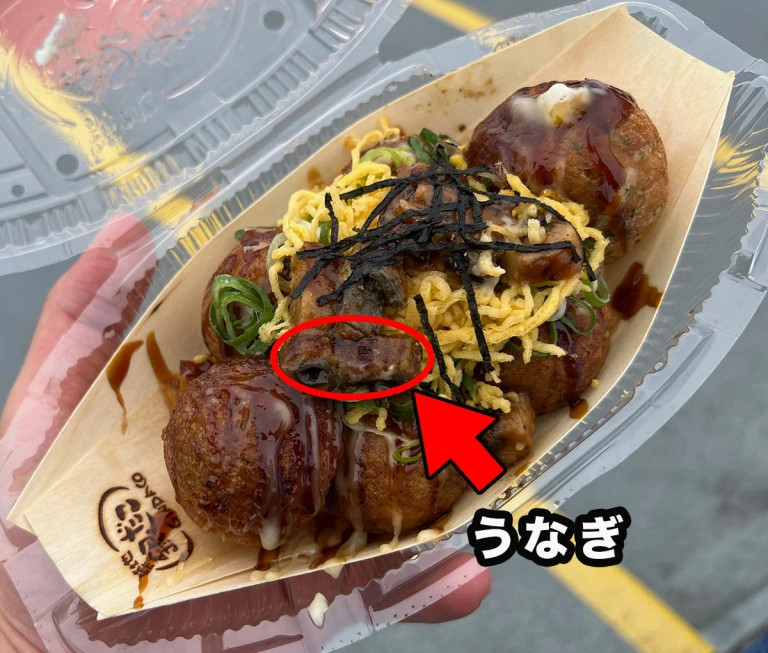
You don’t get a full-length eel filet like you would with an unagi bowl, but it does come with several smaller pieces. Though it isn’t a lot of eel, it’s the perfect amount to balance out the takoyaki and give the dish a sense of unity. Larger sizes would be too much.

As for where Yuichiro found a Tsukiji Gindaco that sells Unatama Takoyaki, it was…
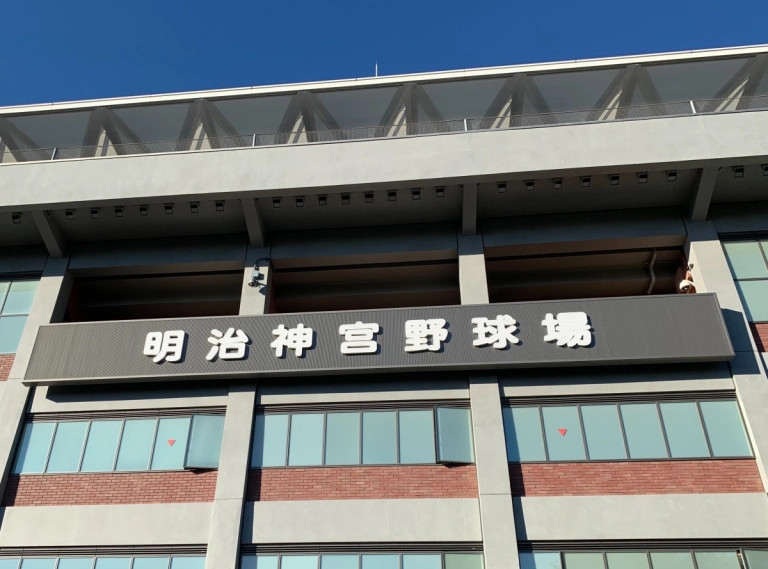
Inside Meiji Jingu baseball stadium, in Tokyo’s Shinjuku Ward!
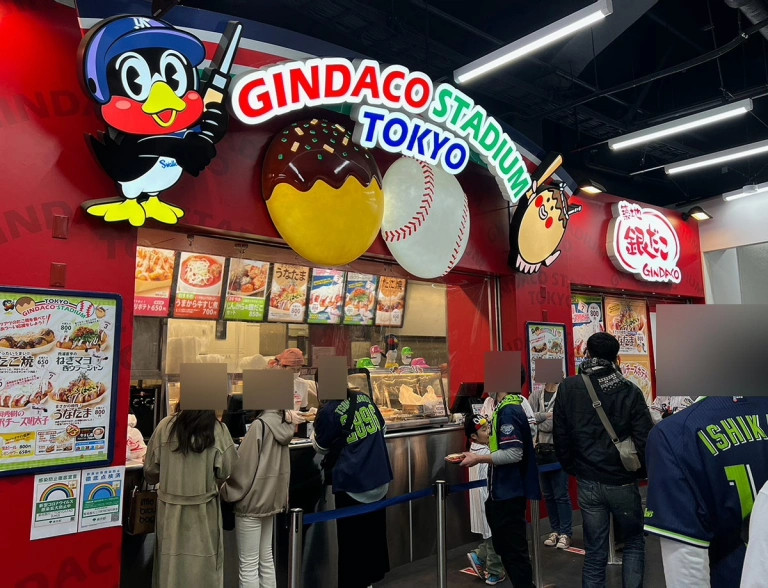
Yes, this baseball stadium food stall is the only Tsukiji Gindaco where you can buy Unatama Takoyaki (just like the Jingu Stadium branch of Freshness Burger was the only place you could get the Home Run Burger).
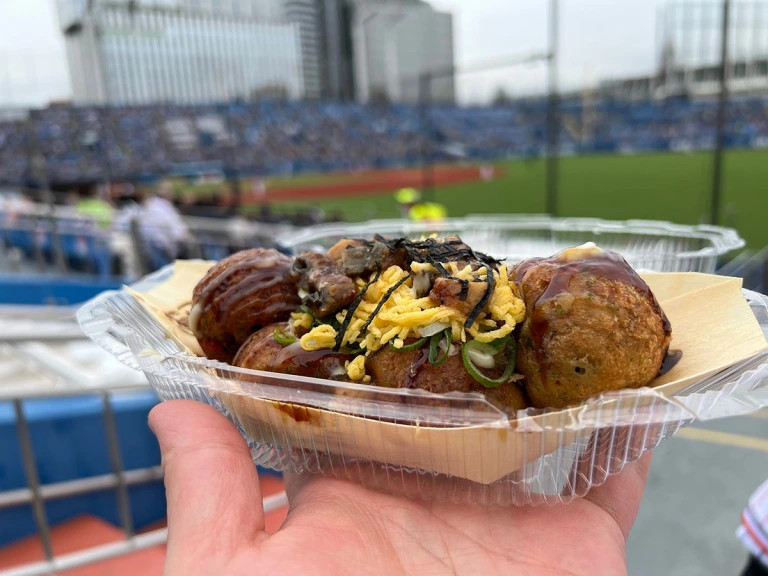
Now’s the best time to try it, too, in the temperate months of April and May. With baseball season starting up, what better time to enjoy takoyaki with a side of eel than while supporting your favorite team at a game on a cool spring day? The sun usually isn’t as strong, and the temperature is generally neither too hot nor too cold. It makes for the perfect weather–and the perfect setting–to make your ordinary Unatama Takoyaki taste five times better.

▼ They also have other unique takoyaki dishes, like the Green Onion & Mayonnaise loved by Tokyo Swallows player Naomichi Nishiura (called “Negi Mayo Nishiura-jan”) and the Luxurious Spicy Cod Roe Cheese (called the “Zeitaku Cheese Mentaiko”) based on Swallows infielder Hideki Nagaoka.
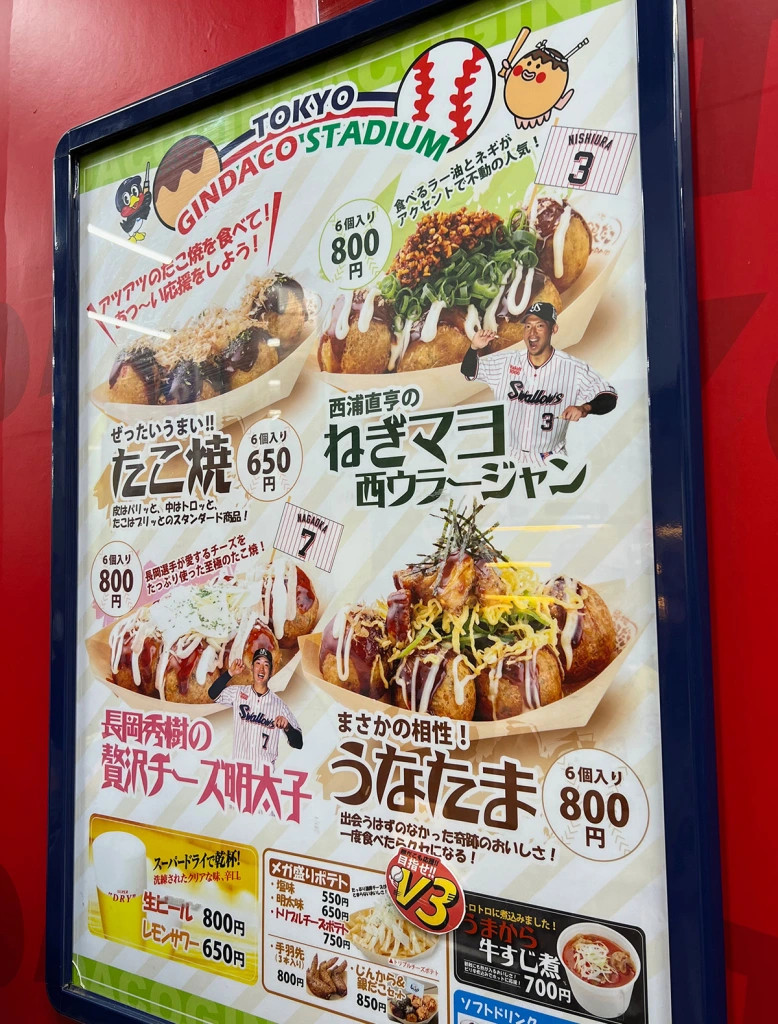
If you’re interested, definitely give it a taste. With Golden Week coming up, it might be the perfect opportunity!

Restaurant information
Tsukiji Gindaco (Tokyo Stadium Branch) / 築地銀だこ(TOKYO STADIUM店)
Address: Tokyo-to Shinjuku-ku Kasumigaoka-machi 3-1 Meiji Jingu Stadium Outfield Area (near Gate 1)
東京都新宿区霞ヶ丘町3-1明治神宮野球場 外野エリア(1GATE付近)

Images © SoraNews24
● Want to hear about SoraNews24’s latest articles as soon as they’re published? Follow us on Facebook and Twitter!

Idol supergroup AKB48 abolishes team system, team sayonara concerts to be held this summer

https://ift.tt/zmlUIhc Casey Baseel

Dissolution of teams marks end of 18-year era for Japan’s biggest idol singer group.

On Saturday, Japanese idol singer supergroup AKB48 held the first of its Spring Concert 2023 performances at Pia Arena MM in Yokohama. As the first concert by the group in roughly three years to allow full cheering from fans in attendance and a total of three dozen songs performed, there was plenty for fans in attendance to be excited about, but there was also a big surprise, as an announcement was made that all of the AKB48 “teams” are being abolished.

Because of the huge size of AKB48, which has a total of 85 members, the group is subdivided into five teams: Team A, Team K, Team B, Team 4, and Team 8. While AKB48 also performs together as a whole, the teams each have their own segments within the group’s concerts, individual promotional events, image colors, and even captains.

But during the April 29 concert, Team A captain Mion Mukaichi, who also holds the position of “General Manager” of AKB48, told the crowd that the team system is being done away with.

▼ Mion Kukaichi

The team system has been part of AKB48’s structure since the group’s debut in 2005, so this marks a major change in how the idols will perform and operate. In addressing the fans, Mukaichi said she was sad to see the system ending, but added “I think this is good timing for AKB to be united as a whole and kick things up a notch.” Former Team B captain Yuki Kashiwagi, who joined AKB48 in 2006 and at 31 years old is its oldest member, added “Everyone will keep doing their best as members of AKB. I hope people will cheer for and support the group as a whole.”

▼ Yuki Kashiwagi

Of the five teams, Team 8 (whose members all concurrently hold positions with other teams as well) is the first to cease operations, with the second day of the Spring Concert 2023 on April 30 its last team event. The remaining four teams, A,K, B, and 4, will be disbanded this fall, with each holding “sayonara concerts” between August 4 and 6.

On the bright side, the dissolution of the teams doesn’t mean their members are being dismissed, as they’ll remain members of AKB48. And in a crowd-pleasing move, the number of on-stage performers at the permanent AKB48 Theater in Tokyo’s Akihabara neighborhood is being doubled, from 8 to 16, as pandemic protocols are scaled back. Still, for fans who were devoted to not just AKB48, but to a particular team, this is the end of an era.

Source: Daily via Hachima Kiko, San Sports
Top image: Pakutaso
● Want to hear about SoraNews24’s latest articles as soon as they’re published? Follow us on Facebook and Twitter!

sábado, 29 de abril de 2023

What’s the rule for where to put strollers on Japan’s Shinkansen bullet trains?

https://ift.tt/GCgpxra Casey Baseel

Japan’s high-speed trains don’t have designated stroller spots onboard, so where should parents put theirs?

What’s the best seat on the Shinkansen? Window seats have a definite appeal if you want to look out and admire the part of Japan you’re zooming through on the bullet train, while veteran or nighttime travelers may prefer to opt for the extra elbow room of an aisle seat.

But for our Japanese-language reporter Ahiruneko, the best seats are the ones in the back row of the car. Why? Because with no one sitting behind you, you can recline your seat back as far as you want without any guilt from encroaching on someone else’s space.

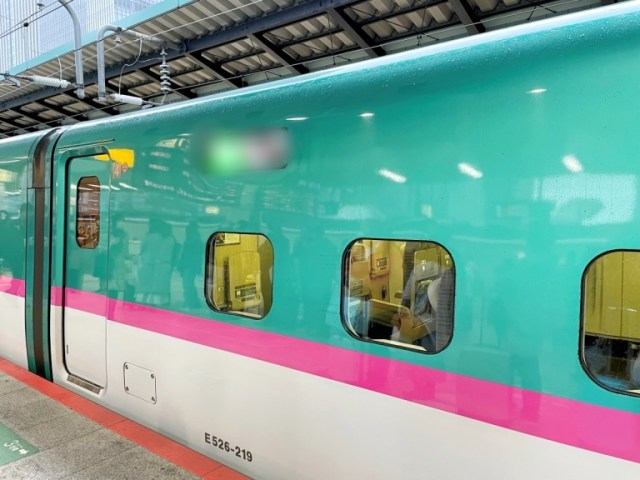
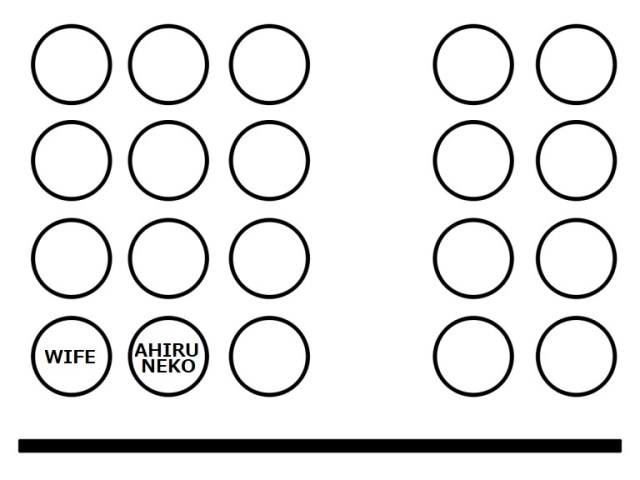
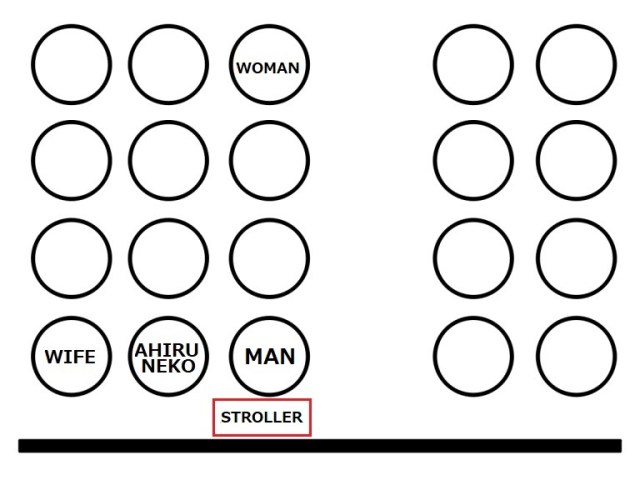
So on Ahiruneko’s last Shinkansen ride with his wife and two-year-old daughter, he booked a window seat in the back row for Mrs. Ahiruneko and the one next to it for himself, with their kid sitting on Daddy’s lap.

▼ Like this

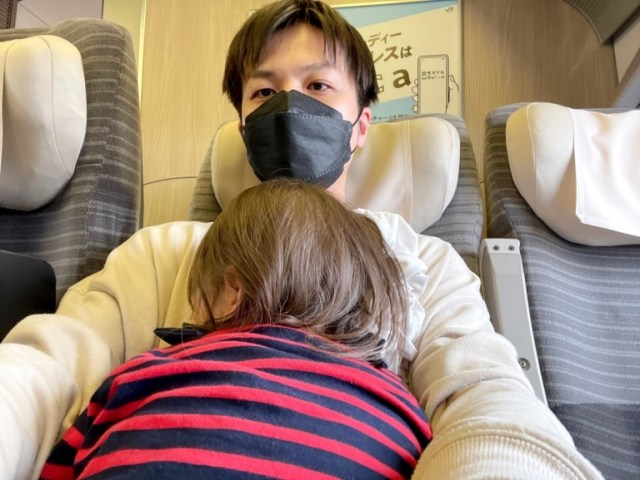
As soon as they hopped on, Ahiurneko and his wife put their seats back as far as they’d go, settling in to lounge luxuriously until their destination.

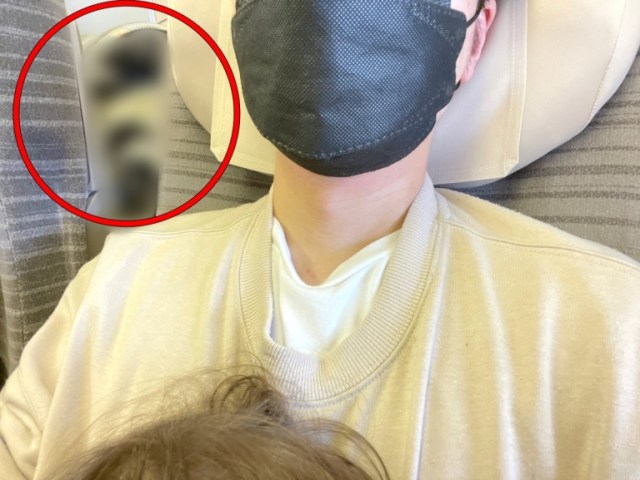
▼ You can see how far back their seats were by comparing Ahiruneko’s seat to the one on his right, which was empty when he boarded.

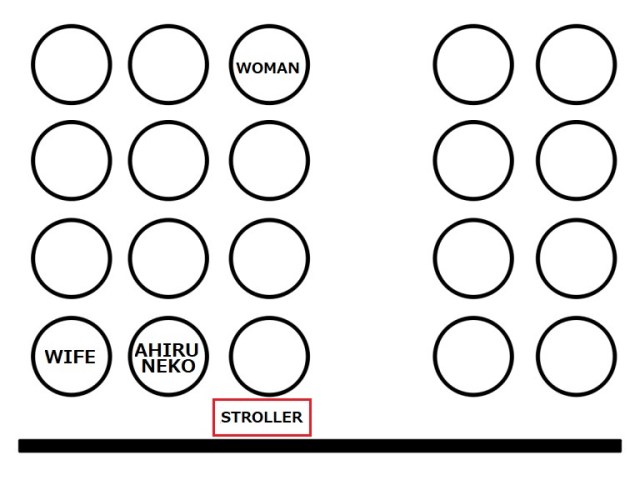
After a few stops, a woman boarded the train with her daughter who appeared to be about four years old. The woman was carrying a folded-up stroller, and as mom passed by where Ahiruneko was sitting she slid the stroller into the space between the seatback of the aisle seat and the back wall of the car. The woman didn’t sit down next to Ahiruneko, though, since her seat was a few rows ahead.

▼ Stroller circled in red

About this time, Ahiruneko’s daughter dozed off, and as anyone who’s ever been cuddled by a tiny tyke as the fall asleep, that cozy drowsiness is highly contagious. Before long, Ahiruneko found his eyelids getting heavy too, so he leaned back in his recline seat and caught some Zs. When he woke up some time later, there was a man sitting in the seat next to his right, having apparently boarded at a station the train had stopped at while Ahiruneko was sleeping.

Perhaps seeing how comfortable Ahiruneko looked, the man decided to recline his seat too…only to find that his seatback wouldn’t move, because it was blocked by the stroller stored behind him. So instead, the man remained sitting with his chair in the maximum upright position until the woman’s stop eventually came up and she retrieved the stroller.

Ahiruneko couldn’t help feeling a little bad for the man. Though he didn’t pout or complain, it couldn’t have been the most comfortable ride for him, especially since he was a tall guy with a stocky frame. This got Ahiruneko wondering what the etiquette is for where parents are supposed to put their strollers on the Shinkansen, so he decided to check View Travel, the train ticket reservation site of Shinkansen operator JR East, and here’s what he found:

“There is no designated storage area for strollers onboard the Shinkansen. Because of this, whenever possible we ask that passengers travelling with babies hold them on their laps, and fold up their strollers and store them in the space near the seats at the back or front of the car.”

While JR says wither the front or back of the car is OK, psychologically there’s a stronger sense that the empty space in front of a seat belongs to the person sitting in it. So in practice, the space behind the back row of seats is where you’re most likely to see people putting their strollers, and JR says that’s OK.

The result is that a seat in the back row can either give you maximum reclining privileges or none at all. There’s no way to tell for sure if there’s going to be a baby onboard too when you’re booking your bullet train tickets (and with the new luggage rules odds are you’ll have to pick a seat when you buy your ticket), so if you are sitting n the back, be aware that you might be sitting straight up too.

Source: View Travel
Photos © SoraNews24
● Want to hear about SoraNews24’s latest articles as soon as they’re published? Follow us on Facebook and Twitter!

Three things you should eat at Denny’s in Japan, according to staff who work there

https://ift.tt/tsVul6j Oona McGee

Recommendations from a staff member reveal what they really like to eat behind the scenes. 

After years of visiting restaurants and taste-testing different dishes, we’ve discovered that if you really want to find out what the best options on the menu are, you should ask the staff what they would order.

This tactic has given us some surprising insights into how best to eat a beef bowl at Yoshinoya and the secrets behind makanai food, and now we’re taking ourselves over to American-born family restaurant chain Denny’s to find out what they recommend we eat there.

This first instalment in our “Clerk’s Own-Pocket Recommendation” series, as we’re calling this investigative project, seeks to discover hidden secrets on the menu at a number of joints — the options so good that staff would happily pay out of their own pocket to eat them.

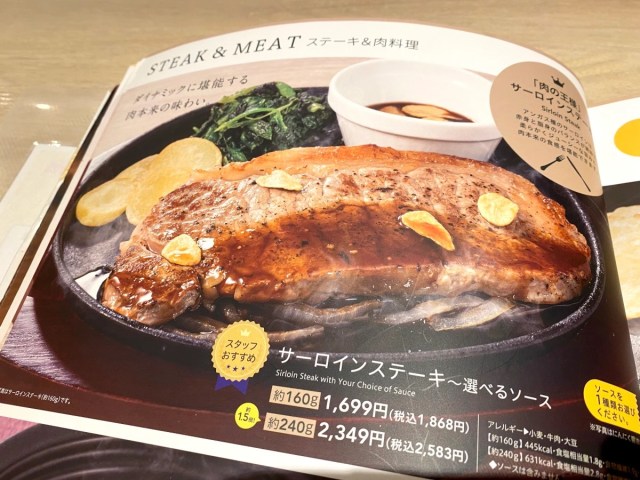
▼ Personally, we’d go for the steak, like a lot of other customers, but is that what staff would order on their own dime?

As we slid into a booth at Denny’s we were happy to find that the clerk serving us knew his stuff, because when we asked him, “Please tell us three recommended items that you would eat at your own expense“, he responded with a smile and replied without hesitation.

In fact, it was almost as if he’d been waiting his whole working life for someone to ask him this type of probing question, so let’s take a look at his recommendations, starting with the…

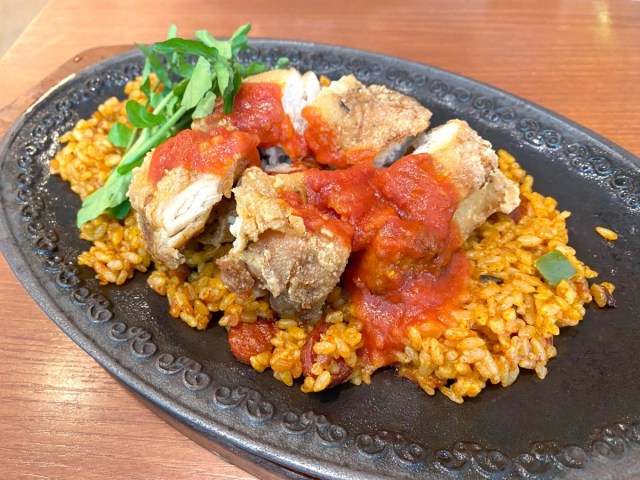
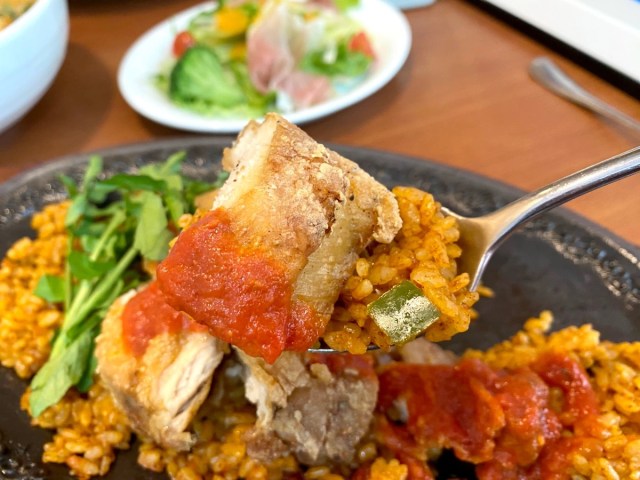
Chicken Jambalaya (1,390 yen [US$10.40])

It’s part of the Fair Menu, but it’s really delicious,” were the words of our waiter when he made this recommendation. The Fair Menu is a limited-time menu that changes throughout the year, with the current “fair” celebrating Golden Week, a string of annual public holidays that runs from the end of April to early May.

According to the official website, the Chicken Jambalaya made its first appearance on the menu back in 1983, and has been returning intermittently for special occasions.

Our waiter warned us that this dish might be a little spicy for some palates, but it wasn’t too spicy for our well-seasoned taste buds. The combination of spicy jambalaya and freshly fried chicken was delicious when eaten off the iron plate, and now we’re hoping it’ll get a permanent spot on the menu someday.

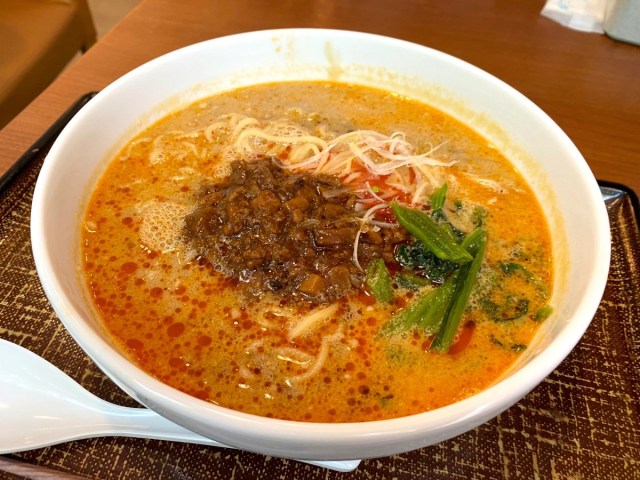
▼ Next up, we have the Sichuan-style Dandan Noodles (990 yen)

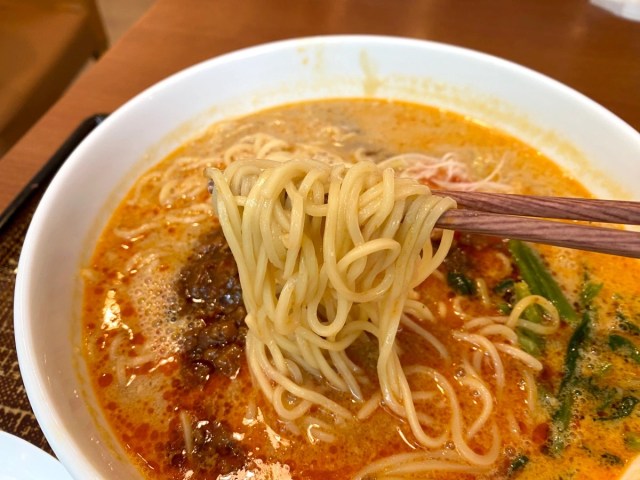
We’d always known Denny’s had dandan noodles on the menu but we’d never thought to try them. After all, with so many great noodle joints in Japan, why would we think to get our noodle fix at an American diner? However, after trying this dish, we were blown away by the taste and quality — it was so perfect that it was kind of scary, as it turned everything we thought we knew about noodles — and Denny’s — on its head.

The broth had a very rich sesame aroma, and the flavour of the sansho pepper throughout the dish was surprisingly delicious. If you’re ever stuck for what to try at Denny’s, we highly recommend giving this a try.

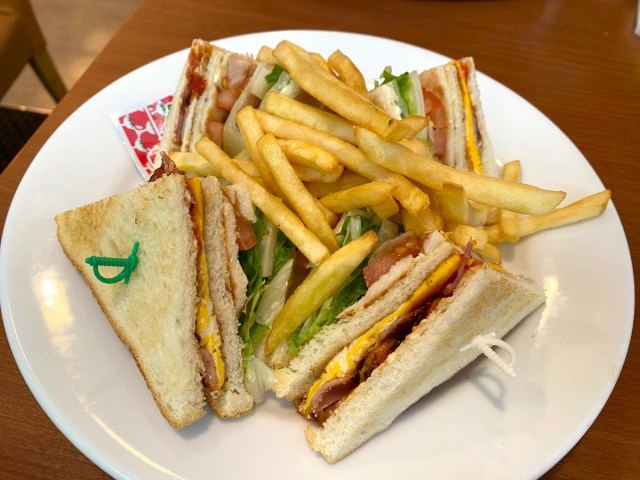
▼ Finally, we have the American Clubhouse Sandwich (1,040 yen)

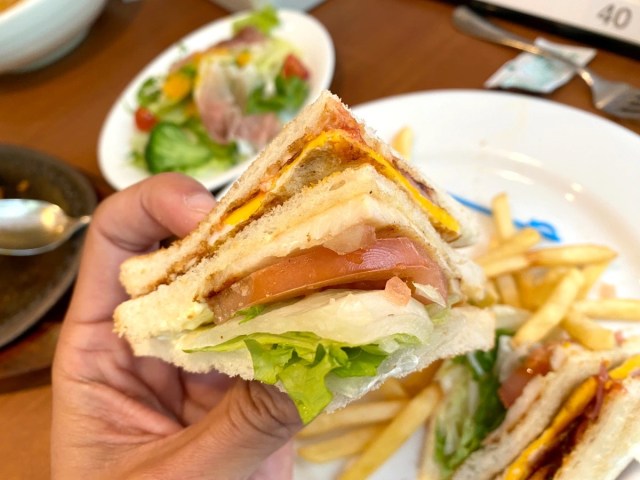
According to the waiter, the American Clubhouse Sandwich “is popular with people of all ages”, and after trying it, we understood the reason for its widespread appeal. Easy to eat, with familiar fillings like roast chicken, bacon, eggs, and tomatoes, this was a tasty way to fill up on a variety of ingredients, making for a very satisfying meal.

▼ Denny’s knows how to do a good Clubhouse.

For us, though, the dish of the day was the Sichuan-style Dandan Noodles. Our waiter told us he often eats it himself, and if we worked at Denny’s we’d be eating it at every opportunity. It’s a dish we never would’ve tried otherwise, which just goes to show how easily secret gems can be hiding on the menu.

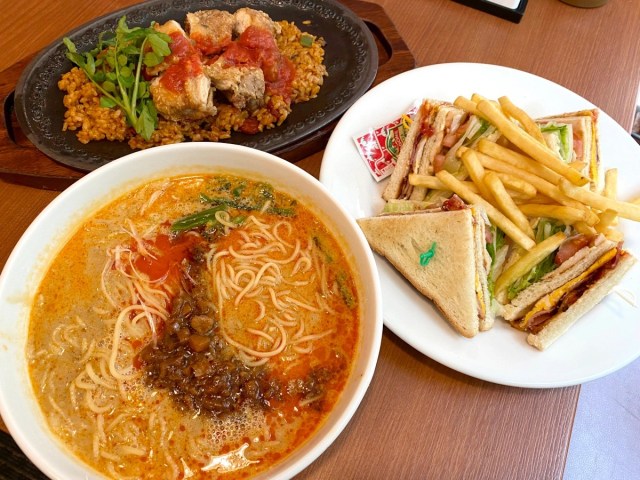
▼ The staff selection at Denny’s.

This meal delivered everything we’d hoped for in a Clerk’s Own-Pocket Recommendation, giving us bagfuls of flavour and a few surprises to boot.

It’s great insider knowledge to have in the back pocket, and now we can’t wait to find out what hidden gems we’ll unearth in the rest of our investigative series!

Related: Denny’s Japan
Photos © SoraNews24
● Want to hear about SoraNews24’s latest articles as soon as they’re published? Follow us on Facebook and Twitter!

Why Mr. Sato wasn’t excited to be in Takeshi’s Castle—and why he can’t wait to apply for Season 2

https://ift.tt/qQlpbTk Dale Roll

It wasn’t all sunshine and rainbows in the beginning, but it sure turned out that way in the end!

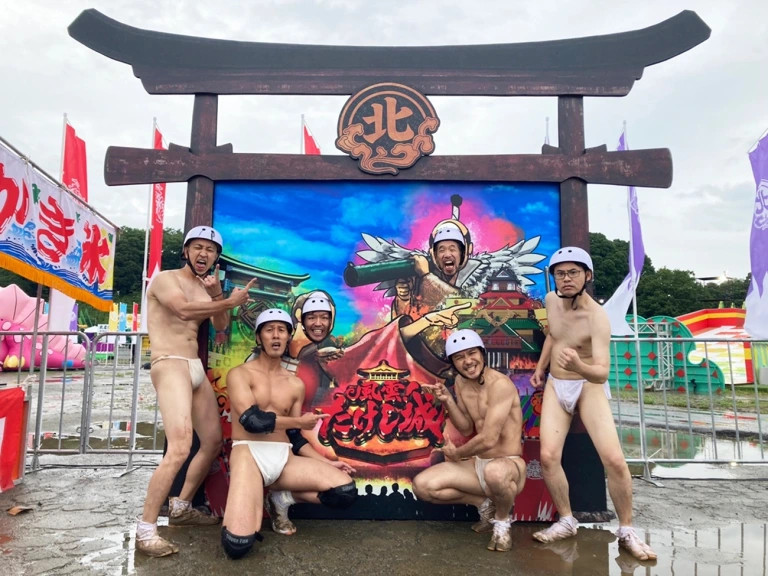
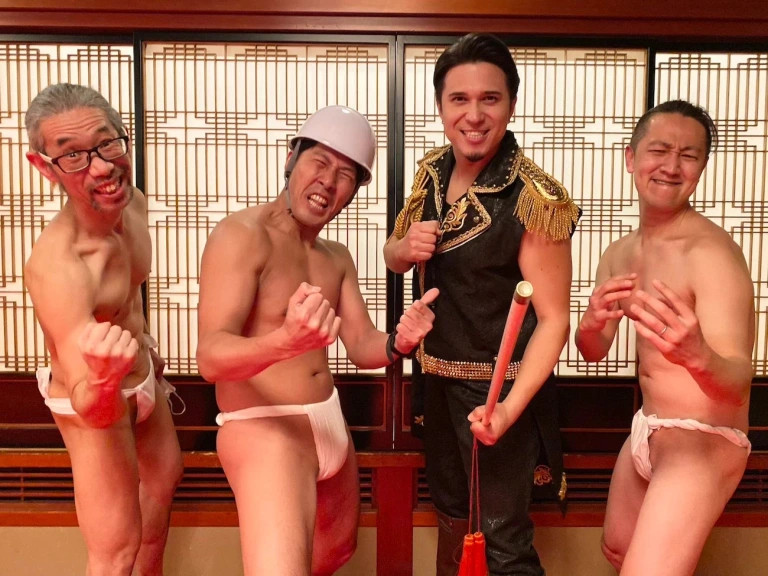
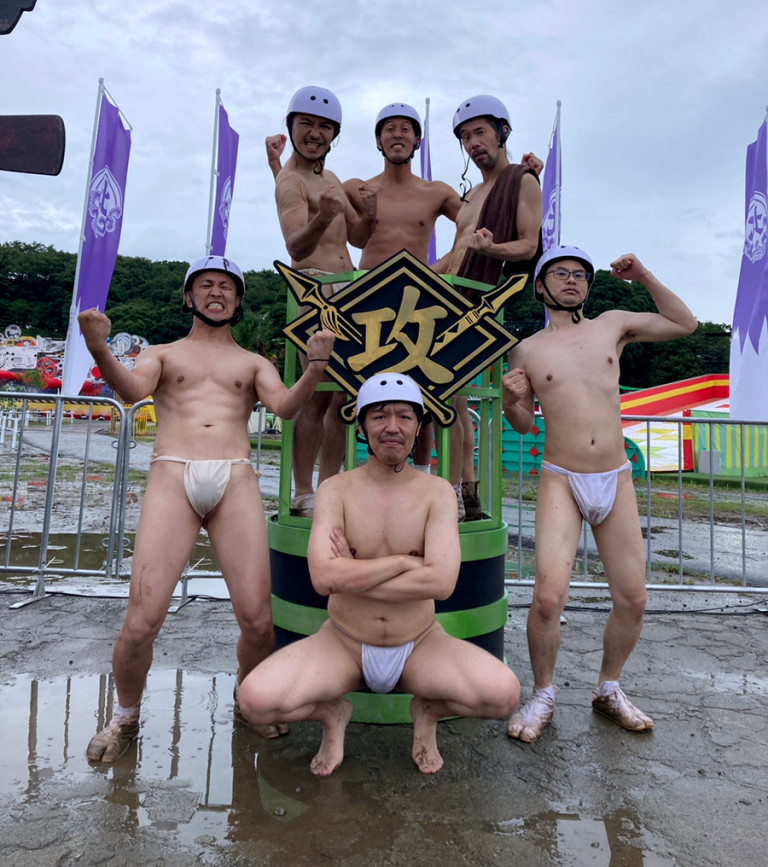
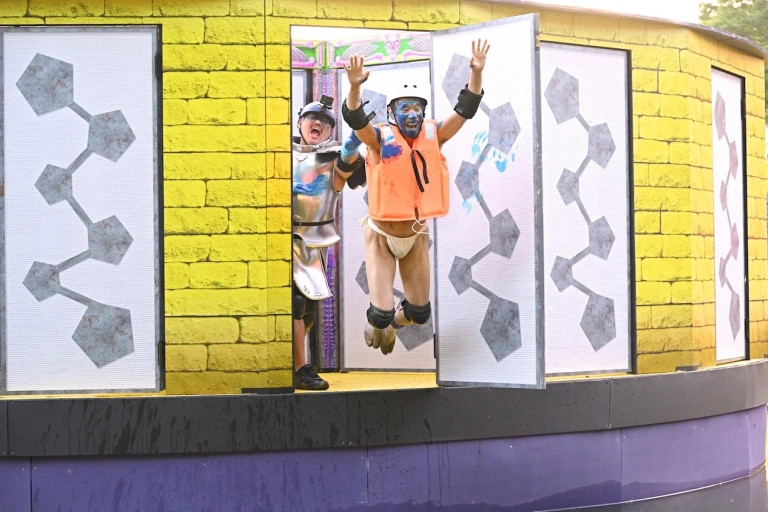
As you might have heard, the international hit Japanese variety TV show Takeshi’s Castle made a triumphant return for the first time in 34 years on April 21, and six of our wacky Japanese-language reporters were lucky enough to participate in it. But our most intrepid reporter, Mr. Sato, didn’t actually want to participate.

A number of factors had almost made him regret signing up. For one, he’d been told to expect a very long day on set. They had to show up super early and would only be released just in time for the last train at the end of the day. They couldn’t leave the set at all until filming was over. Such expectations weighed rather heavily on Mr. Sato, and it just didn’t sound like something he’d enjoy.

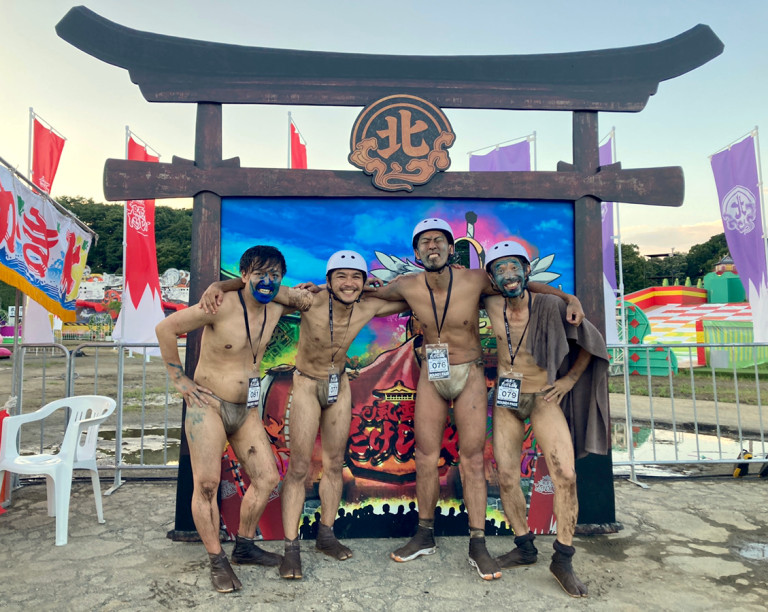
To make matters worse, a culmination of circumstances leading up to the day of filming made Mr. Sato just feel like it was more trouble than it was worth to go. It had been raining, with the prediction of a steady downpour, and Mr. Sato and his fellow reporters were committed to wearing only a fundoshi loincloth for the full day (and for the later premier), which would probably be miserable in the rain.

“Why do I have to do this?” Mr. Sato grumbled on the train, fervently hoping for the day to go by fast.

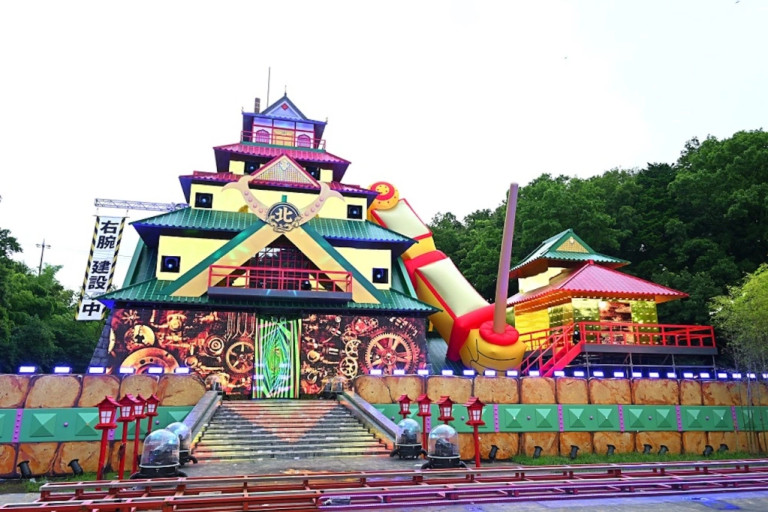
But that all changed when he arrived at Midoriyama Studio, where the show would be filmed. The huge space was decked out like a theme park!

It was hard to believe that they’d built so many props just for one TV show. Mr. Sato couldn’t help but come to a shocking realization that he’d stepped onto a genuine and very intense filming set.

And it wasn’t only the number of facilities that shocked him. The sheer number of participants and staff was insane too. Altogether there had to be 500-600 people there. It was like some kind of wild festival, and all of its color and bustle served to drive Mr. Sato’s melancholia away.

Over 300 of those people were contestants. Not all of them were from Japan, and they were of all ages too, including those who were too young to have ever seen the original and those who actually competed in the show before it went off the air 34 years ago.

They were all strangers to Mr. Sato, connected only by the fact that they were all on the attacking team. But even though they didn’t know each other, they all cheered for each other, encouraged each other, and celebrated each other’s wins. Somehow, they’d all developed a bond.

Forming such a connection after just meeting someone…Mr. Sato had to admit he’d never experienced anything like it in his adult life. It was like he’d gone back in time and become a student again, aiming to compete in a major competition and working hard at it at your school club. In those days, we weren’t alone in our failures and disappointment, and we could see others succeed and feel like it was our success too. To have that feeling again was incredible.

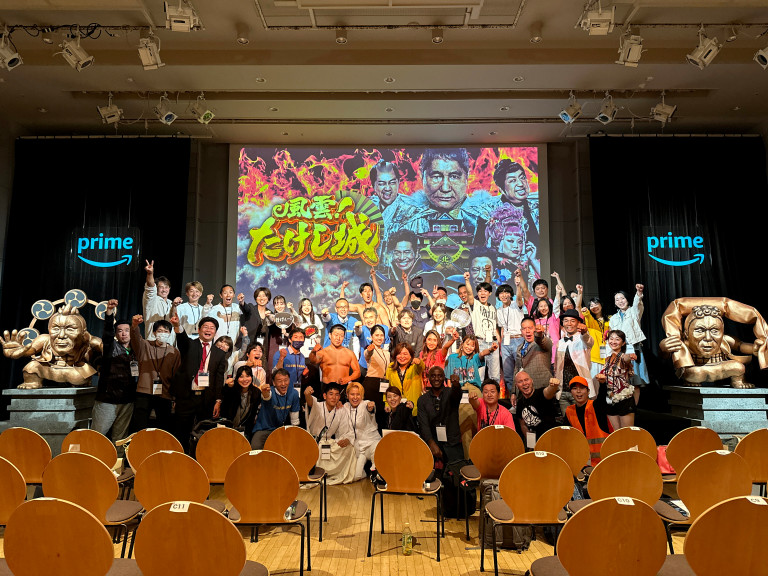
The premiere screening gave Mr. Sato a chance to reunite with the other participants he’d bonded with during filming. It was like meeting up with old friends, classmates from that one special day, full of memories of the competition they battled in together. It brought so much joy to the gathering.

And then there was the way participating deepened Mr. Sato’s connection to his fellow SoraNews24 reporters. Though they’re all on good terms, the hustle and bustle of article-writing doesn’t always leave much time for chitchat during a day at the office. Not that they had all that much mental space for conversation while in the midst of dealing with the crazy castle defenses, but the team really felt their relationships deepen through sharing the challenge and insanity.

So good, in fact, that if there’s a Season 2, Mr. Sato would love to do it again, and not just with the five who participated last time. He’d love for the whole office to come next time!

If watching the show gets you interested in the experience, you should definitely put in your application if the chance arises, Mr. Sato says, because actually being in it is way more fun than just watching it! Falling into a pond and getting soaked to the bone, leaping into a quagmire and covering yourself in mud, painting your face after getting caught by a demon, it’s all fun…

…even when you fail.

Images © SoraNews24
● Want to hear about SoraNews24’s latest articles as soon as they’re published? Follow us on Facebook and Twitter!

Clever Cup Noodle-only measuring cup becomes instant ramen lovers’ new most-wanted kitchenware

https://ift.tt/tqYPhkN Casey Baseel

Come on, Nissin, we need this.

Is there a way to make cooking Cup Noodles easier?

That might seem like an absurdly lazy ambition, but convenience is the whole point of instant ramen. The easier the better, we say, and thankfully that’s a philosophy that Cup Noodle maker Nissin shares with us, as demonstrated by the company’s latest invention.

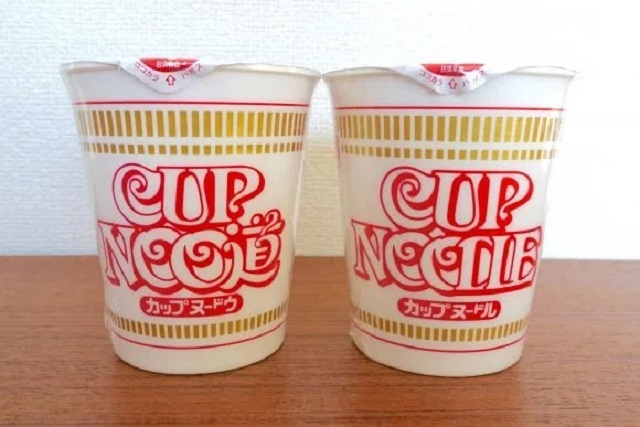
At first glance, that might just look like an ordinary measuring cup with the Cup Noodle logo and a few other aesthetic touches from its iconic packaging. But look closer, and you’ll see that the units of liquid measurement aren’t in metric or imperial units, but Cup Noodle ones.

The lowest line, indicating the smallest volume, is the amount of hot water you need to add to a Cup Noodle Mini. The middle line corresponds to the amount required for a standard-size Cup Noodle, and at the top is the amount for a Cup Noodle Big, for those times when you’re fiercely famished (which also tends to be when the ASAP-nature of instant ramen is most appreciated).

Cup Noodle cups do have a line on the inside near the rim that shows how much hot water you’re supposed to fill them with, so if you have a hot water dispenser in your kitchen that you always remember to keep filled, the benefit of a Cup Noodle-specific measuring cup might not be so quickly apparent. If you don’t have a dispenser, though, Nissin’s invention takes the guesswork out of deciding how much water to boil, so that you won’t boil too little (leaving your noodles undercooked) or too much (wasting time boiling extra water you’re not going to use only to dump it down the drain).

Nissin’s tweet has quickly racked up nearly 140,000 likes as of this writing, along with comments such as:

“I want this so bad…”
“I always boil too much water, so I could really use this.”
“Seriously want one of my own.”
“This is a wonderful invention.”
“I really want to taste the ramen made with this, since it’s the precise amount of water recommended by Nissin.”
“Please start selling these.”

In regard to that last comment, at the moment Nissin hasn’t yet mentioned anything about offering the Cup Noodle measuring cup for sale to the general public, but if they do decide to start selling them, it wouldn’t be the first time one of Nissin’s crazy ideas became reality thanks to popular demand.

Source: Twitter/@cupnoodle_jp via IT Media
Featured image: Twitter/@cupnoodle_jp
● Want to hear about SoraNews24’s latest articles as soon as they’re published? Follow us on Facebook and Twitter!

viernes, 28 de abril de 2023

Yakuza members arrested for going to baseball game

https://ift.tt/2vTCwH8 Master Blaster

Take me out at the ballgame.

You might have noticed a fair bit of coverage recently regarding the ever-shrinking liberties of Japan’s yakuza. No phone, no supermarket loyalty points, no motor cars, not a single luxury. Like Robinson Crusoe, it’s as primitive as can be.

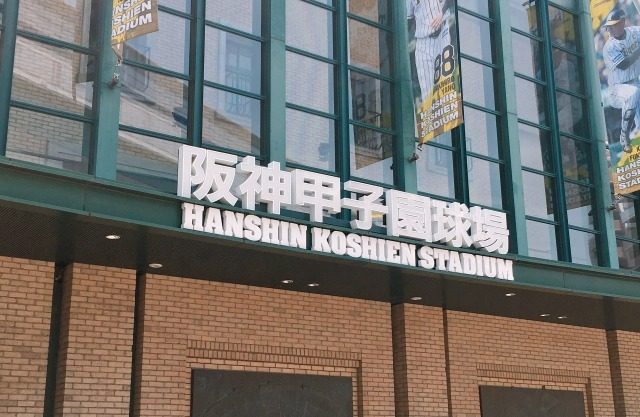
But on 8 April, a pair of gangsters learned the hard way that they can’t even enjoy the great Japanese pastime of professional baseball at the stadium. Hyogo Prefectural Police arrested 78-year-old Fujio Sakai and 52-year-old Hideki Deguchi on suspicion of unlawful entry when they went into the famous Koshien Stadium to watch the home team Hanshin Tigers take on the Yakult Swallows.

Charges of this nature often stem back to the Organized Crime Exclusion Ordinances that were introduced nationwide around 2011. However, in this case Nippon Professional Baseball was way ahead of the curve and already blackballed yakuza members way back in 2003.

Moreover, the Hanshin Tigers were at the center of this move due to a series of incidents linked to their unofficial cheerleading corps known as Chutora Rengokai. This was a group of some 500 Tigers fans who occupied seats together and cheered extra loudly for the team.

▼ Footage of the Chutora Rengokai doing their thing way back when only Japanese mobile phones had cameras

As you can see in the above video, this was mainly just harmless high-spirited fun at a baseball game. However, behind the scenes, yakuza members were allegedly running various rackets to profit from it. One way was by scalping Chutora Rengokai seats by having homeless people line up for tickets and then selling them to diehard fans for about three times the price.

There was also an incident where connected members of Chutora Rengokai threatened to kill a manager at Koshien Staduim because after a game where Hanshin Tigers narrowly defeated the Yomiuri Giants they were going to throw the Tiger’s manager Tatsunori Hara into the air in celebration before Chutora Rengokai could sing the team song “Rokko Oroshi.”

Speaking of the team song, there was also an incident where Chutora Rengokai claimed ownership of “Rokko Oroshi” and even filed the copyright with JASRAC. It wasn’t until some 20 million yen (US$150,000) in CD and ringtone sales were made that it was realized Chutora Rengokai had no right to royalties because the original songwriter was unknown. Needless to say, at around this time, the Tigers and professional baseball as a whole felt it best to just put a blanket ban on all organized crime at their stadiums.

▼ You are currently free to use this song for your own weddings and dance parties.

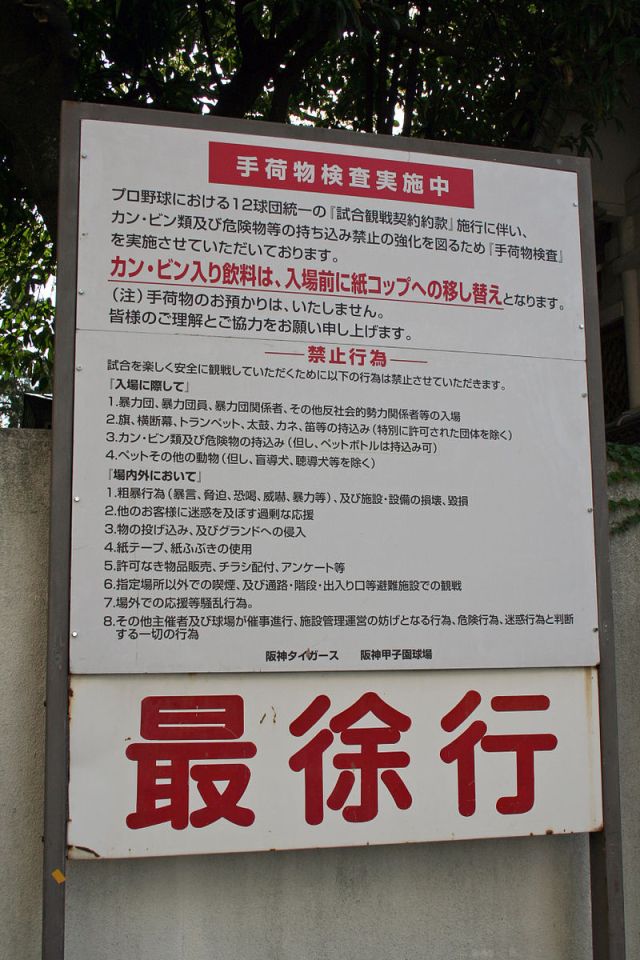
That was all quite some time ago though, and many people have forgotten about all those troubles. Even when Sakai and Deguchi joined the audience earlier this month they didn’t notice the sign at the stadium entrance stating that members of organized crime were not permitted to enter. But even if they had, with the thousands of spectators at a single game, it’d be pretty easy for yakuza members to slip by unnoticed and many probably have in the past.

▼ There are several signs posted around the stadium mentioning the organized crime ban and this one even has it listed as the No. 1 prohibited act

Image: Wikipedia/Corpse Reviver

But on 8 April, it just so happened that the car that took the pair to the game was illegally parked outside the stadium. While police questioned the driver they grew suspicious that his passengers may have been connected. So, they staked out the car until the game was over and identified Sakai and Deguchi as they walked back to it. Arrests were made the following day.

Both men admitted to the charges and Deguchi even expressed his surprise, reportedly telling police: “I didn’t know yakuza can’t go to baseball games.” He certainly isn’t alone either, and it’s food for thought for any youngster looking to enter the life of organized crime. Sure, there’s all the glitz and glamor that comes along with stealing sea cucumbers in the middle of the night, but think of everything you’d have to give up.

Source: Mainichi Shimbun, Daily Shincho, Golden Times
Top image: ©SoraNews24
● Want to hear about SoraNews24’s latest articles as soon as they’re published? Follow us on Facebook and Twitter!